Feed your Soul at Tsukiji – the World’s Largest Fish Market
hile the rest of Tokyo sleeps, one place stirs awake and comes alive during the wee hours of the early morning.
Like bees to a hive, many flock to Tsukiji Fish Market – the largest wholesale seafood market in the world and epicenter for restaurants to source the crème de la crème of produce. Home to record-breaking bluefin tuna, high-quality ingredients and raved by culinary fans, no visit to Tokyo is complete without savoring the taste of the freshest and finest of seafood Japan has to offer. But Tsukiji Market is more than just a mere fishmonger market. From decadent seafood bowls, exquisite wagyu and even sweet treats such as ice cream and traditional daifuku, Tsukiji’s outer marketplace offers a variety of food choices that will excite your senses as you weave your way through each culinary corridor.
From here, we’ll expand your food appreciation and take you through the best foods to try at Tsukiji Market.
Seafood Lovers Galore
tasty seafood treat at every corner, seafood lovers will be spoiled for choice at Tsukiji!
Whether you dine in at a small sushi restaurant for their sushi-of-the-day omakase or get your hands slightly dirty with some good finger food from a friendly food vendor, there is no shortage of seafood eateries to choose from. For us, seeing the lavish displays of the seafood vendors with ready-to-eat dishes was the obvious choice to explore Tsukiji’s food scene.
From the display, visitors can select the seafood they want and the vendor will lightly grill or garnish raw dishes with sauce to eat on the spot. While eating at vendor shops there are a few things to remember:
It is generally frowned upon to eat while walking around the market since you can easily bump people when it’s crowded. To avoid spilling your appetising seafood dish on others, it is best to eat at the store where you bought it from.
Tsukiji Market does not have public bins as it’s the responsibility of store owners to dispose of any garbage. Once you have finished your food, you can either give the garbage to the store owner or throw it in the bin they provide.
In regards to food hygiene and concerns of potential food poisoning, many vendors keep their seafood fresh on beds of ice which helps regulate temperature control. Nevertheless, if you are worried about having a weak stomach, order from stores that are located under shaded areas rather than exposed to direct sunlight.
Whichever way you decide to dine, Tsukiji’s outer market will keep you entertained with over 300 shops and eateries to choose from. Here is just a small collection of the seafood we ate on our visit:
Huge fresh oysters served with soy sauce.
A5 graded wagyu beef sticks with sea urchin.
Fresh sea urchin.
Mixed sashimi plates of tuna, salmon, octopus, prawns, and scallop.
Scallop butter soy sauce freshly grilled at カキ小食堂.
Snow crab, King crab, lobster, and jumbo-sized prawn and scallop ready for grilling.
Gyudon and Offal Stew at Kitsuneya
long-time favourite of the locals, Kitsuneya was established in 1947. To this day, they are still cooking and dishing out some of the best gyudon beef bowls and stewed offal rice bowls in town.
Instantly recognisable by the large bubbling pot of reddish-brown stew simmering at the front of the small eatery, Kitsuneya is so popular that there are lines of hungry patrons waiting before the opening time of 6:30 AM!
Their signature dish is simmered offal stew (ホルモン) on rice and is the store’s
specialty that has been handed down for three generations. The recipe originated from the owner’s grandfather who was a geta shoe craftsman and regularly made the stew as a side dish for his sake.
With a taste and smell so distinct and one-of-a-kind, Kitsuneya’s humble stew rice bowls are morsels of homemade love. Their second popular dish, gyudon, is also beloved by many and is worth ordering with a side of stewed offal, just how the original creator enjoyed it.
hile eating sashimi or sushi you may have noticed that it’s usually accompanied by an egg dish called tamagoyaki.
This pairing of raw fish and egg omelette might seem an unlikely pair but traditionally, it played a role in sushi presentation to add a pop of bright colour to the seafood.
Originally, sushi chefs not only prepared and served fish but also made their own tamagoyaki for their establishment, however it has become more of a tradition in recent times. In fact, making the perfect tamagoyaki is still considered the markings
of a highly-skilled sushi chef as temperature control is needed to make the appearance of the tamagoyaki perfectly yellow and blemish-free.
At Tsukiji there are a handful of tamagoyaki stores selling their own take on the humble egg omelette, but Tsukiji Yamacho is the crowd favourite. Originally dedicated to only supplying to restaurants, they opened their operations to the general public after many requests and have a large following among the international crowd. For just 100 yen, these tasty omelettes on a skewer are made right in front of you and you can choose between sweet or savory.
Fresh Fruit and Strawberry Daifuku at Tsukiji Iroha
fter eating all that great grub, indulging in something sweet would be the perfect way to finish any meal.
Within the maze of the outer market, the odd cafe and dessert stand peeks through among the savory delights and the most recognisable is the colorful fruit display at Tsukiji Iroha.
The Tsukiji Iroha store comprises of three stands: one dedicated to fruity drinks like
banana juice, fruit jelly drinks, and shaved ice called 168 Banana, while the others specialise in the traditional Japanese sweet daifuku, fruit slices, and fruit skewers.
Though a simple fruit stick will set you back a whopping 1000 yen, the hefty price tags are not without reason. The fruits served at Tsukiji Iroha are the premium ranked variety graded on their perfection in appearance, taste, and size. Here, you can also find the famed white strawberry, Yubari King melon, and Shine Muscat grape just to name a few.
The best way to get to Tsukiji Outer Market is by train. For many, the beginning of Tsukiji Market is instantly recognisable by the Lawson convenience store and Jonathan Family Restaurant that act as the starting point before making your way through the outer market maze. Luckily, many of the subway station exits nearby lead to this starting point.
Here are multiple subway lines that you can take:
Toei Oedo Line
Using the Toei Oedo Line, get off at “Tsukijishijo Station” and it will be an easy one-minute walk from the station.
Tokyo Metro Hibiya Line
Using the Tokyo Metro Hibiya Line, get off at “Tsukiji Station” and it will be an easy one-minute walk from the station. Alternatively, you can also take the Hibiya Line to “Higashi-Ginza Station” and Tsukiji Outer Market is a 3-minute walk away.
Toei Asakusa Line
Using the Toei Asakusa Line, get off at “Higashi-Ginza Station” and it will be a three-minute walk from the station
A short stay in Takayama unfortunately also means limited time to try ALL THE HIDA BEEF! If you’re also stretched for time in the oasis of tasty eats that is Takayama, you’re going to want to make sure you use that time wisely to truly experience only the best Hida beef in town.
Does tourist favourite Suzuya Restaurant make the cut? Find out below!
Setting And Atmosphere
oft ambient lighting.
A peaceful atmosphere.
A refined dining experience interwoven with culture and history.
If there is one thing Suzuya’s owner Teppei Shirakawa wants to promise his customers, it’s a dining experience with a unique atmosphere. For Teppei, this unique atmosphere is created from the perfect blend of Takayama folk dishes, crafted from traditional family recipes passed down through generations, an appreciation of traditional Takayama architecture and its history of wooden craftsmanship and a celebration of different cultures, seated together and experiencing the traditions of the place he and his family have called home throughout the generations; Takayama.
Like many restaurants in the area, Suzuya is located within a traditional private house in Hida Takayama’s old township district. With the area being well known for centuries as a hub for timber production and wooden craftsmanship, these traditional houses were largely wooden structures comprising of wooden beams and decorative features with a dark wooden stain.
An important resource for the Takayama region, wood provided better protection during the colder months when compared to clay materials typically used for housing in japan. Behind the traditional facade, customers can enjoy a glimpse of the past once they step inside and observe the living quarters locals and merchants once occupied during the Edo period.
The décor of this restaurant can be best described as ‘simple elegance’. The dining experience is relaxed and calming, with ambient soft lighting shining through Japanese shoji screens throughout the restaurant. The shoji screens also help to create a feeling of privacy, quietness and intimacy as they provide a subtle division between guests. The warmth of the atmosphere is exemplified by the wooden setting and furniture which also showcases the exceptional local craftsmanship and fine timber produce Takayama has to offer.
Divided into multiple areas, diners can enjoy seating at tables or traditional tatami dining. There are also private rooms for larger groups or celebrations.
The dining experience at Suzuya is slow-paced, calm and tourist-friendly when compared to the busy hustle and bustle of the homely Hidatakayama Kyoya, which we had visited the night before.
Private Tatami Dining Room
At Suzuya, Hida beef is grilled on a traditional charcoal grill known as a Shichirin Hida Konro, which is made out of porous clay called Keisodo that conducts heat evenly. The outside of these charcoal grills are decorated with washi paper showcasing a traditional Japanese art aesthetic.
Food
uzuya is all about showcasing Takayama’s excellent seasonal produce and serving all dishes in the traditional folk style. During our time dining here, we tried two of Suzuya’s most popular Hida Beef dishes; the Amiyaki Teishoku and the Houba Miso Beef Steak.
With Hida Beef being Takayama’s pride and joy, it only made sense to order the Amiyaki Teishoku. This dish features high grade slices of Hida Beef with local veggies and a dipping sauce. Keeping the meat unmarinated, customers can enjoy the pure flavours and textures of Hida Beef, lightly grilled on top of a charcoal grill known as a Shichirin Hida Konro. Grilling your Hida beef on a Shichirin Hida Konro is part of the experience as only a special type of charcoal known as ‘Binchotan’ is used. This traditional charcoal does not contain chemicals and produces much less smoke unlike modern charcoal. Using Binchotan ensures that the taste of the Hida Beef is not ruined during the grilling process.
To ensure the quality of every dish, Teppei hand selects the beef that features in it, ensuring only the leaner and tender cuts of meat are served at Suzuya. In this dish, it appears that two different grades of Hida Beef were used, one higher than the other. The higher graded beef only consisted of 3 of the 7 slices of meat we received and were truly a melt in mouth experience. The others were unfortunately more chewy and tough.
One of Takayama’s other well known speciality dishes is Houba Miso. Originally a humble farmer’s dish eaten where the sweet miso was eaten with rice, this dish is now more popularly cooked with Hida Beef, onions and shiitake mushrooms. Grilled on top of a houba (Japanese Magnolia Leaf), the dish will have you salivating with its mouthwatering smell. The Houba Miso served at Suzuya is based on a traditional recipe, passed down by the owner’s great grandfather. While also delicious, we do unfortunately have to remain fair and admit that the Houba Miso at Hidatakayama Kyoya was one of our most unforgettable food memories in Takayama.
Both the Amiyaki Teishoku and the Houba Miso at Suzuya are served as set meals with rice and soup. In comparison to the set meals for these dishes at Hidatakayama Kyoya, it would have also been nice to have a side dish of traditional mountain veggies included. Considering both meals were the same price, we feel like Hidatakyama Kyoya provided just a little more value.
For the vegetarians out there, Suzuya does a great job of offering vegetarian options for non meat eaters.
Amiyaki Teishoku ¥3850
Houba Miso Beef Steak ¥1980
Service
he best part of our experience at Suzuya was the service. We visited around 6:30pm, which was just early enough to be able to dine in without needing a reservation. As the restaurant filled with more people over the course of our dinner, the experience still felt relaxing.
From the moment you walk through the doors, the hospitality and friendliness of the staff is phenomenal. The wait staff take time to explain the dishes to customers and answer any of their questions.
We were also surprised at the fact so many could speak basic English. The owner is also incredibly friendly and makes a habit of coming out and chatting to each table with genuine interest and joy – you can tell that meeting his customers and learning about where they come from is the most favourite part of his job. Overall, there was a lot of laughter shared in this restaurant and it really was a lovely experience.
Grilled Fish side dish
Value for Money
would say the value for money at Suzuya Restaurant is average. Hida Beef in general is expensive, but the same dishes at Hidatakayama Kyoya provided much better value for the same price. In saying this, if we were to also compare the customer service experience of both restaurants, Suzuya’s was outstanding.
All in all, your perception of value for money comes down to what you care more about; good value food or good value service. For me, food is the winner and I would have loved to see a few extra goodies – particularly a side dish of seasonal mountain veggies added to the set meals – in order to feel like I got the most value out of the dish.
Eating soba noodles remains a staple favourite in rural Japan, and the Takayama area grows some high-quality buckwheat making it the perfect place for some tasty soba noodles!
Searching for some local grub, we stumbled upon by coincidence Sumikyu (or Nadai Teuchisoba Sumikyu), a local soba restaurant that was selected in the 2019 Michelin’s Recommended Restaurants for the Aichi, Gifu, and Mie regions.
Founded in 1933, Sumikyu is homegrown in Takayama and has been owned by the same family for four generations. Specializing in handmade soba using only Hida locally sourced ingredients, see what makes this humble soba establishment so popular with locals and tourists alike.
SETTING AND ATMOSPHERE
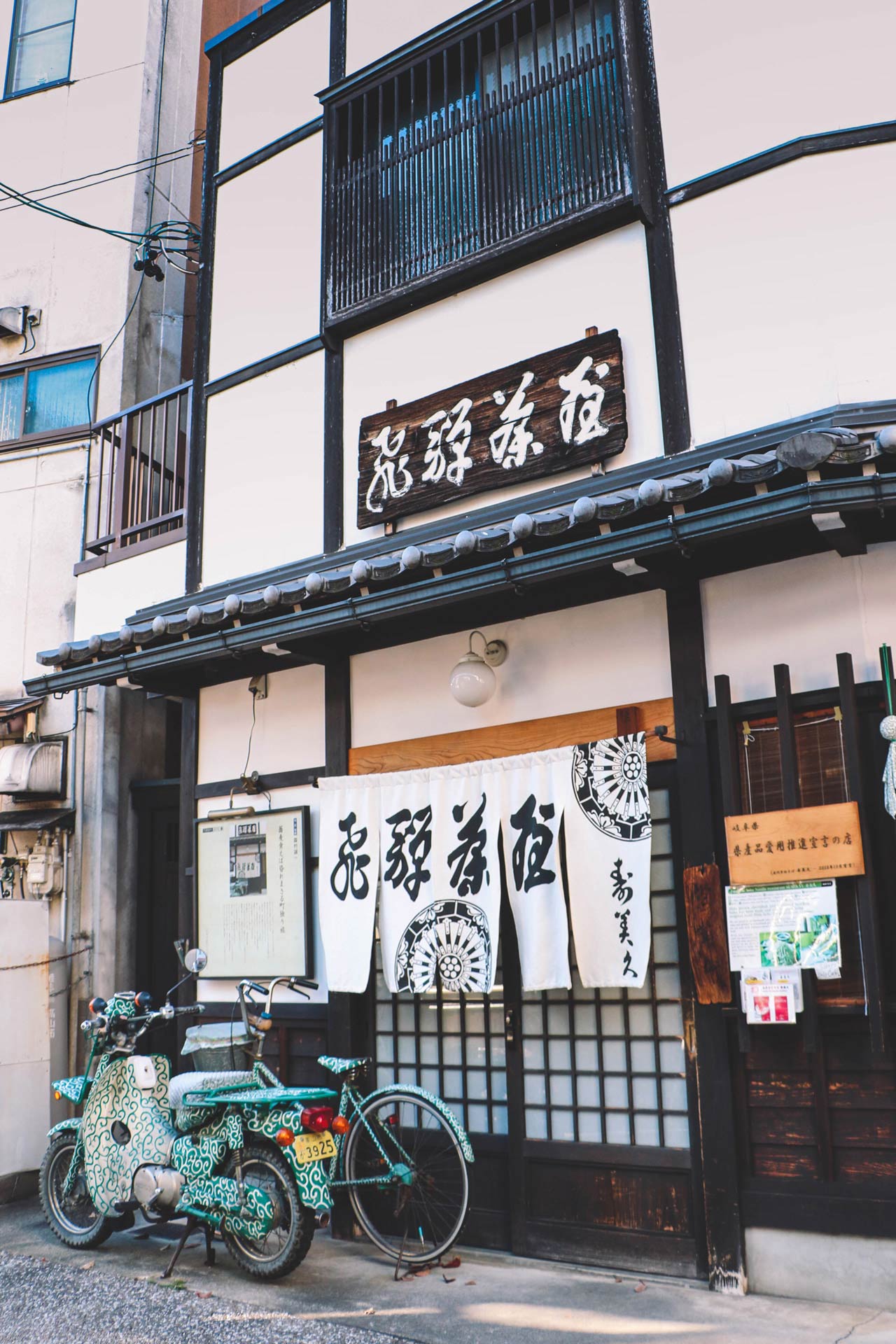
aving such a long history in the town, it would seem only natural that Sumikyu would be located in the town’s iconic Furui-machi-nami – the old traditional area of Takayama.
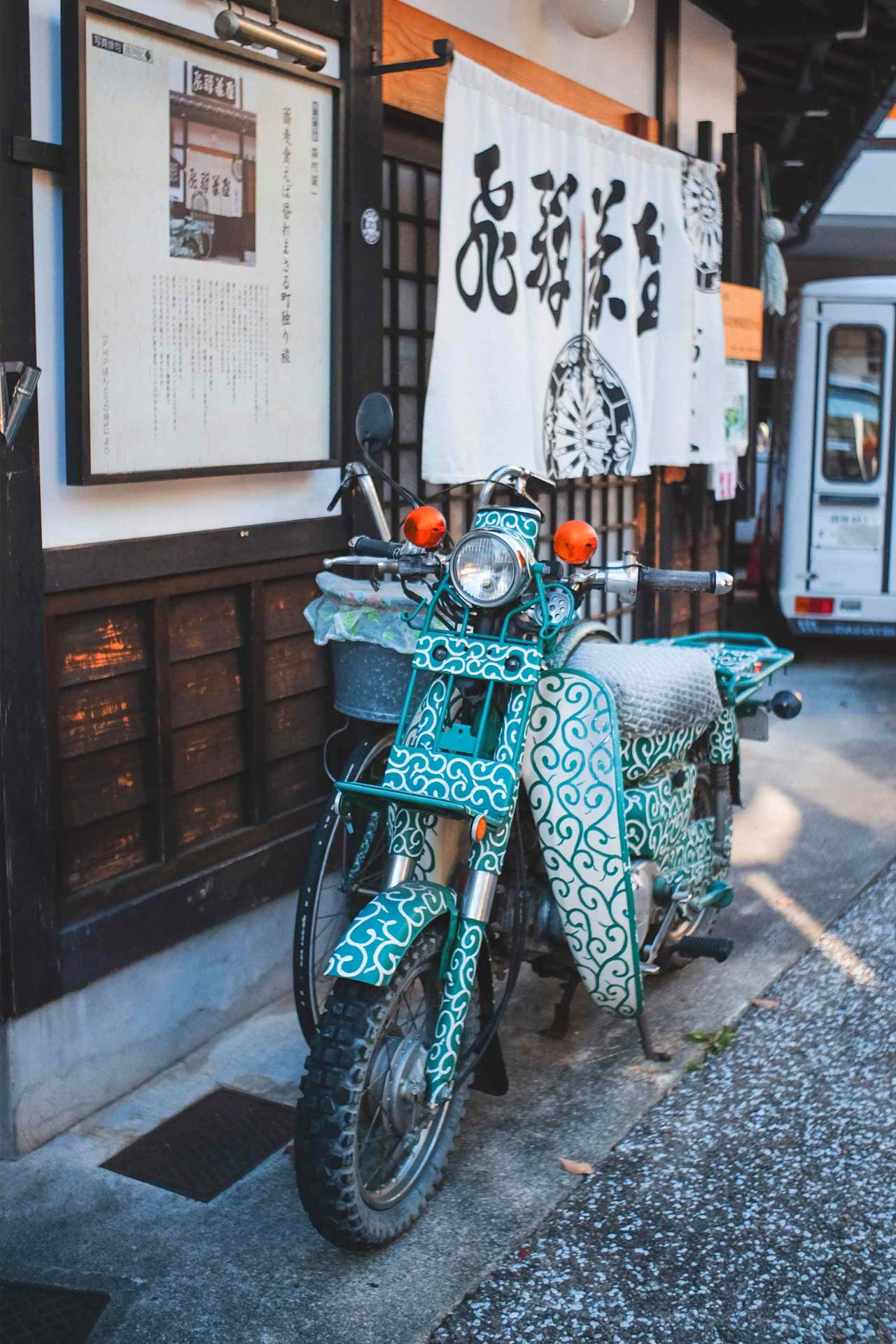
From the outside, Sumikyu blends seamlessly into the surrounding maze of traditional wooden storefronts. To distinguish from the rest, a beautifully arabesque painted bike stands proudly at the front of the store. Hand-painted by the owner, it’s incredibly eye-catching and appears to be the trademark of Sumikyu.
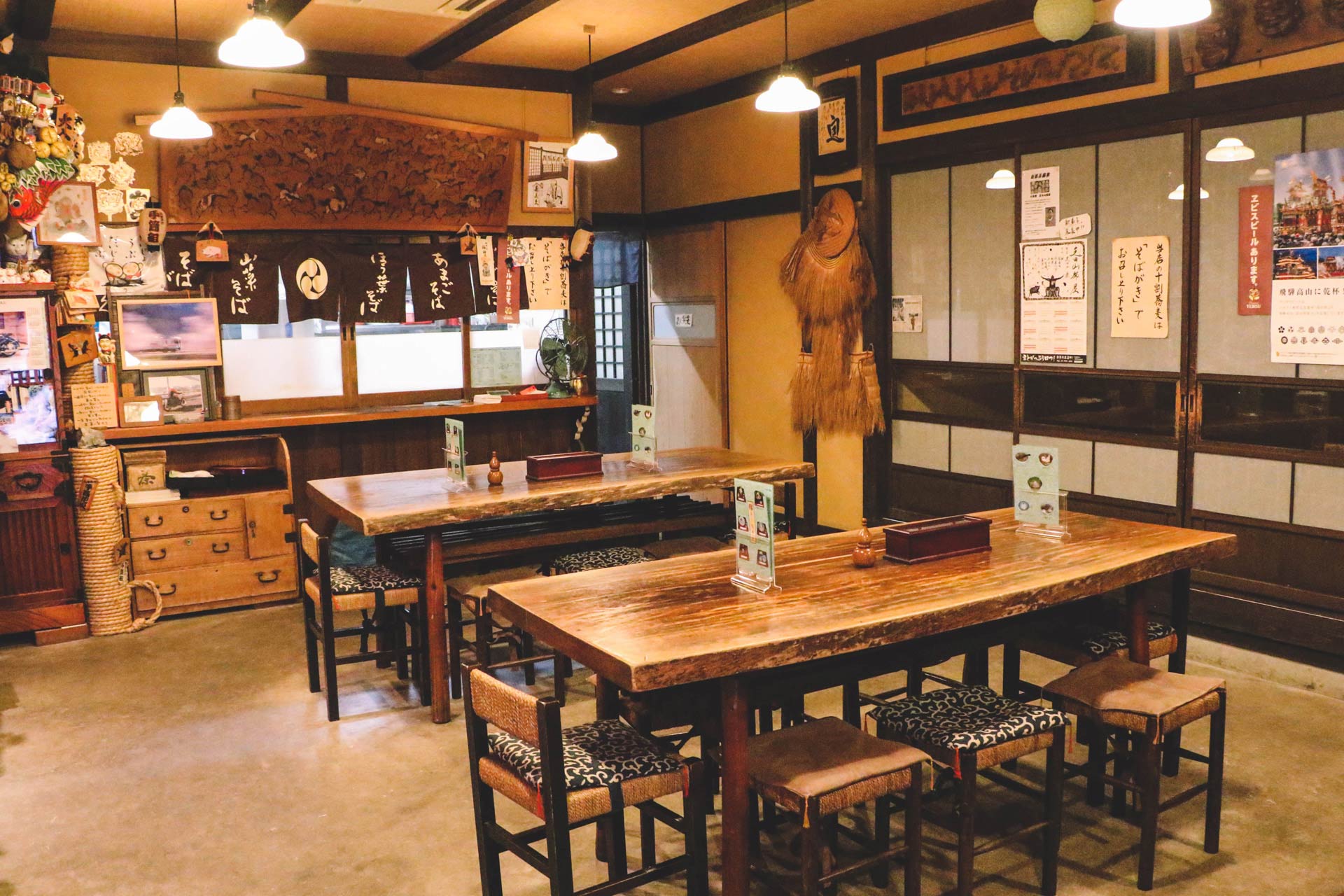
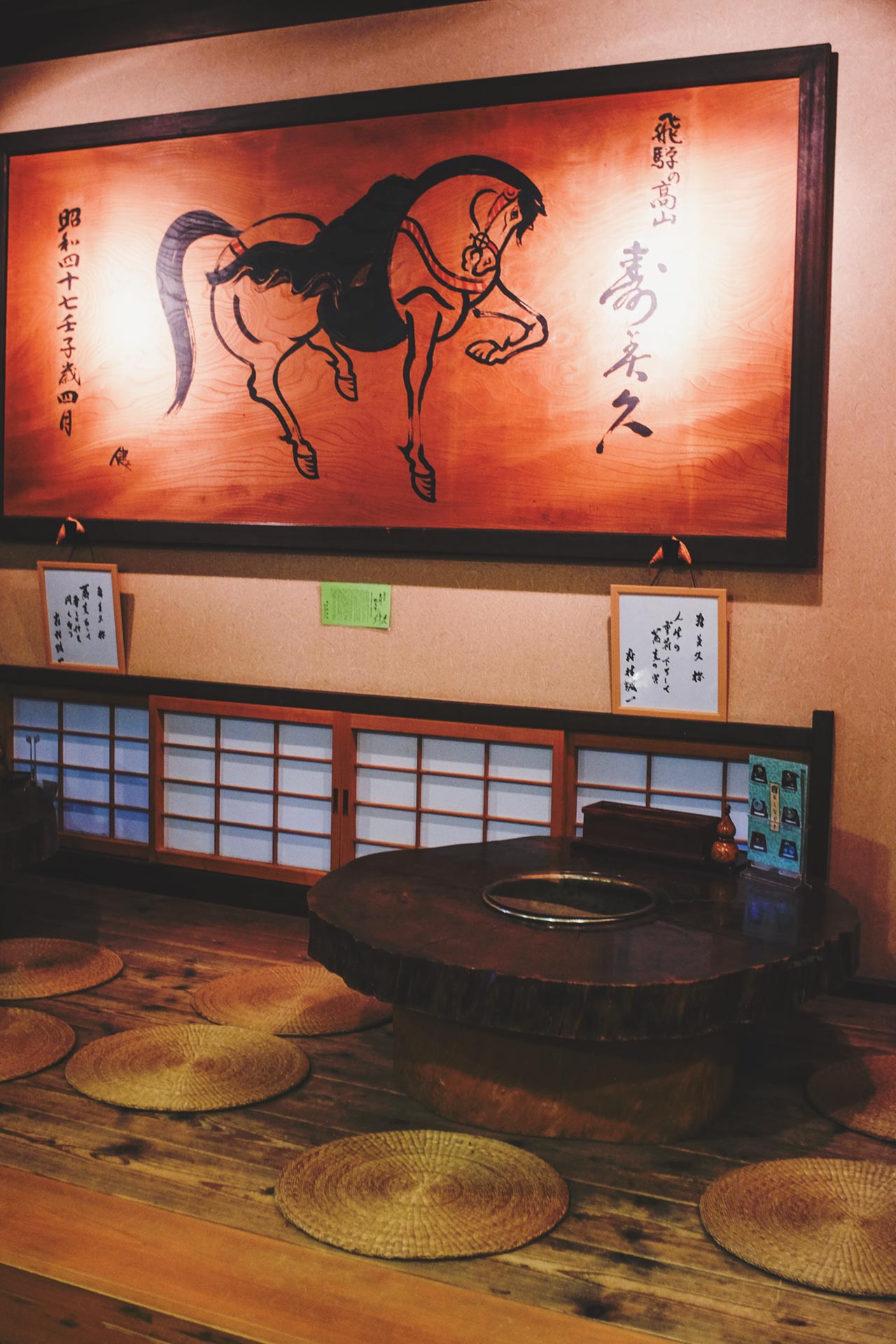
Inside, Sumikyu’s interior feels like time hasn’t passed since the Showa period. Mainly decorated with wooden furnishings (no doubt a nod to Takayama’s craft-making history) and a number of horse paintings, the features give character to this local eatery.
The dining area is divided into two areas; one with tables and counter seating for people looking for a quick casual meal while the other is the tatami style area for those in small groups. Though we were only a party of two, Talyssa and I were able to snag the tatami style table which made our experience feel all the more traditional.
They also have a small section where you can buy their soba noodles, soba tea, and soba dipping sauce to recreate your own at home.
Overall, Sumikyu makes you feel like you found something special. A hidden gem that the locals would frequent and the true foodies would seek.
FOOD
umikyu is a certified store using solely Gifu Prefecture made products. The soba is made from scratch and Sumikyu also goes the extra mile by grinding their own soba flour by hand, using traditional stone tools to make their soba noodles.
Another thing you’ll notice about Sumikyu is their attention to food presentation. Their bowls of noodles are all beautifully presented with generous toppings that it feels more upscale than just your average dine-in.
Although there are many options of soba dishes on offer, there are two dishes that stand-out and are recommended to try in most reviews and magazine clippings of the restaurant: the Sansai Zaru Soba and the Amago Soba.
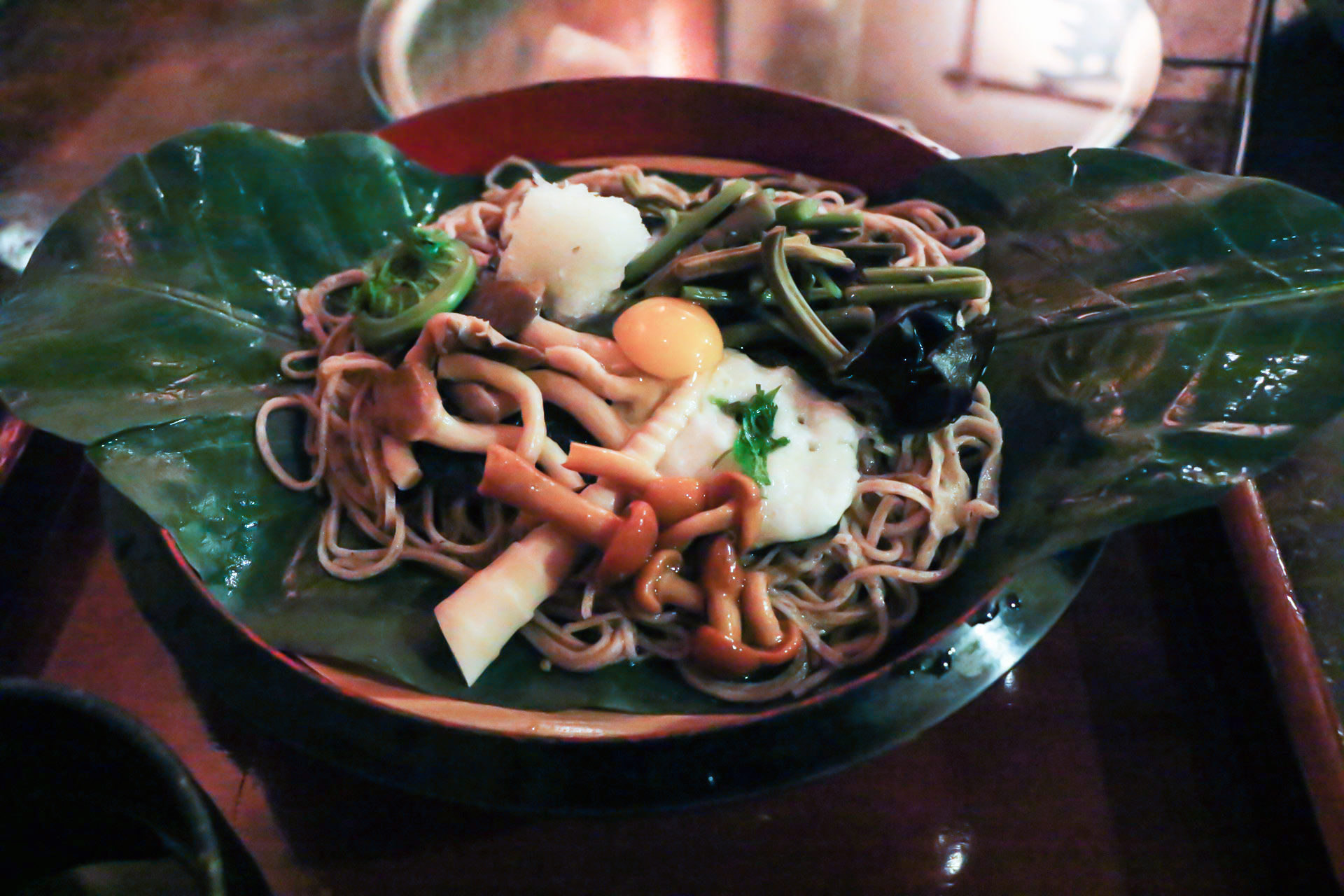
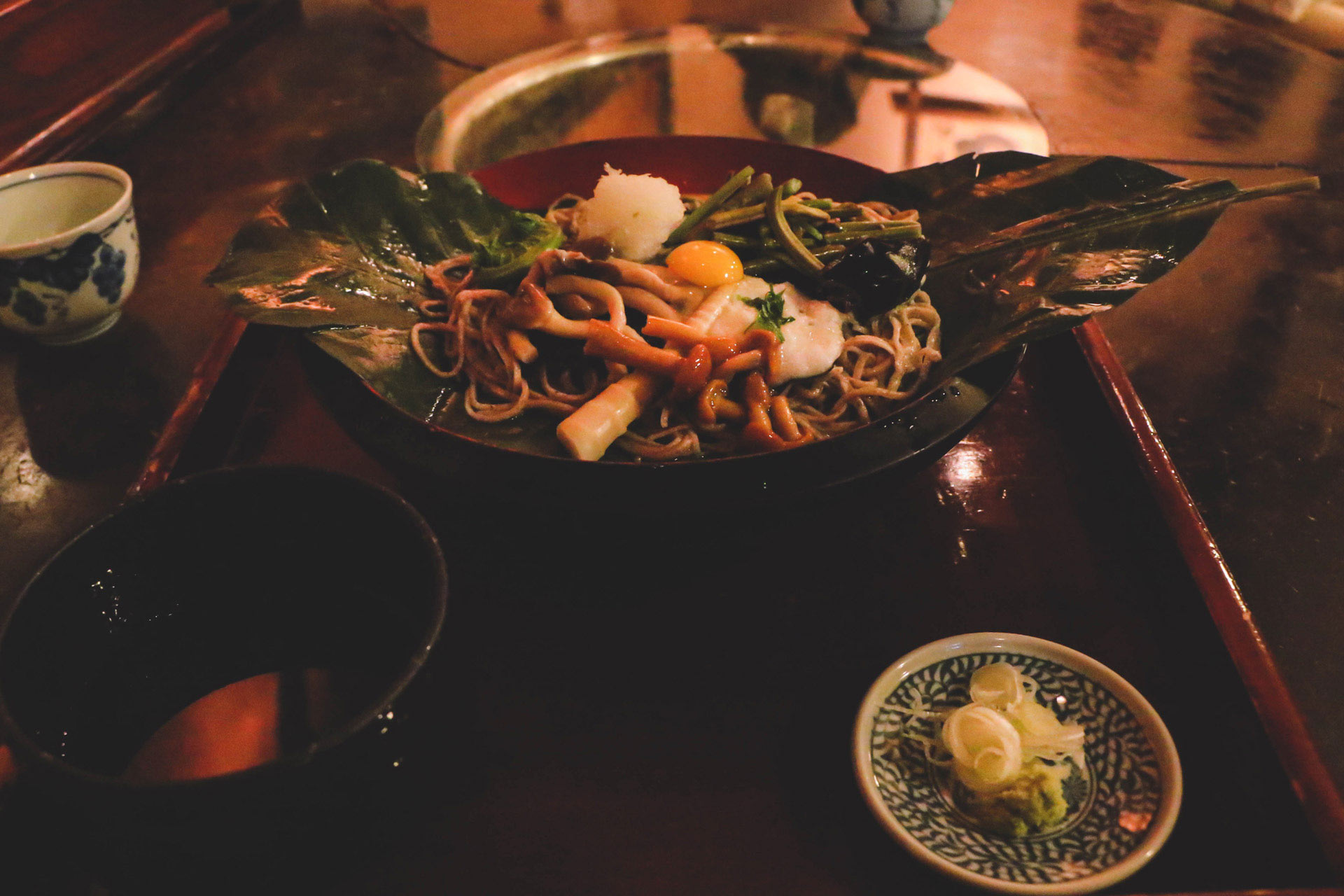
The Sansai Zaru Soba dish was like nature on a plate. The cold soba noodles were served on a fresh hoba leaf with a dipping sauce on the side and topped with Takayama’s famous mountain vegetables and a raw quail egg. It’s a great dish for health-conscious minds with a clean simple flavour focusing on the freshness of the ingredients. However, it may not be a dish for everyone.
While Japanese dishes in the West are typically the crowd favourites like teriyaki chicken, tempura and ramen, the slimy texture of the grated mountain yam (tororo) mixed with the raw quail egg yolk is a style of Japanese cuisine unfamiliar with many tourists and could be off putting for those who don’t like the idea of slimy slippery noodles. Talyssa found the texture unpleasant but if you’re like me and enjoy similar slimy foods like okra, you might find it more enjoyable.
Alternatively, the other most famous dish, the Amago Soba, will make your mouth water! The Amago Soba is a warm soba dish topped with a deliciously marinated trout and served in a sweet-salty warm mushroom broth. This dish was one of our favourites and was super tasty!
Towards the end of the meal, the staff will give you some sobayu in a teapot. Sobayu is a white creamy broth made from the boiled water of the soba noodles and mixed with the remaining dipping sauce to drink at the end of your meal. Be sure to hang around after you finished eating to complete your soba dining experience with some sobayu.
Sansai Zaru Soba (Mountain Vegetable Soba) ¥1250
Amago Soba ¥1250
SERVICE
espite the lunch rush, the service at Sumikyu was prompt and efficient. We were able to get a table upon arrival and the atmosphere was very cosy.
Unfortunately, the menu is entirely in Japanese but the most popular dishes have pictures next to them which makes ordering a breeze.
According to some reviewers over at Tripadvisor, the staff do speak good English but we weren’t able to confirm this since we communicated to the staff in Japanese during our visit.
VALUE FOR MONEY
onsidering everything was handmade from scratch, it is a little surprising how inexpensive dining at Sumikyu was!
The most expensive dish was only around ¥1850 which included seafood and most dishes were roughly the same amount as other soba restaurants at roughly ¥1100 on average.
Whether you choose to dine for lunch or dinner, Sumikyu offers great humble food at a very reasonable price.
Known for its local cuisine, a trip to Takayama just wouldn’t be complete without sampling much of the delicious food that is on offer!
Rich in traditional restaurants, copious street food vendors and uniquely local cuisine that spans centuries of historical development, food is central to Takayama and a point of pride for its locals.
Read on for the best local foods Takayama has to offer:
#1 Hida Beef
When it comes to Wagyu (Japanese Beef), the first thing that pops into your mind is the notoriously famous Kobe Beef. But what if I told you there was another, juicier kind of beef to rival Kobe’s undisputed reputation?
Hida Beef is the Gifu Prefecture’s answer to deliciously juicy, mouth watering beef. But you might be wondering, how does Hida and it’s internationally famous cousin, Kobe beef, differ?
Hida beef originates from the mountainous north of the Gifu Prefecture in central Japan. To give Hida beef its signature taste, black haired Japanese cattle are fattened by an accredited producer for at least 14 months. To be called “Hida Beef” the beef must receive a quality grade of 3, 4 or 5 from the Japan Meat Grading Association. This, combined with the clean spring water from the central Japanese alps contributes to the quality of Hida Beef.
As a result, Hida beef has a larger amount of shimofuri (fat marbling) than Kobe beef, making it juicer and more tender, providing a true melt-in-mouth delight for your taste buds. In contrast, Kobe beef aims for a balance between akami (red leaner meat) and Shimofuri (fat marbling).
There are many ways to enjoy hida beef in Takayama but the two most popular are Yakiniku (Japanese BBQ) and as Hida Beef Nigiri.
Where to Eat Yakiniku Hida Beef: Suzuya
Located in a traditional house in Takayama old town, Suzuya Restaurant has been making Takayama local cuisine since 1961. Staff are really friendly and can speak English which is a bonus.
We ordered the Amiyaki Teisyoku, which was a set meal of high grade hida beef that came with rice and soup. The beef is cooked in front of you on your own personal charcoal BBQ.
Amiyaki Teisyoku: ¥3850
Where to Eat Hida Beef Nigiri: Sakaguchiya
With an impressive history, Sakaguchiya Restaurant was originally an inn that first opened its doors in 1907. Renowned in the area, many high prfile guests stayed there including the brothers of Emperor Heisei. In the mid Showa period, the inn opened a small sweets shop at the front of the building which was very popular among travelers in the Takayama area. It wasn’t until 1983, that the owners reinvented the inn as a restaurant and opened Sakaguchiya, selling local cuisine using local ingredients.
Pioneering the idea for the Hida Beef Nigiri, Sakauchiya serves their nigiri on a giant senbei (rice cracker) making it the ideal street food as you journey through Takayama old town. You can order your Hida Beef Nigiri cooked as you like (rare, medium rare or well done) and then eat the rice cracker after! A convenient and a zero waste solution.
Depending on how much you want to spend, you can also order different hida beef grades:
We tried both the Hida Gyu and the Premium hida beef sushi and we say go for the premium, where you’ll really get a sense of how tender and delicious hida beef can be. Don’t bother with the Hida Gyu.
#2 Houba Miso
A regional dish of the Gifu Prefecture, Houba miso involves cooking sweet miso with onions and other veggies such as shiitake mushrooms, on a houba (Japanese magnolia leaf) and cooked over a charcoal fire.
With its origins as a humble dish eaten by farmers during winter, houba miso was traditionally eaten as an accompaniment with rice due to the lack of food available during the colder months.
In more modern times, houba miso is most famously cooked and served with Hida Beef and is a definite must-try dish in Takayama – it is absolutely divine!
Where to Eat Houba Miso: Hidatakayama Kyoya
While we also tried Houba Miso at Suzuya Restaurant, the one at Hidatakayama Kyoya was a clear winner! Their houba miso was absolutely delicious and the perfect balance between sweet and salty. A definite must-try!
The restaurant is located in a restored Japanese country house that features traditional mid-19th century architecture, including exposed ceiling beams, tatami flooring and wooden lattice partitions. For more, read our full Hidatakayama Kyoya review.
Houba Miso Set Meal: ¥2000
#3 Handmade Soba Noodles
While soba is a Japanese noodle dish available all around Japan, what makes the soba at Takayama unique is that the area boasts the perfect climate conditions for producing top quality soba noodles.
With Takayama’s location being among the Japanese central alps, the cold temperatures and fresh spring waters from the surrounding mountains, makes it the perfect climate for producing it’s highly acclaimed soba noodles.
When ordering soba noodles from Takayama, we recommend you go for the dishes that also highlight the area’s local food, such as wild mountain veggies, hida beef or amago (mountain trout, local to the Gifu Prefecture).
Sansai Zaru Soba: ¥1350
Where to Eat Handmade Soba Noodles: Sumikyu
This restaurant caught our eye because of its status as a Michelin 2019 recommended restaurant in Takayama. Sumikyu have been hand making their soba for 4 generations! Soba noodles are prepared fresh daily and the restaurant closes as soon as the day’s soba is sold out! So get in quick. Between us, we tried both hot and cold soba.
The Sansai Zaru Soba, is a Michelin recommended dish at Sumikyu and was definitely a beautiful dish to behold.
Served cold, the soba noodles are presented on a large magnolia leaf and topped with a variety of traditional mountain vegetables local to Takayama and the Gifu Prefecture: fern, a variety of mushrooms & fungi, bamboo, greens, radish puree and a raw quail egg. To eat, mix together and then dip into the accompanying dashi sauce.
The Amago Soba, was also a delicious standout and featured a whole amago fish which was very sweet, wild mountain mushrooms and soba noodles in a hot and flavourful broth. Delish!
Amago Soba: ¥1450
#4 Mitarashi Dango & Gohei Mochi
Popular all over Japan, Mitarashi Dango is a sweet street food made by skewering round mochi on a stick and coating it in a sweet sesame sauce. Takayama however, serves its mitarashi dango differently.
In Takayama, Mitarashi dango is a savoury snack. Instead, the mochi is glazed with a savoury soy sauce and grilled over a hot fire. It is thought that this savoury version of dango is one of the very first preserved foods eaten in Japan, dating as far back as the Heinan period (10th century).
The second snack food, Gohei Mochi, is a very old and traditional Japanese snack, local to the Gifu prefecture. It is high calorie and rich, consisting of a pounded lump of white rice, skewered on a stick, dipped in a sweet walnut miso paste and grilled over an open fire. In Japan’s more historical times, Miso provided local farmers and people with a great source of warmth, comfort and important nutrients during Takayama’s long winters.
Where to Eat Gohei Mochi & Mitarashi Dango: Akebonya
Located in takayama old town, Akebonya sells both mitarashi dango and gohei mochi – we got one of each. If you have a chance, it’s a good idea to try mitarashi dango and gohei mochi
from a few different places as each shop has a rceipe for the sauce. The great thing about Akebonya is that they sell the sauce separately which you can also buy!
#5 Takayama Ramen
As you may have expected by now, even the ramen at Takayama is different!
Known by the locals as Chuka Soba for its thin and curly noodles similar to those used in Chinese cuisine, Takayama Ramen also differs in taste from traditional Japanese ramen as its soup base is made from bonito flakes and soy sauce. The dish is typically topped off with pork fillet, sprouts and fermented bamboo shoots. While there are plenty of places to eat Takayama ramen in Takayama, it’s important to know that each restaurant’s ramen tastes a little different, with owners adding their own spin to broths.
For the taste of tradition, try Nakatsubo. As the city’s oldest ramen shop, Nakatsubo is known for selling Takayama’s best Takayama Ramen. It’s both traditional and simple.
Other notable mentions include Mametengu Honten which is a family business that has been running for just over 70 years!
#6 Hida Gyuu Ootama Yaki
While on most Takayama food guides, you’ll find “hida gyuuman” listed we invite you to also try this fusion-esque alternative!
As one of the more unique street food’s in the area, the best way to describe hida gyuu ootama yaki is that it’s like a giant takoyaki with a mammoth filling. Inside, you’ll find hida beef, small prawns, a quail egg, sprouts and green onion.
Where to Hida Gyuu Ootama Yaki: 雑貨屋 木の実 (Zakka-ya Konomi)
We believe (but please correct us if we are wrong) that this is the only place that sells hida gyuu ootama yaki. It is by no means a ‘traditional’ food, but rather utilities Takayama’s local foods (such as hida beef) to create a unique and modern street food.
This is the shop’s original recipe so if you see it, be sure to try it!
You’ve heard of wagyu, the marble textured wonder beef from Japan praised for its buttery soft texture that melts in your mouth, but what about hida beef?
Hailing only from the Gifu prefecture, this prime breed of cattle is super tender with mesh-like marbling that gives hida beef its juiciness. Many also say that the sparkling clean spring water of Gifu also gives hida beef its distinct flavour.
For food lovers wanting a taste of real hida, many head to Gifu prefecture’s Takayama – the home of hida beef. However, don’t just choose any steakhouse in Takayama to try this delicacy. To appreciate this fine cut of steak, what better place to dine than at the place many heil is the best hida beef restaurant in town – Hidatakayama Kyoya.
SETTING AND ATMOSPHERE
he Hidatakayama Kyoya restaurant is a restored Japanese country house located within the historical Old Town district of Takayama. As a real treat, diners can enjoy eating within the walls of a traditional mid-19th century home with exposed ceiling beams, tatami flooring, and wooden lattice partitions. What a way to create an inviting nostalgic ambiance!
The house is described as being from Echigo, an old northern province before its neighbouring prefectures and districts merged to form modern-day Niigata Prefecture in 1876. The house was specifically relocated to its new home in
Takayama and diners can enjoy the experience of being seated around a traditional irori (Japanese hearth). As you look around, the interior is fitted with old trinkets and traditional folk art pieces adding to the character of the place.
Seeing the busy staff shuffle past with platters of beef while we sat among the antique furnishing and smokey air made us feel right at home. For a truly memorable dining experience, we highly recommend sitting on the tatami flooring for the best seat in the house and to fully enjoy the pleasure of grilling your meat the old fashioned way.
fter reading multiple food reviews of people highly praising Hidatakayama Kyoya’s hida beef dishes we are glad to say, we understand what all the fuss is about!
At Takayama, the region’s food specialty is houba miso – hida beef with miso, green onions, and shiitake mushrooms grilled on a magnolia leaf (houba).
As the dish slowly cooks on your own personal grill, the scent of the miso and magnolia leaf creates a mouthwatering smell as you wait for your beef to be ready. The hida beef was incredibly tender and had a tasty steak flavour that perfectly
matched the saltiness of the miso. The set meal also included a small side dish of tofu, potatoes, and simmered mountain vegetables which were seasoned lightly. It was a great palate refresher creating a nice delicate flavour paired in contrast with the meat’s rich taste.
Did someone say “slip a shrimp on the barbie”? As the true Australians we are, Talyssa and I decided to upgrade our meal by ordering a side of prawns to grill and they were a delicious accompaniment to our barbeque meal. Sweet and meaty, it was a shame we didn’t have two stomachs to order another plate!
Our Hida beef on houba miso
Side dish of tofu, potatoes, and simmered mountain vegetables
Hida Beef on Houba Miso Set Meal (¥2000)
Prawns (¥1400)
Service
he overall service at Hidatakayama Kyoya was very prompt, efficient, and timely especially considering how busy the place was.
When we did our research, visitors seemed very impressed by the modest down-to-earth hospitality and their interactions with the “okami-san.”
An okami-san is the name given to a female manager or owner of a traditional Japanese style establishment like a ryokan who is at the center of guest relations. At Hidatakayama Kyoya, their role is to greet guests, explain and demonstrate how to cook certain dishes, ask how the patrons enjoyed their meals and go the extra mile to provide information about Takayama’s must-see tourist spots for visitors.
Unfortunately, we noticed that the general staff who served us weren’t as “homey” in their reception and hospitality on the night we visited and it’s a shame that we didn’t get to experience a true “okami-style” service for ourselves.
Keep in mind, this restaurant closes super early! We arrived at around 8pm and the last order for food was at 8:30pm with closing time at 9pm, so that could be why the staff rushed us to be seated and to order.
If you want to have a more relaxed time, it would be best to arrive during lunch or at an earlier dinner time.
Value for Money
s Hidatakayama Kyoya serves premium quality hida beef, the prices for the meat dishes are generally on the pricier side however still on par with prices found at other yakiniku restaurants. You can still enjoy a hida beef meal affordably by ordering the “Hida Beef on Houba
Miso Set Meal” at 2000 yen, which is the restaurant’s most popular menu item.
Considering the quality of the food and the unique dining experience offered at Hidatakayama Kyoya, splurging on a meal here is definitely worth it.
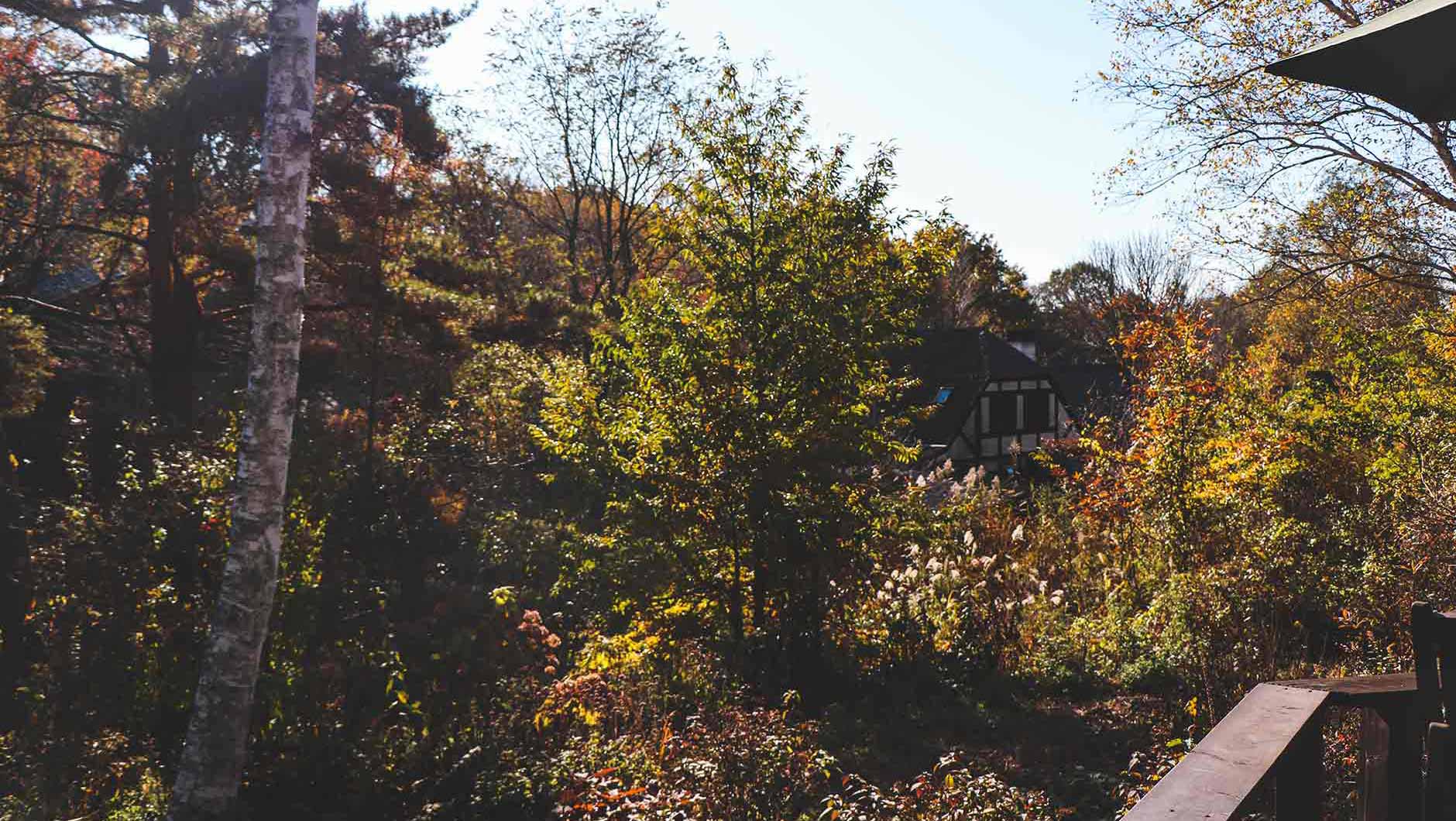
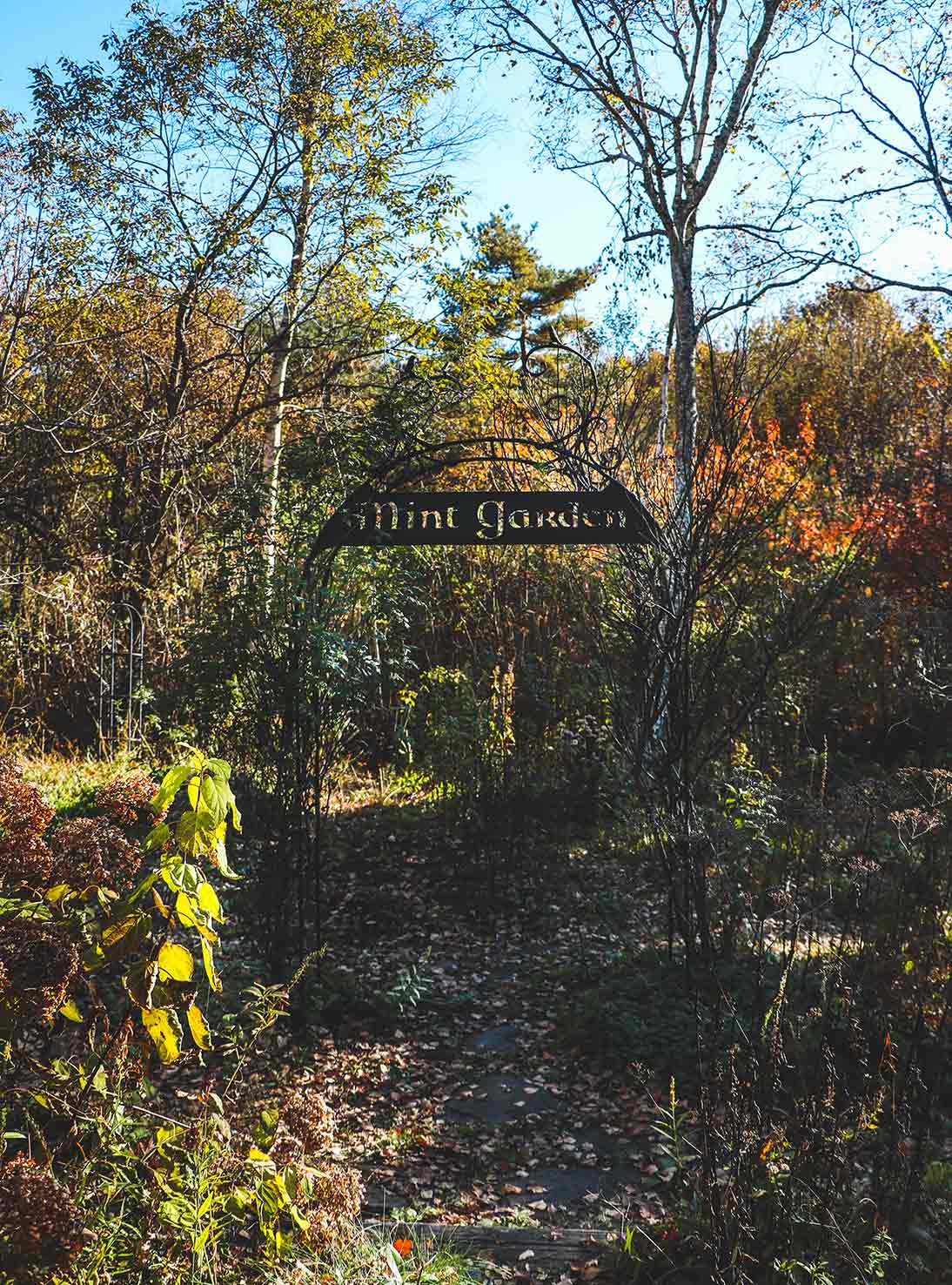
While traveling around Suwa, Nagano, it was a real challenge to find places opened on a Wednesday. While most of the popular eateries we read about on travel sites were closed, we were lucky to strike gold with a small local find called the Mint Garden through good old Google search. With the autumn drive towards the Mint Garden as our last saving grace to satisfy our afternoon tea cravings, here’s what to expect in this idyllic cottage cafe.
Setting & Atmosphere
f you love all the charms that quiet mountain living has to offer, you’ll definitely enjoy the country home aesthetic of Mint Garden.
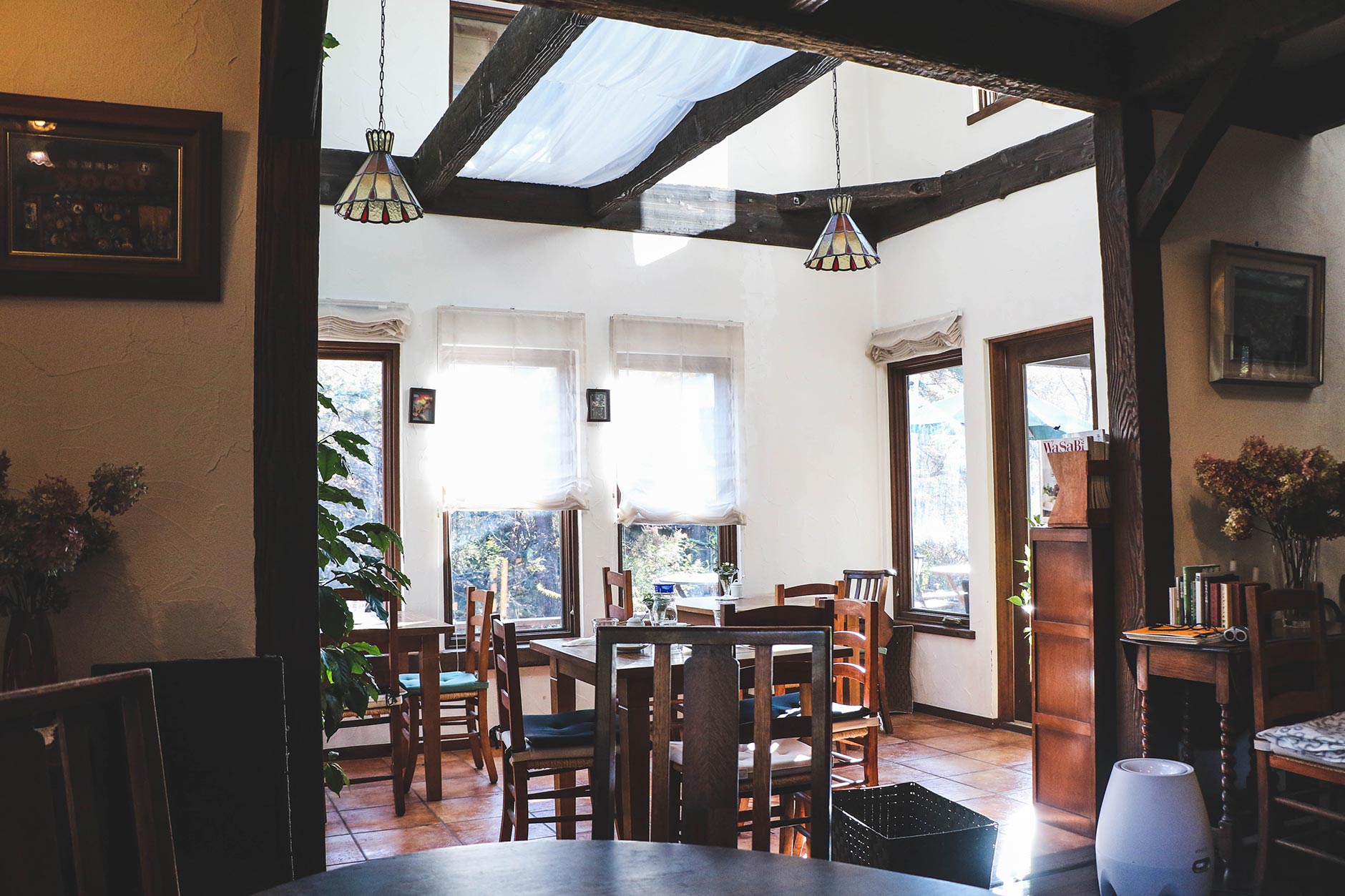
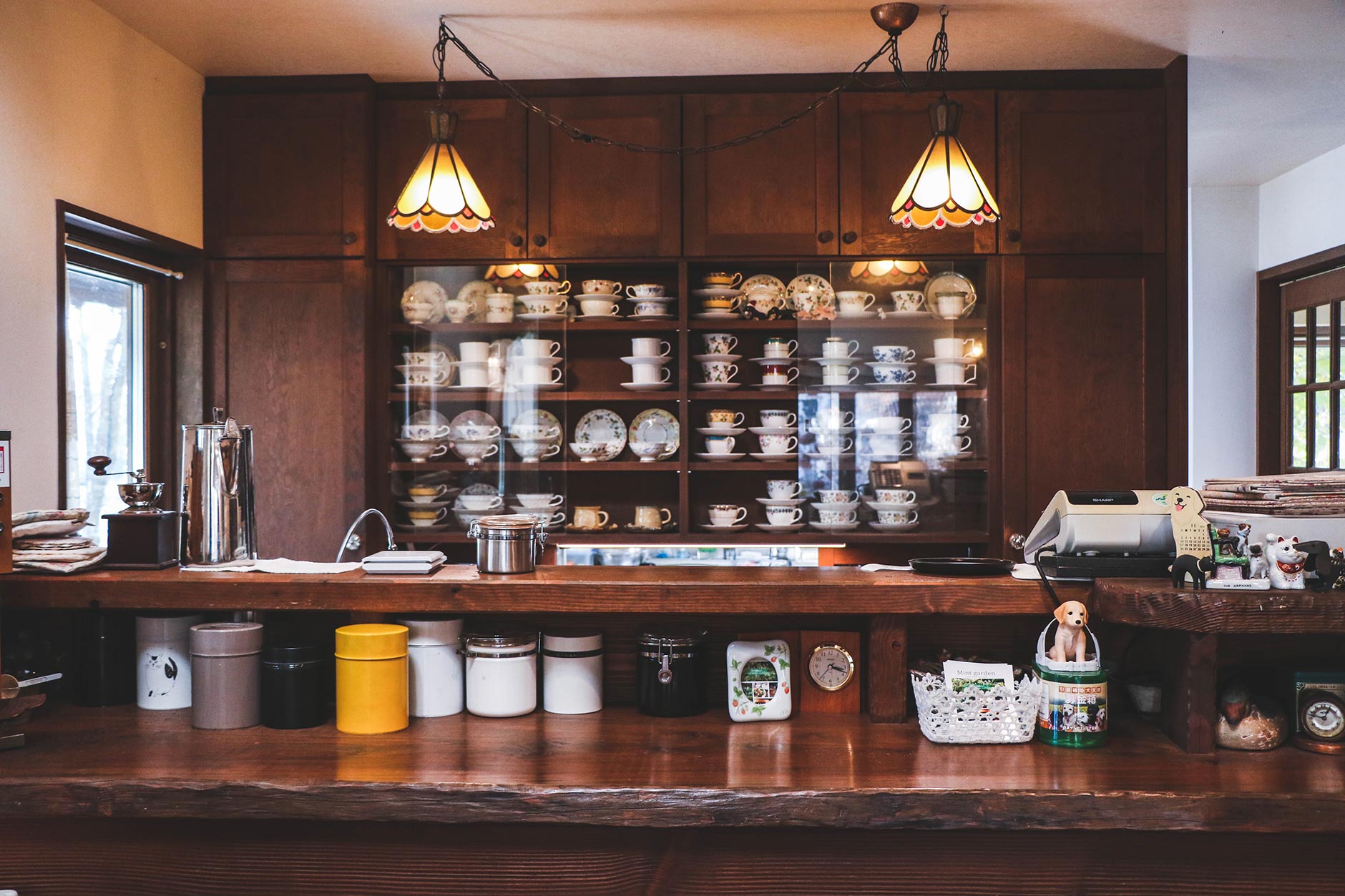
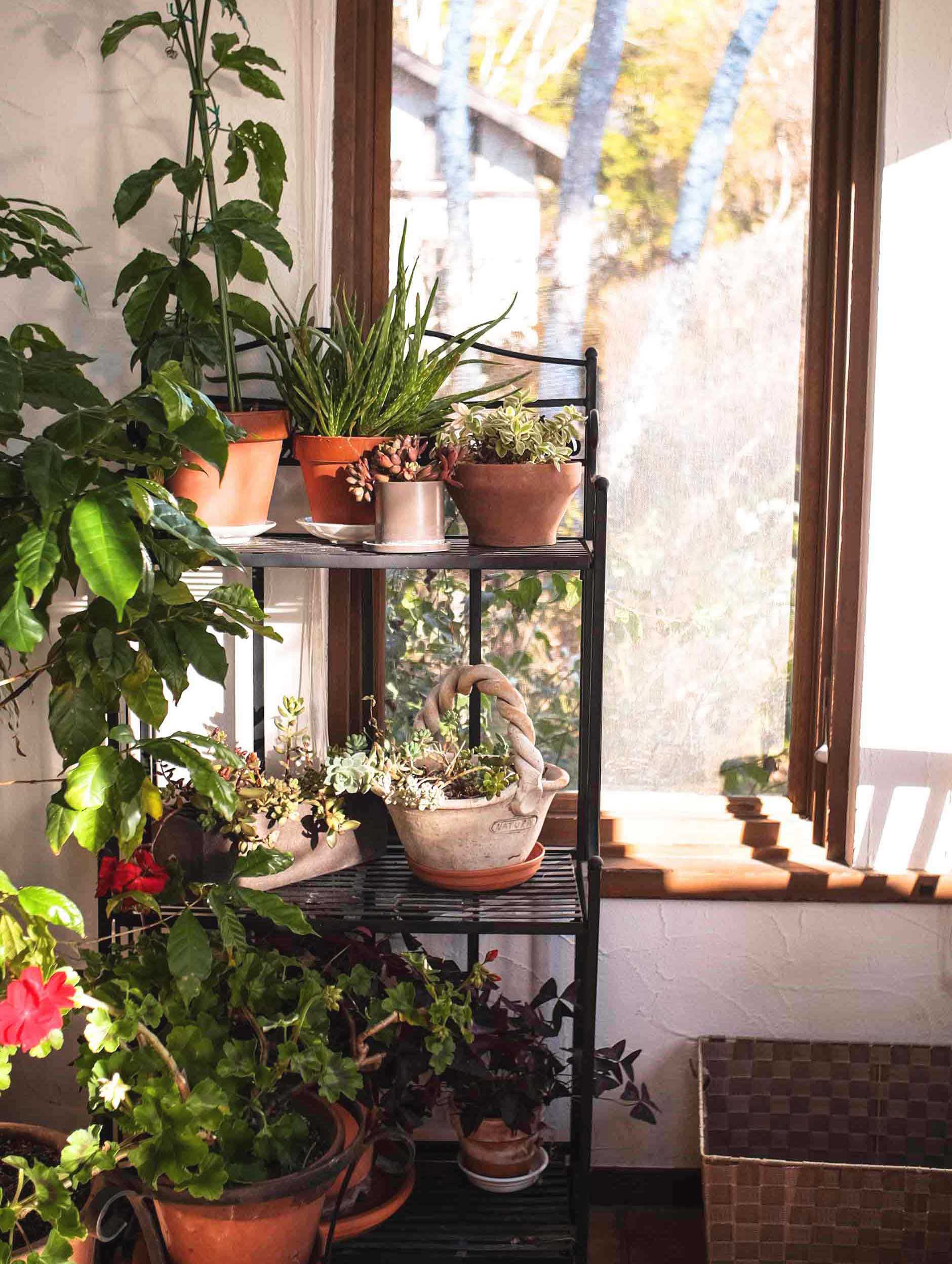
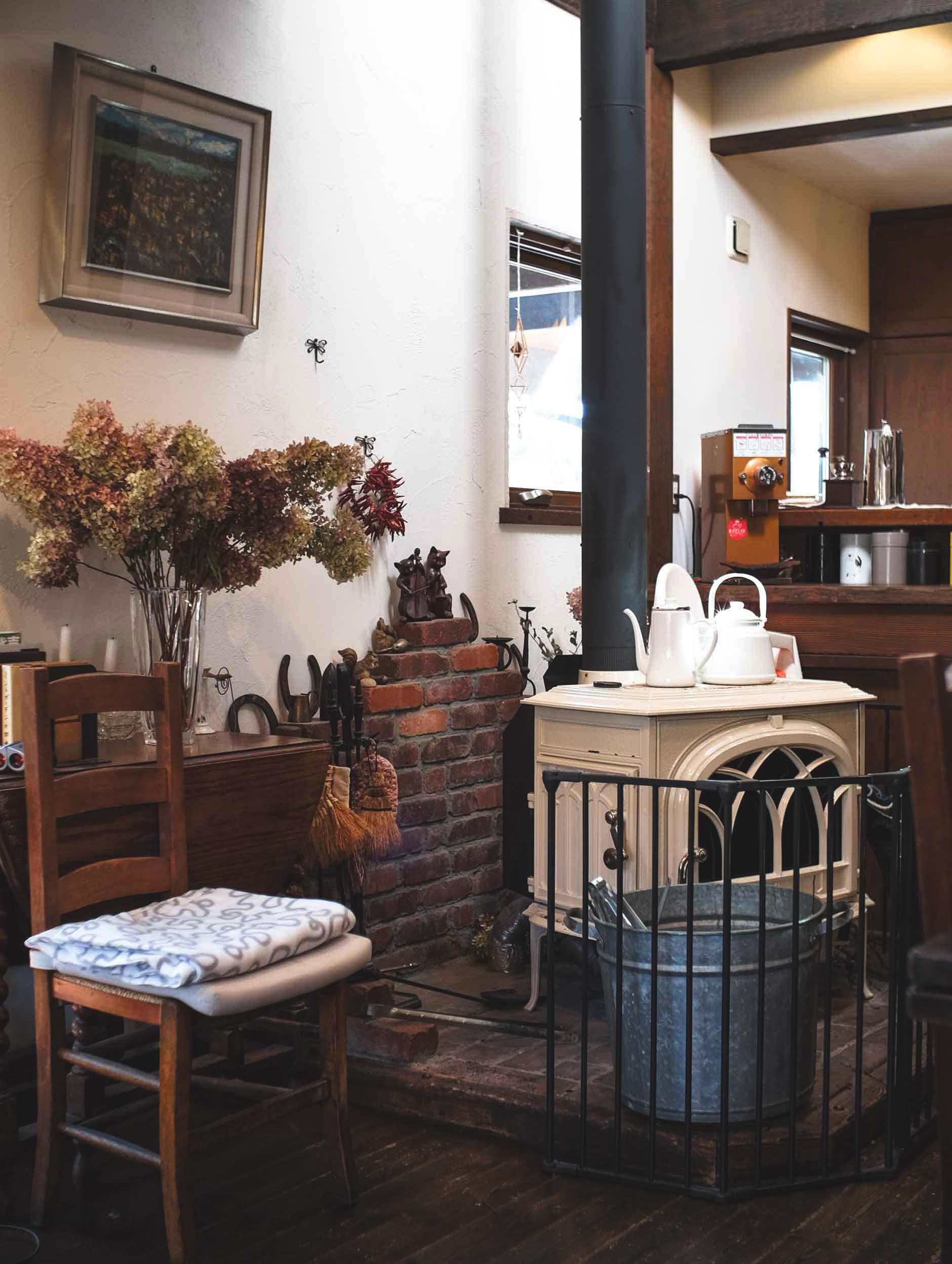
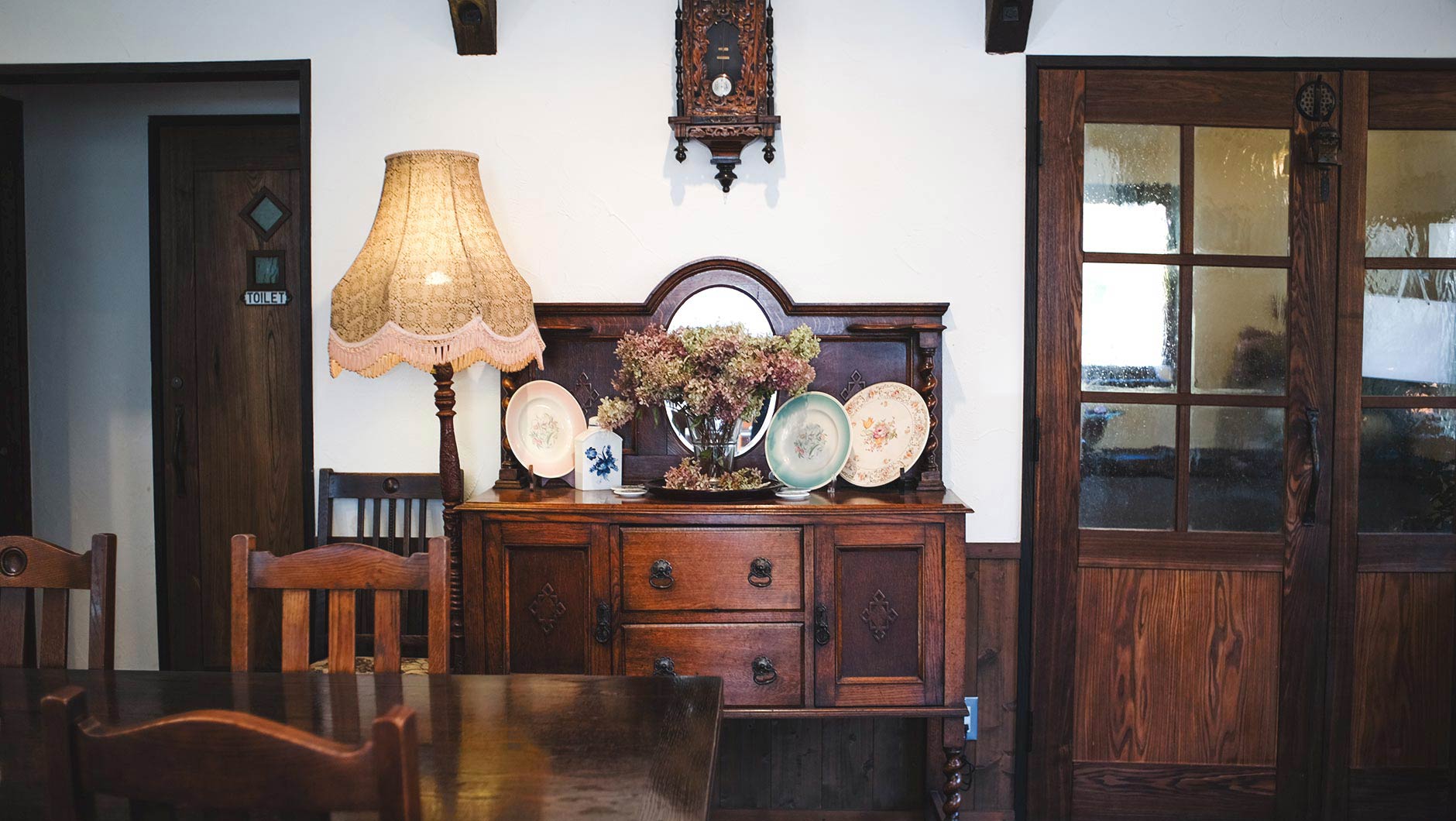
The owners run the cafe out of their European style wooden house by themselves and it has all the vintage details you would expect of a chic traditional German farmhouse. Once you step inside, you’ll instantly feel at home. The wooden antique furniture with exposed ceiling beams radiated those cozy hygge vibes while, the old stove heater kept the room at a toasty warm temperature. There’s also a small handmade trinket shop next to the register.
Even better, the cafe is also dog friendly and the owners have three dogs themselves
who you can see behind the register bar. Their older black Labrador is a big old sweetie who gets around slowly and will melt your heart!
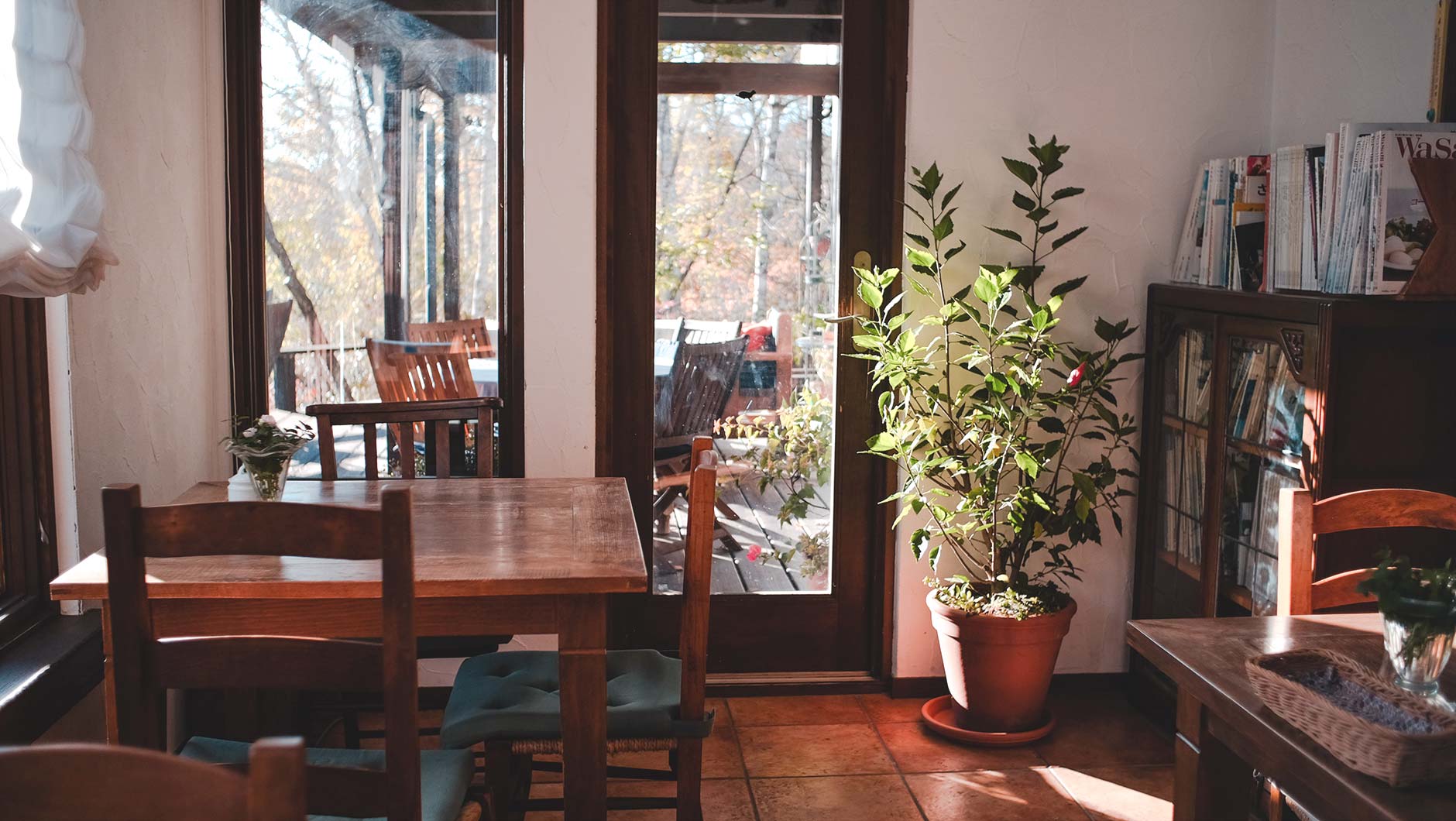
If you get the opportunity, sitting in the sun room area has to be one of the cafe’s best features. It’s charming high ceiling and skylight let’s in those warm afternoon rays that makes you feel at peace. You’ll also have views of the garden or wonder outside on the terrace. I could already imagine my inner granny enjoying a cup of tea in the sun room or sitting on the porch while listening to the birds sing and watching my rose garden grow. Wherever you choose to sit, you’ll definitely forget about the rat race of modern life being surrounded by all this rich nature!
FOOD
s you might have noticed with our various recounts of aesthetically pleasing cafes in Korea and Japan, cafe-hopping while traveling is our thing!
Dare I say, we have become experts at trying to find cafes that offer something attractive while making it worth the trip. At the Mint Garden, their main draw is their hearty salad dishes that look like they are overflowing with green goodness. They refrain from using pesticides as much as possible and use mainly organic and local ingredients so customers can eat with peace of mind.
For the weary traveler who also enjoys tea time, the Mint Garden is also a lovely stop-over for afternoon tea which is when we visited. Considering we had been eating every meal at a convenience store thus far, the thought of a freshly prepared meal was greatly welcomed with open arms.
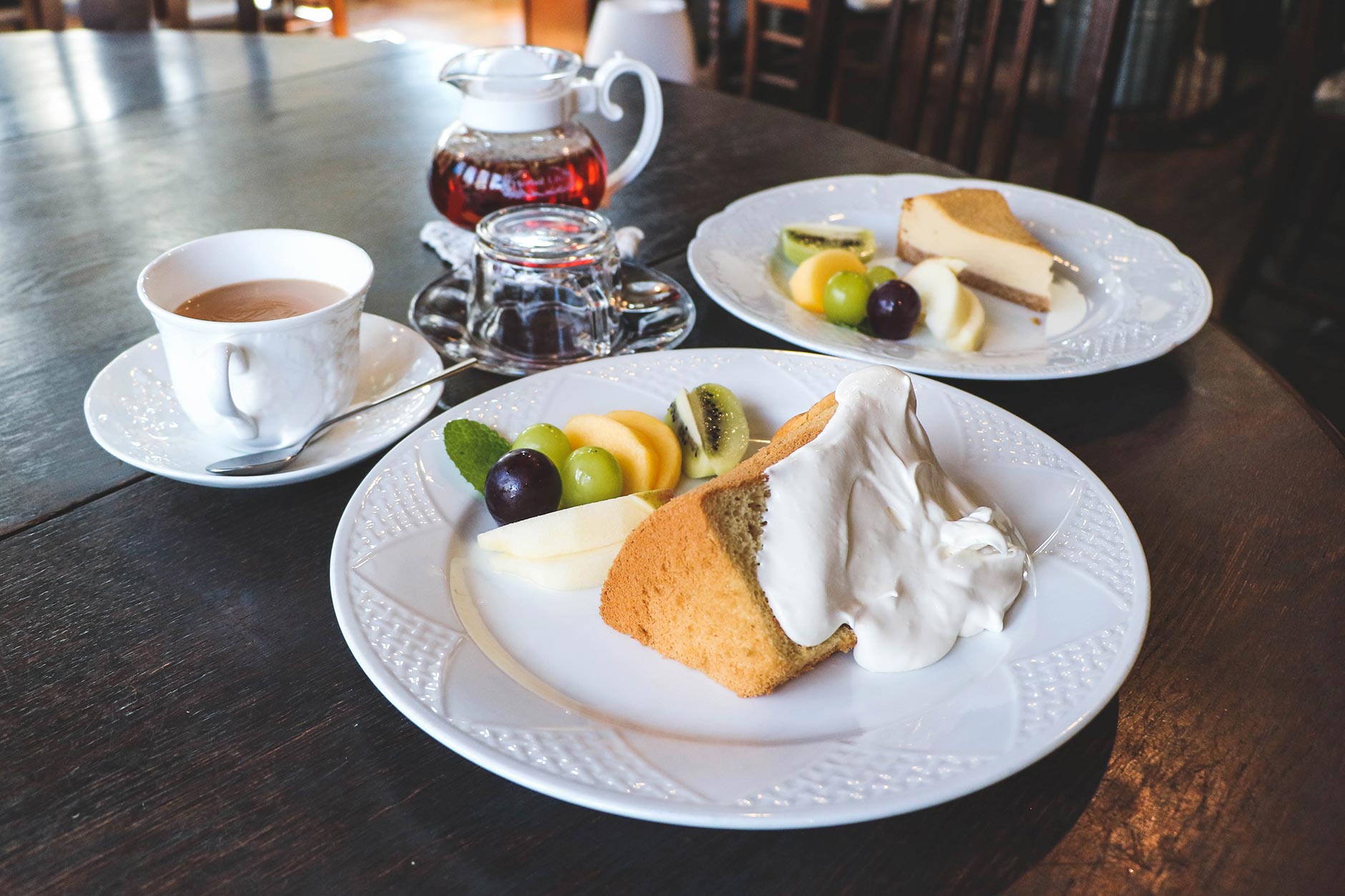
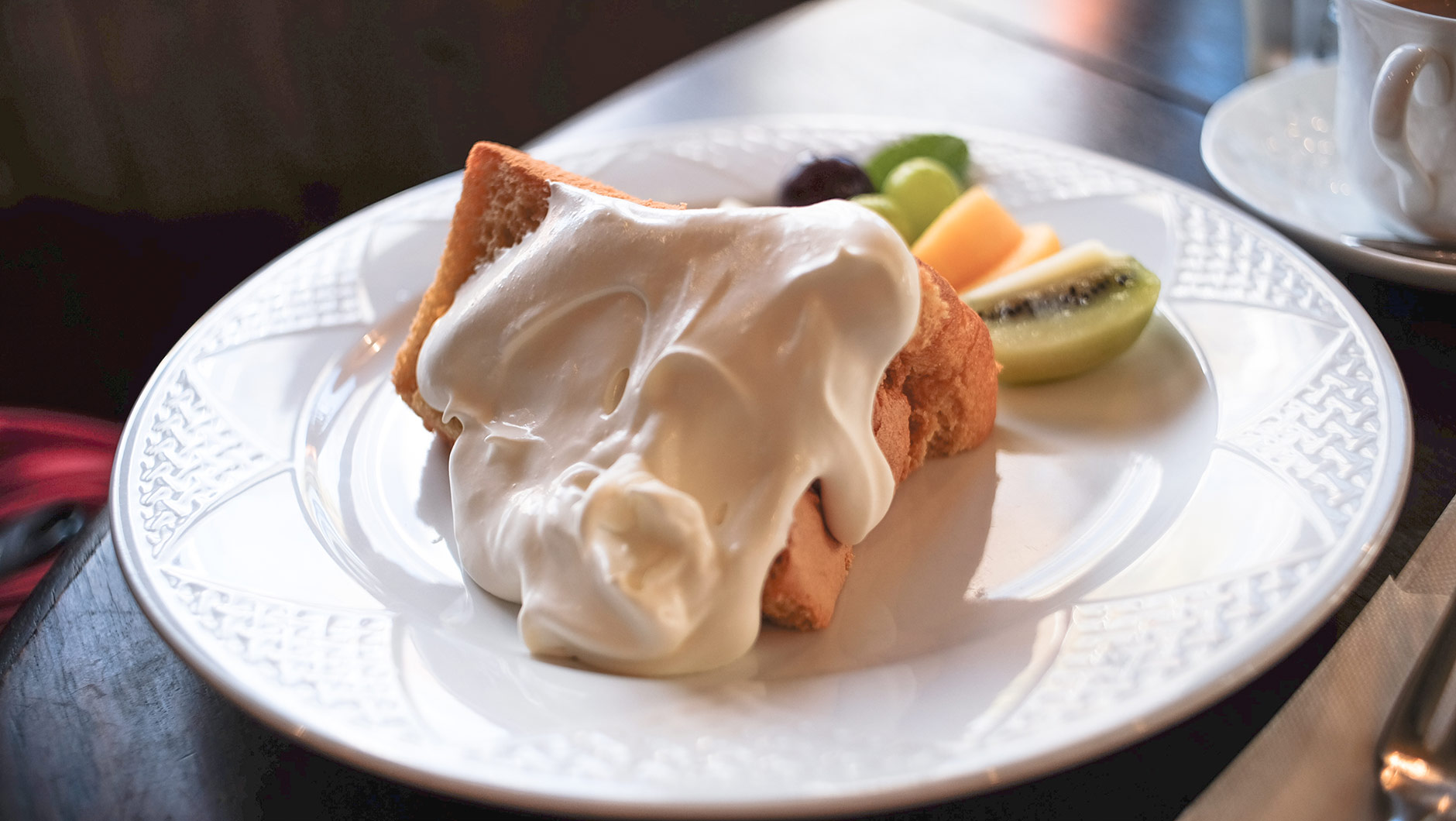
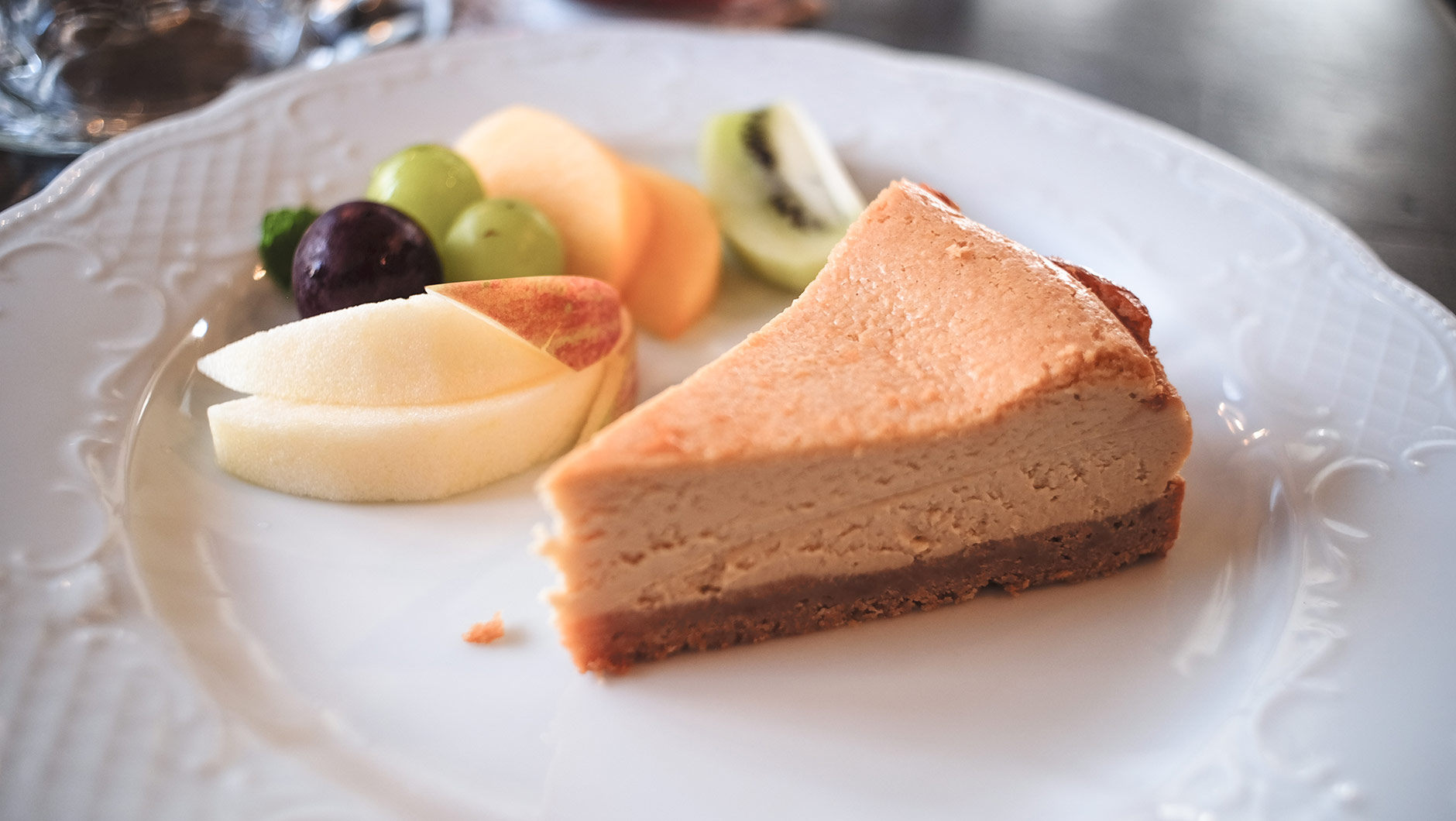
The homemade cakes were all deliciously served with a side of seasonal fresh fruits
and we were lucky to come when Japanese grapes were in season. If you have never tried Muscat or Kyohei grapes in Japan you’ll be surprised how super plump and juicy they are!
For our cakes we decided on the baked cheesecake and the chiffon cake. At first, I thought the cheesecake looked a bit petite on the plate but it was very rich and dense so it turned out to be enough to satisfy my greedy eyes. Of the two, we both agreed the winner was the classic chiffon cake. It was so light and fluffy and tasted even better with the generous dollop of hand whipped cream.
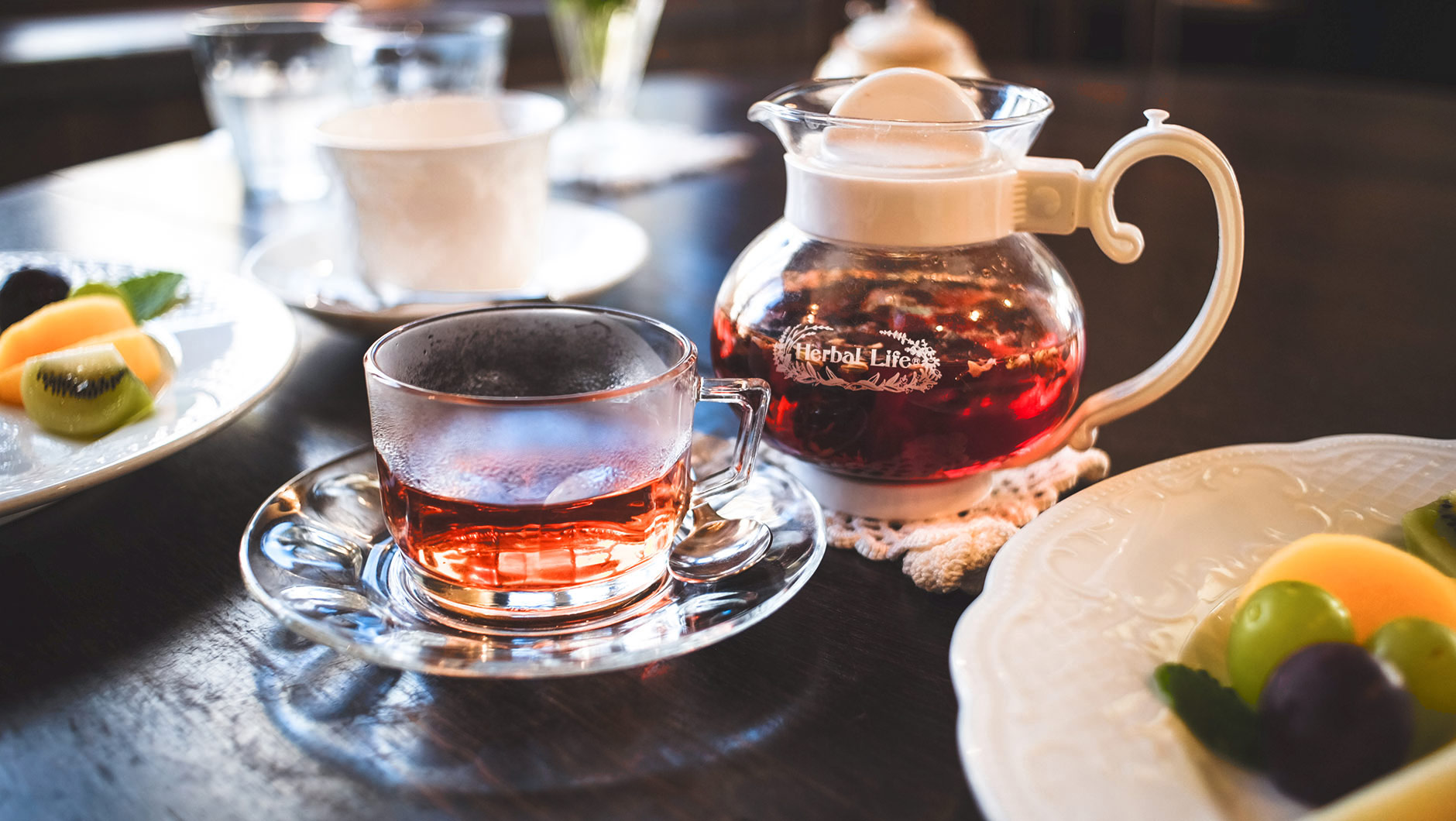
To wash it all down, we chose to share the flowery herb tea called “hanakokoro” which was surprisingly very smooth and an interesting blend of lavender, rose and anise seed. Although I don’t usually like herbal blends, I really enjoyed the flavour of this tea a lot! Not too flowery and very different from any commercial tea blends I have tried before. We also ordered a chai tea as our other set drink.
eeping in mind that this is run and owned by a husband and wife team, it’s best not to rush your time here.
As we beat the lunch time rush, our service at afternoon tea time was pleasant and prompt with a homey hospitality. The staff are friendly and enjoy chatting with their customers but unfortunately can speak only Japanese and some broken English.
Considering this, travellers might find it difficult to order and communicate since the menu is all in Japanese.
Though it isn’t listed anywhere, the last order for lunch time is at 3PM (unless sold out for the day) while tea and cakes are still available to order before closing time at 5PM.
Value For Money
aybe it’s due to the area but considering everything at the Mint Garden is homemade and uses organic ingredients, the prices are incredibly reasonable.
I noticed that the lunch set was only 1150 yen which included curry, naan bread, vegetable salad, drink and fruit dessert – a great bang-for-your-buck! You can also order a lunch cake (450 yen) or creme brulee (350 yen) if you are in the mood for more dessert.
If you are coming by for tea time only, the cakes were not too bad at 500 yen each but you should definitely order the cake set which also includes a drink of your choice to make tea time come under 1000 yen.
Overall, the Mint Garden is an affordable dining spot to savour the wholesomeness of homemade healthy food before continuing the long drive ahead.
Run by two travel and lifestyle bloggers, The Hidden Thimble focus’ on creating truthful and in-depth travel guides, food & beauty reviews. Enjoy drool-worthy photography from around the world!