You’ve heard of wagyu, the marble textured wonder beef from Japan praised for its buttery soft texture that melts in your mouth, but what about hida beef?
Hailing only from the Gifu prefecture, this prime breed of cattle is super tender with mesh-like marbling that gives hida beef its juiciness. Many also say that the sparkling clean spring water of Gifu also gives hida beef its distinct flavour.
For food lovers wanting a taste of real hida, many head to Gifu prefecture’s Takayama – the home of hida beef. However, don’t just choose any steakhouse in Takayama to try this delicacy. To appreciate this fine cut of steak, what better place to dine than at the place many heil is the best hida beef restaurant in town – Hidatakayama Kyoya.
SETTING AND ATMOSPHERE
he Hidatakayama Kyoya restaurant is a restored Japanese country house located within the historical Old Town district of Takayama. As a real treat, diners can enjoy eating within the walls of a traditional mid-19th century home with exposed ceiling beams, tatami flooring, and wooden lattice partitions. What a way to create an inviting nostalgic ambiance!
The house is described as being from Echigo, an old northern province before its neighbouring prefectures and districts merged to form modern-day Niigata Prefecture in 1876. The house was specifically relocated to its new home in
Takayama and diners can enjoy the experience of being seated around a traditional irori (Japanese hearth). As you look around, the interior is fitted with old trinkets and traditional folk art pieces adding to the character of the place.
Seeing the busy staff shuffle past with platters of beef while we sat among the antique furnishing and smokey air made us feel right at home. For a truly memorable dining experience, we highly recommend sitting on the tatami flooring for the best seat in the house and to fully enjoy the pleasure of grilling your meat the old fashioned way.
fter reading multiple food reviews of people highly praising Hidatakayama Kyoya’s hida beef dishes we are glad to say, we understand what all the fuss is about!
At Takayama, the region’s food specialty is houba miso – hida beef with miso, green onions, and shiitake mushrooms grilled on a magnolia leaf (houba).
As the dish slowly cooks on your own personal grill, the scent of the miso and magnolia leaf creates a mouthwatering smell as you wait for your beef to be ready. The hida beef was incredibly tender and had a tasty steak flavour that perfectly
matched the saltiness of the miso. The set meal also included a small side dish of tofu, potatoes, and simmered mountain vegetables which were seasoned lightly. It was a great palate refresher creating a nice delicate flavour paired in contrast with the meat’s rich taste.
Did someone say “slip a shrimp on the barbie”? As the true Australians we are, Talyssa and I decided to upgrade our meal by ordering a side of prawns to grill and they were a delicious accompaniment to our barbeque meal. Sweet and meaty, it was a shame we didn’t have two stomachs to order another plate!
Our Hida beef on houba miso
Side dish of tofu, potatoes, and simmered mountain vegetables
Hida Beef on Houba Miso Set Meal (¥2000)
Prawns (¥1400)
Service
he overall service at Hidatakayama Kyoya was very prompt, efficient, and timely especially considering how busy the place was.
When we did our research, visitors seemed very impressed by the modest down-to-earth hospitality and their interactions with the “okami-san.”
An okami-san is the name given to a female manager or owner of a traditional Japanese style establishment like a ryokan who is at the center of guest relations. At Hidatakayama Kyoya, their role is to greet guests, explain and demonstrate how to cook certain dishes, ask how the patrons enjoyed their meals and go the extra mile to provide information about Takayama’s must-see tourist spots for visitors.
Unfortunately, we noticed that the general staff who served us weren’t as “homey” in their reception and hospitality on the night we visited and it’s a shame that we didn’t get to experience a true “okami-style” service for ourselves.
Keep in mind, this restaurant closes super early! We arrived at around 8pm and the last order for food was at 8:30pm with closing time at 9pm, so that could be why the staff rushed us to be seated and to order.
If you want to have a more relaxed time, it would be best to arrive during lunch or at an earlier dinner time.
Value for Money
s Hidatakayama Kyoya serves premium quality hida beef, the prices for the meat dishes are generally on the pricier side however still on par with prices found at other yakiniku restaurants. You can still enjoy a hida beef meal affordably by ordering the “Hida Beef on Houba
Miso Set Meal” at 2000 yen, which is the restaurant’s most popular menu item.
Considering the quality of the food and the unique dining experience offered at Hidatakayama Kyoya, splurging on a meal here is definitely worth it.
hile the Gifu Prefecture is home to well known cities such as Shirakawago and Takayama, another lesser known but arguably as beautiful city is Nakatsugawa; home to the scenic natural beauty of waterfalls, gorges, colourful momiji, historic culture, striking traditional villages, hiking trails (including the famous Nakasendo trail) and copious camping grounds.
Tucked away inside Nakatsugawa city is Yumori Park, known as an outdoor lover’s paradise. A peaceful getaway from the hustle and bustle of the city life, visiting Yumori Park in autumn is strikingly beautiful. The surrounding natural landscape is a sea of changing leaves, a mix of dark green pine trees with orange and gold ginko trees interwoven with the bright red gradients of the Japanese Momiji.
Visiting in autumn tourists and locals alike can experience the Yumori Momiji Festival, which brings together in celebration local crafts, food, produce, music and more.
Home to the legend of the white dragon and 5 impressive waterfalls, let’s explore all there is to know about Yumori Park.
What To See
Ryujin no Taki Waterfall
hile Yumori Nature Park boasts 5 waterfalls within it’s parklands, the Ryujin no Taki Waterfall is by far the most famous and the highlight of the park.
One of 50 famous waterfalls in the Gifu prefecture, the Ryujin no Taki Waterfall is known for its clear blue water that changes colours as the sunlight shifts throughout the day. It’s quite normal to see the waters change from crystal clear aqua, to turquoise to a deep emerald blue.
Carving it’s way through a mountain gorge, the pristine waters cascade rhythmically down the mountain. The waterfall itself can be viewed from numerous viewpoints along a wooden walkway that guides you through the pristine natural landscape of the gorge. Make sure you bring your camera – there are stunning photo opportunities along the way.
The place is just as beautiful as the photos online, and while the waterfall can be a little tricky to find at first, the most obvious walkway entrance can be found just beyond Yumori Shrine.
Not only are the falls beautiful, they are also home to local folklore. The waterfall itself is named after Ryujn, the god of the dragons and ruler of the seas.
Typically residing in a palace at the bottom of the ocean, Ryujin is known to control the tides with magical jewels and can take human form to visit the surface. According to the legends of the area, Ryujin appeared before local villagers at the Ryujin no Taki waterfall before rising up to the heavens. As Ryujin rose up to the heavens, he collided with the nearby mountains which caused him to lose many of his scales. As Ryujin’s scales fell from the heavens, they collided with the mountains and became the waterfall.
The clear – blue, mountain water of Ryujin no Taki Falls
Yumori Shrine
s you make your way along and up the path from the Ryujin falls, you’ll reach Yumori Shrine, built for worship of the dragon god, Ryujin. A cosy wooden shrine that overlooks the Ryujin falls, worshippers are invited to offer ema – wooden tablets – to pray for success or have their wishes granted.
The shrine was built for a very specific reason. As the legend goes, the nearby village was prone to flooding as the Kawaue river would frequently overflow its banks.
One of the times this occurred, the villagers found a rock inscribed with writing among the rice paddies.
Seeing the rock, the leader of the village believed it was the Dragon God and ordered for it to be enshrined at the waterfall as soon as possible. After a burglar took the rock from the mountains and threw it into the waterfall, the great white dragon appeared and rose to the heavens, causing a great storm that left the village in ruins. In order to pacify the dragon, the villagers built Yumori shrine to worship it.
Spot the Local Wildlife & Enjoy the Scenic Flora.
onsidered an outdoor lovers paradise, what most surprised us about Yumori Park and the Gifu prefecture in general, was the sheer amount of local wildlife.
In the Gifu Prefecture, you can try your luck at catching a glimpse of Japanese monkeys, serrows, rabbits and martens among the picturesque autumn flora.
Known for its rich natural environments, Gifu is often referred to as the prefecture of ‘Hizan Nosui’ as it is gifted with the Hida mountains and pure spring waters from the Southern Alps. Because of the prefecture’s diverse landscapes and climate, it is home to a variety of native animals and plants.
During our time at Yumori Park we were able to spot a Japanese Serrow leisurely bathing in the cool mountain water. So Cute!
A Japanese Serrow came out to say hello!
Scenic autumn foliage.
Momiji Bridge
urrounded by over 15,000 beautiful momiji trees, the quaint red arches of Yumori Park’s momiji bridge make for a picturesque photo opportunity in the heart of autumn.
Crossing the bridge, you can enjoy the autumn surroundings and relax among the soothing sounds of the clear blue natural spring water running underneath.
Things To Do
Go Fishing For Trout
From April to early November, the Yumori International Fishing area located within Yumori Park, allows tourists to wade ankle deep in the pristine mountain streams and try their hand at trout fishing!
Originating from the Central and Southern Alps, these waters are abundant with rainbow trout, eels and sometimes, you may even be able to catch ‘amago’ – a type of Japanese trout with red spots.
Yumori Park offers a wide range of fishing options, with the most unique experience being mountain stream fishing – that is, fishing among the flowing waters of the Kawaue River. For those that prefer not to get wet, there are numerous fishing ponds, where rods can be rented and fish can be caught all the while keeping you nice and dry. Fish can either be caught by hand or you can hire a fishing rod.
For those hiring a cabin in the Yumori Campgrounds, you are allowed to fish in the river waters near your campground, which are not accessible to the general public.
Fish can be grilled on nearby public BBQs or enjoy local trout dishes served at restaurants nearby. Some even allow you to grill the fish you have just caught.
he beauty of Yumori Park is especially prominent during autumn, where the changing leaves are on full display all around the park.
Every year during this time the Yumori Momiji Matsuri is held, where locals and tourists alike can sample fresh Nakatsugawa produce, local delicacies, crafty workshops, live music and more!
Autumn Craft Workshops
Yumori Momiji Festival offers a variety of workshops where you can make cute autumn themed crafts. At Viento Cafe in particular, for 500 yen you can make autumn crafts using wooden materials, forest decorations as well as Japanese ‘sampuru’ (fake food) of Japanese sweets in autumn themed imagery.
Collect all three stamps found in various locations around Yumori Park to win a prize/souvenir. Held from 10am to 4pm during the Yumori Momiji Matsuri.
Local schools decorated the park with artwork for the Momji Festival.
Things To eat
Gohei Mochi:
he Gifu region is probably one of the best places to try authentic Gohei Mochi. What is Gohei Mochi? Gohei Mochi is a very old and traditional Japanese snack, local to the Gifu prefecture. It was high calorie and rich, consisting of a pounded lump of white rice, skewered on a stick, dipped in a sweet walnut miso paste and grilled over an open fire.
While the exact history of the first Gohei Mochi is a little hazy, Gohei mochi is thought to have first appeared during the mid-Edo era.
As the gifu region and surrounding areas are mountainous, gohei mochi’s sweet sauce consists of ingredients found in the mountains, such as walnuts. Sometimes, hornet larvae was used to achieve a richer taste and add extra nutrients – BUT you don’t have to worry about your gohei mochi featuring that these days. Other ingredients like sugar, which are tougher to find in the mountainous regions of Gifu, were thought to have been accessible due to the important and famous Nakasendo trade route that passed through the Gifu Prefecture and connected Tokyo to Edo.
fter an afternoon of catching trout in Yumori Park’s International Fishing Area, you can enjoy your freshly caught fish for dinner!
Many local restaurants in the park offer fascilities where you can grill and enjoy your freshly caught fish with other local Japanese dishes.
If it’s just the trout you want to enjoy, you can grill your fish on one of the many BBQs by the river.
While we didn’t get the opportunity to enjoy fishing, one of the food stalls we passed was selling freshly grilled Yumori trout. Although only seasoned with salt, this was one of the most tastiest fish we ate during our trip!
How to Get to Yumori Park
By Car
As always, the easiest and most efficient way to get to Yumori Park is by car. Just a half hour drive from Nakatsugawa, the drive is both easy and scenic.
By Train
Getting to Yumori Park from Nakatsugawa Station is relatively simple. Catch the Chuo Train Line to Sakashita Station.
By Local Bus
From Sakashita Station, catch the Yumori Line bus and hop off at Yumorikoenguchi. It’s only a short 10 minute walk to the park entrance.
alk the path of wandering traders, warlords, samurai, and geisha and journey between the old capitals of Ancient Japan.
Although much of the ancient roads that connect the old capital of Kyoto to the new capital of Edo (modern-day Tokyo) have been buried or long forgotten to the winds of time, there are parts of these ancient routes still untouched for the modern traveler of today.
Magome Juku in the Kiso Valley area of Gifu Prefecture is a well-preserved little town and arguably the most scenic. It is the forty-third post town of sixty-nine towns used by weary travelers to rest, find entertainment, and gather supplies while making the long journey through the Nakasendo trail. To this day, these historic post towns still evoke memories of the Edo period.
Sounds like a fascinating place to get a taste of old Japan, right?
Take a look back at this interesting time in Japan’s feudal history as we share the local gems this rural village has to offer.
WHAT TO SEE
s a point of interest, there are many tourist spots in Magome Juku that are dedicated or related to the famous author, Shimazaki Toson, including the Shimizu-ya Museum, the Eishoji Temple and the Toson Memorial Museum.
Born in 1872, the town is in fact, the birthplace of the late novelist who wrote about the effects of the Meiji Restoration in the Kiso Valley in his famous novel, “Before the Dawn.” With Magome Juku still being relatively off-the-grid, English signage around the town is minimal. As a result, its historical significance is not the sole reason people come here from far and wide.
For many, and certainly for us, it was the views of the beautiful old fashioned
waterwheels and idyllic wooden architecture signature to Magome Juku, that enticed us to experience the old-world atmosphere of this charming picturesque town for ourselves.
Although many original structures were destroyed by fires in Magome Juku, the traditional lattice-facade houses that surround both sides of the main pathway were restored in the 1970s when the city officially closed the path to traffic. Thay also removed visible signs of modern times such as electricity lines to retain the nostalgic feeling of pre-modern Japan. Most of the houses are now converted into modern eateries, lodging inns, or souvenir shops for visitors, however they still create a good impression of the hustle and bustle of life centuries past. With the surrounding nature changing seasonally, plenty of photo opportunities are abound!
Shimizu-ya Museum
Masugata Waterwheel
ight as you make your way up the pathway towards the main part of town, you’ll be greeted by the first signature sight of Magome Juku called the “Masugata Waterwheel.”
What makes this waterwheel important?
First of all, a masugata is a defensive wall structure carved into the landscape consisting of a double, right-angle turn. It acts as a stone fence-like paling to give
defenders an advantage from incoming intruders and was a common feature of castle towns and post towns along the Nakasendo trail. Today, the masugata leaves a striking impression as you view the giant waterwheel from the front.
The giant waterwheel has become an iconic symbol of the town and was originally an old rice flour mill but today produces hydro-electricity for the town. There are a number of miniature waterwheels that decorate the townscape to discover as well.
The waterwheel on the left and the masugata on the right
Inside the waiting room near the Matsugata Waterwheel
You can get a special Magome Juku stamp at the Magome Tourist Information Center
Magome Waki-honjin Museum
“waki-honjin” is a style of inn during the Edo period reserved for government officials, noble families, and high standing samurais. Today, these inns are preserved as open museums displaying large collections of historical artifacts from 200-year-old documents to Edo period garments designed for Emperor Meiji himself when he ventured along the historic trail in its prime.
The Magome Waki-honjin Museum has a nice display of Edo Period documents, clothes, paintings, and furniture where you can learn about the history and culture of the time. It also gives a good impression of how different life was for a high-
ranking official compared to the common man.
If you have time to spare and plan to head towards the next post town Tsumago Juku, we recommend checking out their waki-honjin museum too.
Compared to the Magome Waki-Honjin Museum, the Wakihonjin Okuya in Tsumago is definitely the most aesthetically impressive of the two, due to the magical way the afternoon light spills through the shutters above the living area’s irori (Japanese hearth). If you want to capture the best lighting for photos, it is best to visit between September and March on sunny days.
s you make your way further up the hill you will find a replica of the “kosatsuba” notice board that outlines the law for visitors during the ruling “Tokugawa Shogunate” feudal system of the time. Among the interesting rules posted were prohibitions against Christianity, rewards for incarcerating practicing Christians, and a death penalty for persons
caught cutting down any of the area’s cypress trees!
The final stop at the top of the hill is the observatory lookout point where you can get a great panoramic view of the town below and see Mount Ena and the Mino Valley in the distance.
hile walking past the many shops on your way to the top of Magome Juku, you’ll encounter the scent of deliciously roasted chestnuts wafting from the food shop windows. It’s super hard to resist!
In fact, one of the must-try dishes of Magome Juku is made with chestnuts called “Kuri Kowameshi.” It’s roasted chestnuts and glutinous rice cooked and served in a
hot stove.
Another chestnut treat to try is a dessert called “kuri-kinton” which is a specialty of the Gifu Prefecture. It’s a small cookie dough-like sweet that is made from boiled, mashed chestnuts. If you do want to savour these local specialties for yourself it is best to visit during the autumn time when chestnuts are in season.
he 恩多屋 is a small eatery opposite the Shimizu-ya Museum that specializes in serving chestnut fed pork dishes and Kuri Kowameshi set meals.
Inside the cafe has free wifi and charging dock stations at every table for your phone. At the front, they also have traditional street food that you can order to-go.
Soba
eeing as soba is the famous local dish of the nearby Nagano Prefecture and the tradition of eating soba was popularised during the Edo Period, Magome Juku naturally has many soba restaurants where you can feast on the well known Japanese dish.
If you are looking for interesting toppings to go with your soba, try the mountain vegetables (山菜そば) or if you want a challenge try the slightly slimy but delicious grated mountain yam (山かけそば) for a more authentic rustic meal.
hese stuffed dumplings originating from Nagano Prefecture are made with seasonal vegetables, sweet bean, or pickle fillings and grilled so the dough is nice and chewy
upon consuming. The local “kozawana” pickle filled oyaki is a must-try if you enjoy salty-tangy flavours.
WHERE TO EAT OYAKI: 道中おやき
f you want to try all the different flavours of oyaki, head to 道中おやき where they sell both salty and sweet types of oyaki fillings as well as juicy homemade meat buns (nikuman) too.
The top sellers are the “kozawana” pickle, Japanese mugwort (yomogi) with red
bean and pumpkin oyaki kind.
You can order to-go, sit inside the shop and enjoy the tea and pickle service or sit outside on the bench and enjoy the atmosphere of the old town while you enjoy eating.
Mochi and Dango
ne of the most iconic street foods of Japan, mochi and dango are small sticky rice balls eaten as a snack or dessert commonly served at small gatherings over tea.
Although both are smooth in texture, look very similar, and taste very simple, there is a key difference in how they are made. Mochi is made from pounded glutinous rice and served by itself, while dango is made from rice flour served on a stick and coated in a sauce.
Although Magome Juku is in the Gifu Prefecture, their style of mochi follows the style from Nagano. The texture is grainier and the mochi is served as 3 spheres stacked on top one another on a skewer.
A signature local dish of the area and specialty to the region is “Goheimochi” which is served with a walnut miso paste.
hough originally a 100-year-old corridor making business, the interior of 四方木屋 has been transformed into a classic Japanese style cafe where customers can enjoy the traditional taste of Japanese treats while chatting over some tea.
As many shops along the Nakasendo trail served as a casual rest stop for travellers, we felt just like the old wandering traders who would have stopped to rest their tired
feet at a roadside teahouse just like this one.
The cafe does well to keep the Edo-aesthetic inside by offering both modern table seating and traditional floor seating options so people can enjoy casually resting and chatting just like many would have done in the old days. Sitting on the tatami floor filled with cozy antique furniture and wooden cutout lanterns inspired our imaginings of times gone by!
Zenzai with Shiratama Dango
Matcha Cappuccino
Table Seating Area
Tatami Seating Area
WHAT TO DO
SUMMER: Magome Juku Somen Night Festival
ave you heard of nagashi somen before?
An entertaining way to eat this classic summer food, nagashi somen is the fun of catching icy cold flowing somen noodles that run though a hollowed-out bamboo flume before it gets carried away.
During August at night time, Magome Juku sets up an impressive 100-meter long bamboo slide where people can dine and slurp on these refreshing noodles.
xperience a Kabuki show within the traditional setting of old Magome Juku.
Organised by the Ji-Kabuki Preservation Society this special performance includes highlights from popular Kabuki shows. The actors will also
teach you how to participate in traditional Kabuki viewing practices such as Ohineri (throwing tips on the stage) and Omukou (audience call). Participants also get to take a commemorative photo with the Kabuki actors and on certain days, a Kabuki “kumadori” makeup workshop is held where you can transform into a Kabuki actor yourself!
t the end of the Edo period, in the first year of the Bunkyu period, Emperor Takaaki’s younger sister, Kazumiya, from Kyoto’s Imperial Court was married to the Shogunate of Edo-Tokyo, Tokugawa Iemori.
In the autumn of 1945, the Princess traveled along theNakasendo trail from Kyoto to Edo-Tokyo to be wed and the journey was celebrated as the biggest event in the
history of Nakasendo.
Today, many post towns along the Nakasendo recreate Princess Kazumiya’s epic wedding procession with local residents playing the roles of Princess Kazumiya and her entourage.
njoy a romantic walk during the evenings of mid to late November as shop lanterns are set up through the Magome Juku main street. As twilight hits, the lanterns are lit up creating a nostalgic atmosphere.
At the same time, Shimada Park just off from the main area has an illumination show to highlight the season’s autumn leaves at night.
hen the temperature drops in the Kiso Valley, just like a scene from a movie set the Nakasendo trail is lit up with the soft light of “ice candles” connecting the post towns.
As an extra sweet incentive for bearing the freezing cold, the Furusato no Ie inn
(found 80m above the Fujimura Memorial Hall) serves handmade warm pork soup and amazake during the festivities, made by the local ladies. For photo enthusiasts, the Kiso Tourism Federation also runs a photo contest during the festival.
eyond Magome Juku, many seek to complete their Edo style experience with a hike just like the old days and trek towards other post towns along the original old Nakasendo route.
From Magome, the journey to the next post town, Tsumago Juku, is an easy 7.8-kilometer walk passing through a variety of scenic Japanese landscapes from dense bamboo forests to towering cypress tree groves. The journey takes around two to three hours to complete.
Tsumago Juku is considered generally more authentic and traditional feeling than Magome Juku as it was less prone to fires and the townspeople have gone to great lengths to preserve the original building and house structures from the period.
If you wish to continue past Tsumago Juku, the next town, Nagiso, is another 3.2 kilometers and is listed as “One of The Most Beautiful Villages in Japan.” Although Nagiso isn’t as well-known as Magome Juku or Tsumago Juku, it offers onsens and scenic sites such as the Kiso River flowing through the center of the town, Kiso Village’s hidden gem the Kakizore Keikoku Valley and the Tadachi-no-taki waterfall. Nagiso is also the home for a special type of kabuki performance called ‘Tadachi Kabuki’ which has a distinct ancient style different from the popularized central school of Kabuki from Tokyo.
With plenty of English signage, well-maintained paths and various waterfalls, shrines, and waterwheels in the forest to keep you entertained, taking your time wandering the old Nakasendo road makes for a memorable trekking experience.
An important note when following Google Maps to walk the old Nakasendo trail: Google will only give you directions using the main new route rather than the traditional road. However, if you look closely on the map you can see the old path to follow labeled “Old Nakasendo.” Alternatively, you can ask the staff for a Nakasendo walking map at the Magome Tourist Information Center.
WHERE TO STAY
f you are looking for an affordable and stylish stay, we stayed at the Guest House Gaku Magome.
Although this accommodation is dormitory-style, we were pleasantly surprised by how chic the place was. The guest house is part of the Magomefurusato School and offers a unique housing experience with the interior being a mixture of a
typical Japanese school and a modern wooden cabin in the woods.
Every person got their own stylish wooden bedding cubicle which was surprisingly very private and comfortable. With your stay, the guest house also provides free breakfast, and best of all, Magome Juku is just a 7-minute walk away!
Whether you are coming from Tokyo Station or Kyoto Station, the most convenient way to get to Magome Juku is to head to Nagoya city and transfer from there.
Using the train at JR Nagoya Station in Nagoya City, you can either hop on the Shinano Express or take the Rapid train service on the JR Chuo Main Line to JR Nakatsugawa Station.
From Nakatsugawa Station, you will need to take the Magome Line Bus and get off at the stop “Magome” to arrive at Magome Juku. The total travel time to Magome Juku from Nagoya City takes a little over 2 hours in total.
ARRIVING BY BUS ONLY
Alternatively, if you wish to skip the hassle of transferring at multiple stations and take a direct bus, you can take the “Nagoya Line” highway express bus at Meitetsu Bus Center in Nagoya City and go directly to Magome. The total journey will take less than 2 hours but unfortunately, the highway bus website to reserve tickets is mostly in Japanese.
ARRIVING BY CAR
We took a rental car to Magome Juku and found the best parking was near the Magomekan Honkan souvenir store which offers free all-day parking. It is best to arrive early as parking spaces are limited and quickly filled.
n the heart of Chino lies a fairytale forest blanketed by moss – a sheer expanse of vibrant greens, like an untouched pristine scene from one of Miyazaki’s films.
With the sunlight sparkling on the morning dewdrops, everything is still and silent. It’s not hard to imagine a sleeping Totoro waking up among the moss covered tree branches, surrounded by kodoma – Japanese woodland spirits.
In this post, we invite you to open your eyes to a different kind of adventure. The kind that involves miniature worlds, forests and ecosystems you’ve not yet taken the time to notice before. We invite you to observe up close and look, really take the time to look, at all the intricate details we too often pass by. You might just discover how fascinatingly beautiful and complex the world truly is.
Located on the eastern side of the Nagono Prefecture, Chino is still a relatively unknown destination for the majority of tourists, yet is home to one of the most diverse mossy ecosystems in Japan. Best of all, you can still get up close and personal with nature without the excessive crowds.
Discover all that the Chino Moss Forest has to offer:
Kokenomori – Chino Moss Forest
he Chino Moss Forest is one of the best and important mossy ecosystems in Japan. Featuring over 485 different kinds of moss, Chino’s moss forest makes up nearly a quarter of all the species indigenous to Japan.
As you begin your stroll inside the moss forest, you’ll notice the temperature drop instantly. The atmosphere is cool and calming and presents a perfect opportunity to breathe in and enjoy the crisp, fresh air.
The main walking trails are well built and sturdy, with wheelchair friendly pathways constructed with wooden boards. For those looking to explore off the beaten track, small wooden planks venture off into a myriad of directions from the main pathways. Slightly unstable, the wooden planks are a great way for those steady on
their feet to experience the different kinds of moss that lay deeper within the forest.
Visiting on a sunny autumn day, the moss was a little dry and not as green and vibrant as we expected. The moss looks its best just after a shower, so we recommend visiting during periods of rainfall – you’ll see a noticeable difference in the vibrancy of the moss.
In 2008, the moss surrounding Shirakoma Pond was designated as a National Bryophyte Heritage Site by the Bryological Society of Japan. For those wanting to get deeper insight into the different species of moss, the local walking tours are filled with plenty of knowledge.
The map below highlights 10 different locations in the moss forest, where you can experience different species of moss, as well as walking trails and times.
Map Translations: A: Dicranum majus | B: Sphagnum girgensohnii | C: Andreaeaceae: The moss attached to the rocks looks best in the sun’s rays. | D: Pogonatum japonicum: The moss here is within a primeval forest. | E: Bartramiopsis lescurii. | F: Pogonatum contortum: The moss here is within a primeval forest. | G: Dicranum hamulosum and Dicranum viride var. Hakkodense. H: Heterophyllium affine. I: Pseudobryum speciosum. | J: Bazzania yoshinagana.
Wooden planks allow for adventures deeper into the forest.
Entrance from the carpark.
Main walkway inside the moss forest.
The forest floor is overgrown with moss!
Moss covered tree trunks.
Shirakoma Pond
nuggled in the foothills of Mt. Kita-Yatsugatake is Shirakoma Pond, nestled roughly in the centre of Chino Moss Forest. This pond is the largest lake in Japan that can be found above 2,100m and is well known for its surrounding moss forest.
Just a short 15minute walk from the car park, you will arrive at the lake. Walking the circumference of the pond only takes 45minutes and makes for a perfectly scenic and easy going hike. Small eateries for refreshments are dotted along the way.
Shirakoma Pond is known for its crystal clear water – a 5.8 meter degree of water
transparency to be exact. The lake is said to be named after a tragic legend of a young girl who fell into the lake with her white horse and was never found again.
The primeval woods surrounding the lake are hundreds of years old and feature a variety of flora including Japanese hemlock, spruces, Veitch’s silver fir and the appearance of Japanese rowan in autumn.
Calming and tranquil, Shirakoma Pond is the perfect pitt stop during a day spent hiking.
Photography Tips
have to say, having never photographed moss before, it took a while to get the type of shots I was looking for. I’m more of a landscape photographer rather than shooting up close detailed shots, but I absolutely LOVED shooting at the moss forest. Here are my tips to get the most out of your moss photography:
Bring a spray bottle
We visited on a sunny autumn day and as a result the moss was mostly dry. I had it in my head prior to visiting that I wanted to capture beautiful dew kissed moss! Luckily, we read a tip online that suggested bringing a little spray bottle of water to “freshen up the moss” before we took our photos. Dew-kissed moss photos? Great success!
Use a Macro Lens and Low Aperture
For those with DSLR cameras, macro lenses work nicely for some close up detail shots and, with low aperture, bokeh backgrounds.
Join a Tour/Bring Cute Figurines
Some moss forest tours also offer little photography shoots where you can take photos of the moss with miniature anime character set ups, such as Totoro and other woodland spirits. These look super cute and we’re bummed we did not bring our own!
As always, the easiest and most efficient way to get to Chino moss forest is by car. We were staying at Kurumayama Kogen Skypark in Chino, and the drive took 50mins.
Parking is free and there is a public toilet available.
By Train
Trains to the Chino Moss Forest area can be caught from Tokyo and Shinjuku station.
From Tokyo Station catch the Hokuriku Shinkansen to Sakudaira.
From Shinjuku Station, catch the JR Chuo Line to Kabuchizawa Station. From here catch the JR Koumi Line to Yachiho station.
From Sakudaira and Yachiho Station, you can catch the local buses outlined in the next section to Shirakoma Pond.
By Local Bus
Local buses run from Sakudaira and Yachiho Station to Shirakoma Pond. You can use the Yachiho Kogen Local Bus timetable to look up local bus times. On the timetable, 佐久平駅 is “Sakudaira”, 八千穂駅 is “Yachiho Station” and 白駒池入口 is the “Shirakoma Pond Entrance.” There are two buses on weekdays (red) and weekends (green). Read the timetable horizontally to see departure and arrival times.
The price for a local bus to Shirakoma Pond Entrance from Sakudaira Station is ¥1950, and while we can’t seem to find the exact price from Yachiho station, it should be cheaper as it is much closer to the destination.
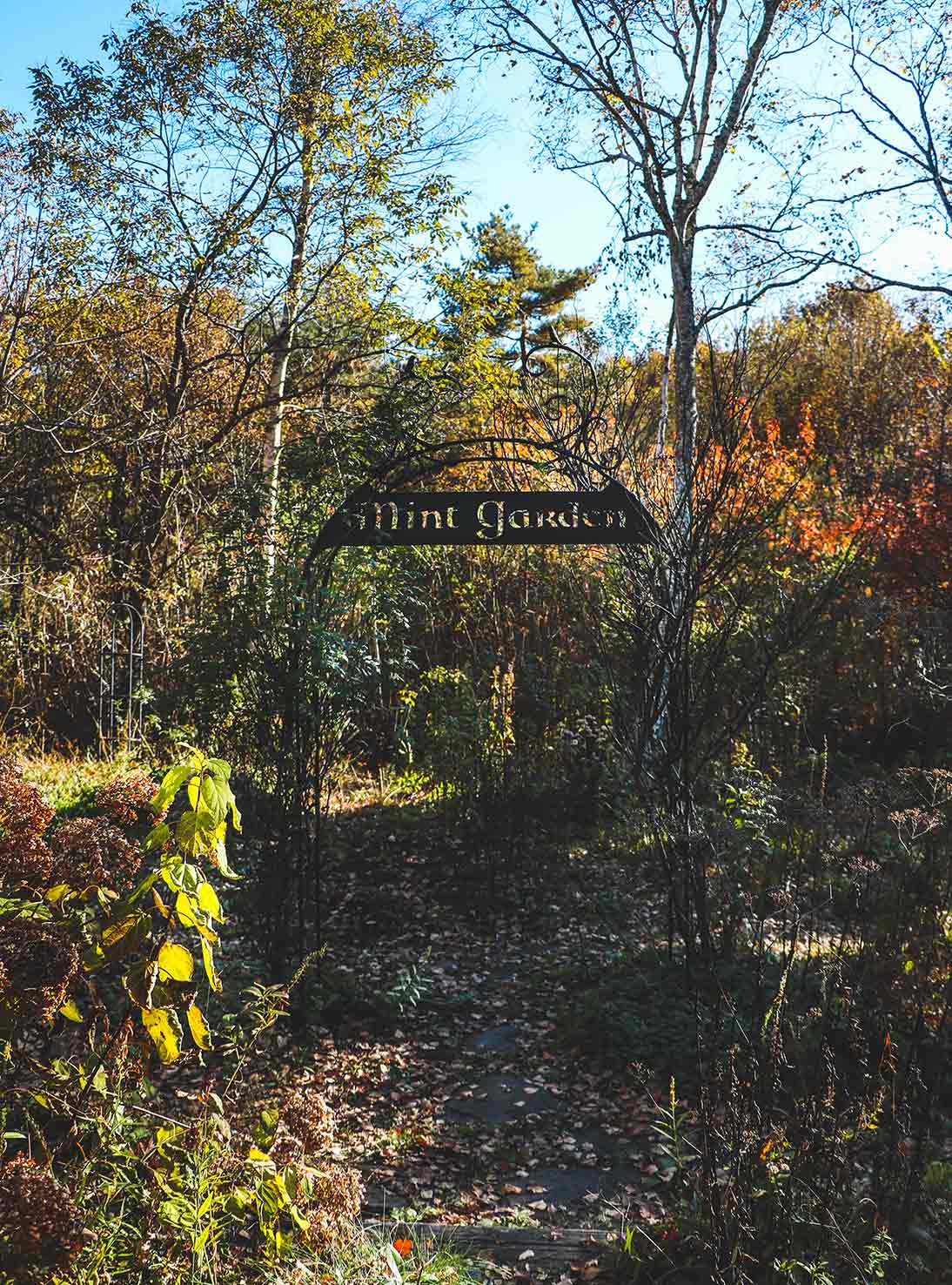
While traveling around Suwa, Nagano, it was a real challenge to find places opened on a Wednesday. While most of the popular eateries we read about on travel sites were closed, we were lucky to strike gold with a small local find called the Mint Garden through good old Google search. With the autumn drive towards the Mint Garden as our last saving grace to satisfy our afternoon tea cravings, here’s what to expect in this idyllic cottage cafe.
Setting & Atmosphere
f you love all the charms that quiet mountain living has to offer, you’ll definitely enjoy the country home aesthetic of Mint Garden.
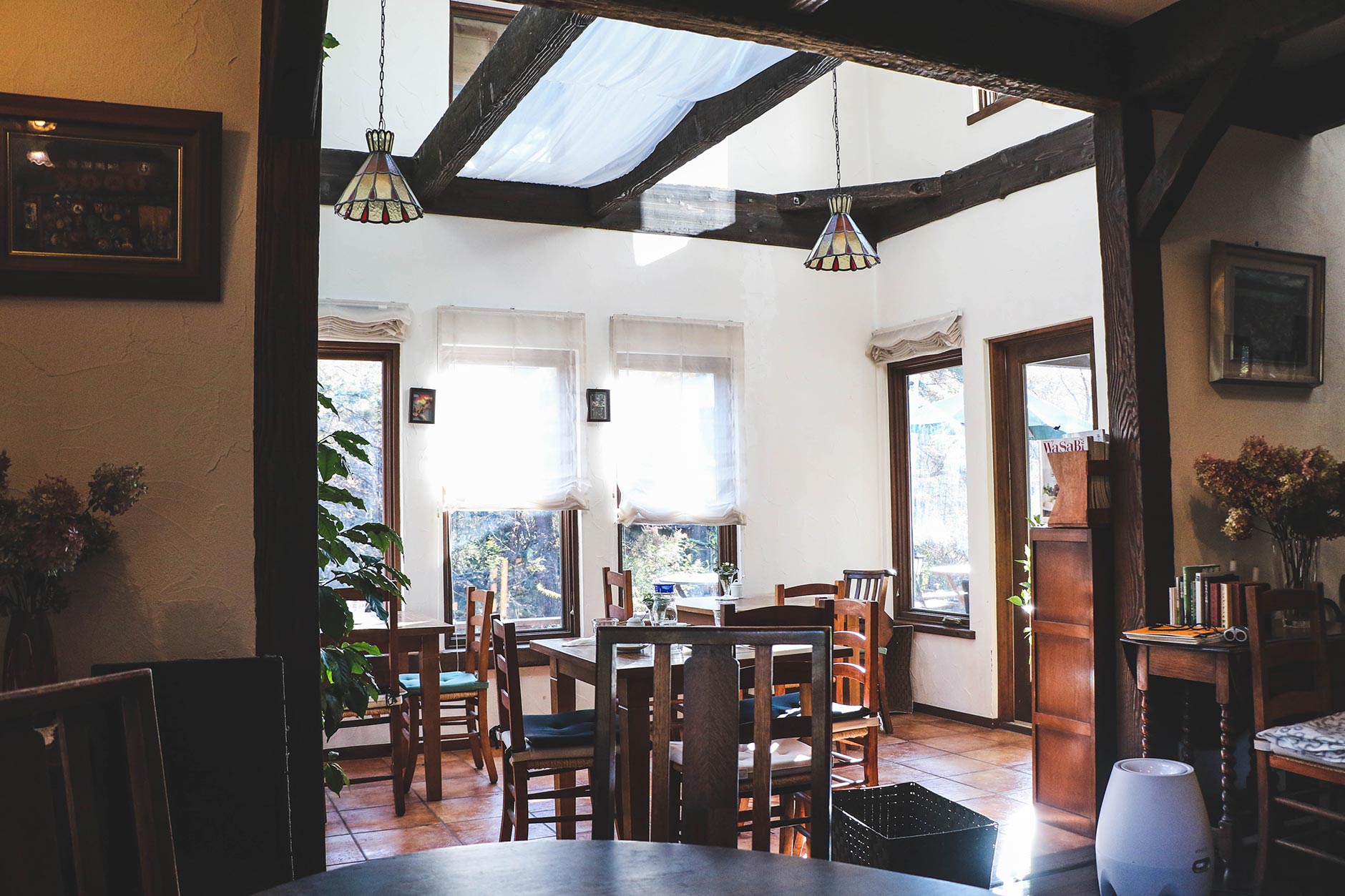
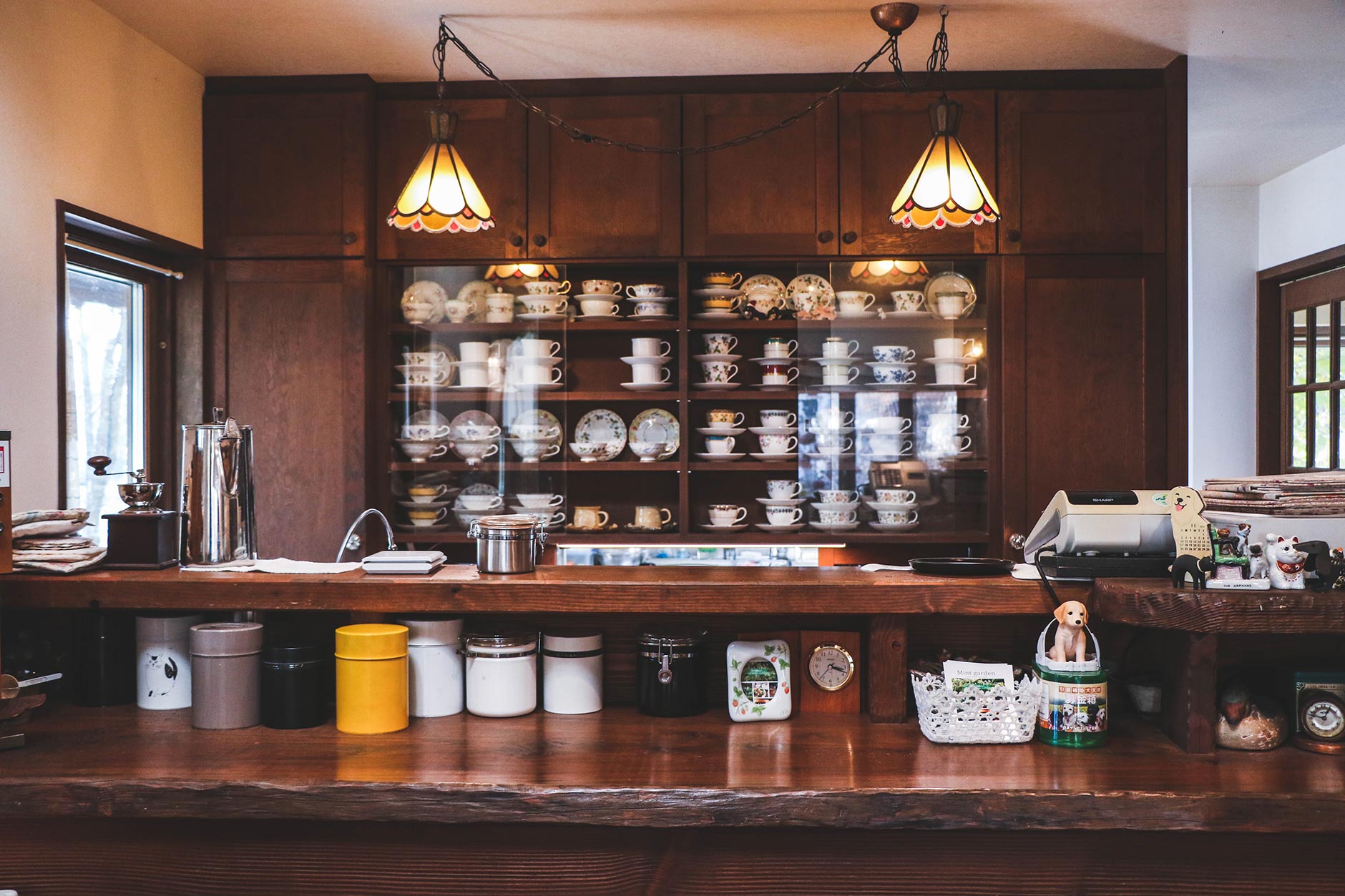
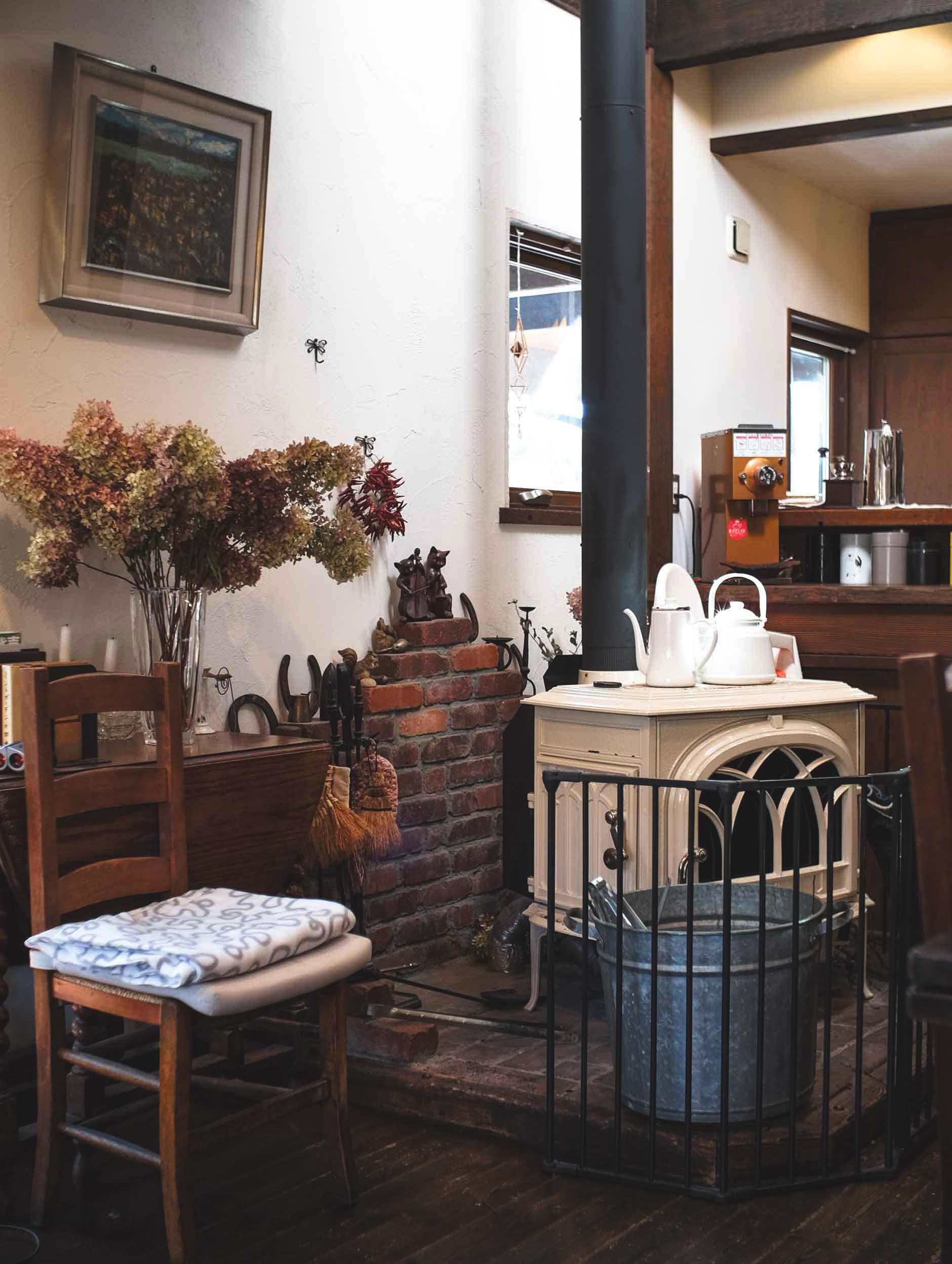
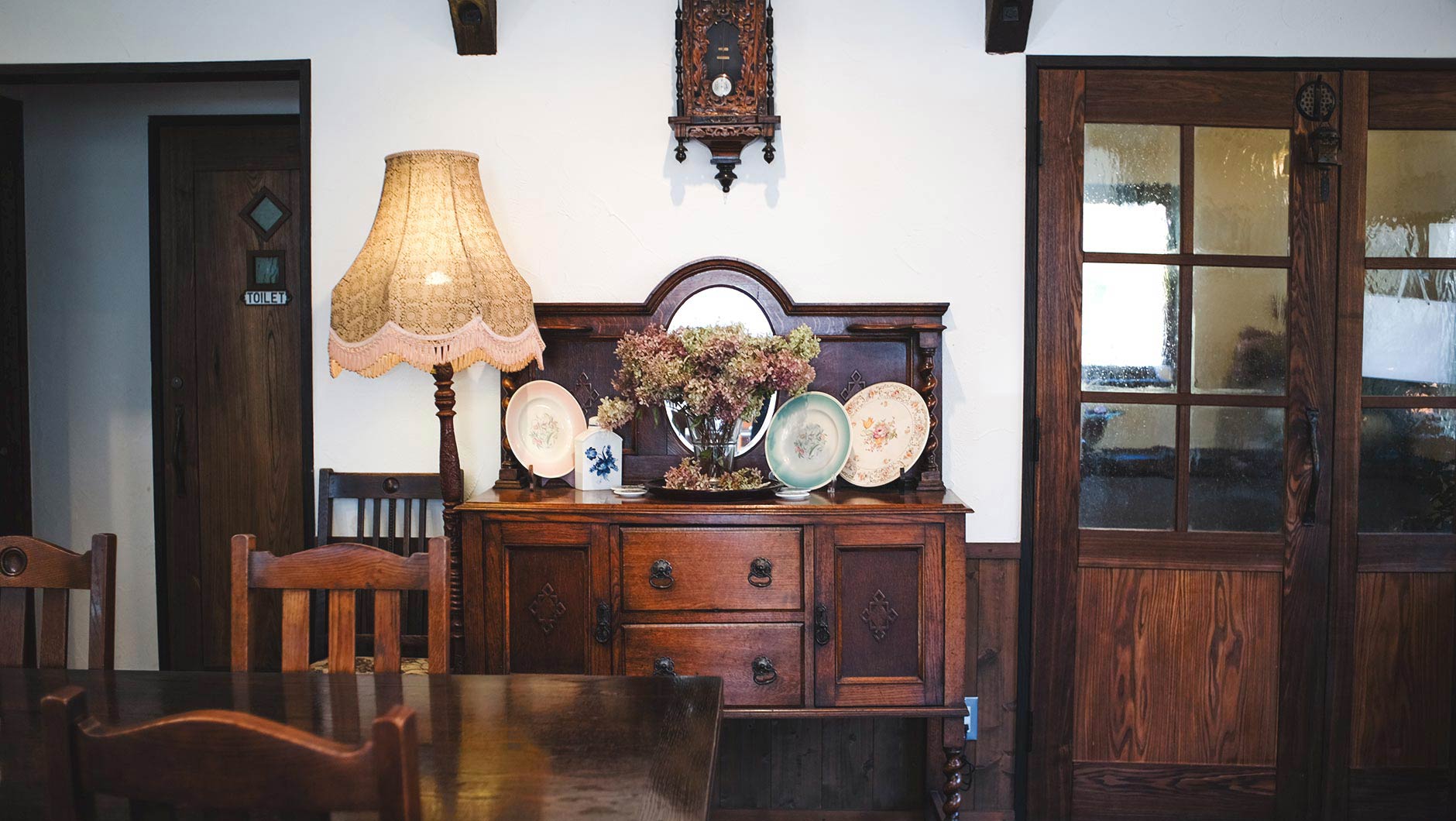
The owners run the cafe out of their European style wooden house by themselves and it has all the vintage details you would expect of a chic traditional German farmhouse. Once you step inside, you’ll instantly feel at home. The wooden antique furniture with exposed ceiling beams radiated those cozy hygge vibes while, the old stove heater kept the room at a toasty warm temperature. There’s also a small handmade trinket shop next to the register.
Even better, the cafe is also dog friendly and the owners have three dogs themselves
who you can see behind the register bar. Their older black Labrador is a big old sweetie who gets around slowly and will melt your heart!
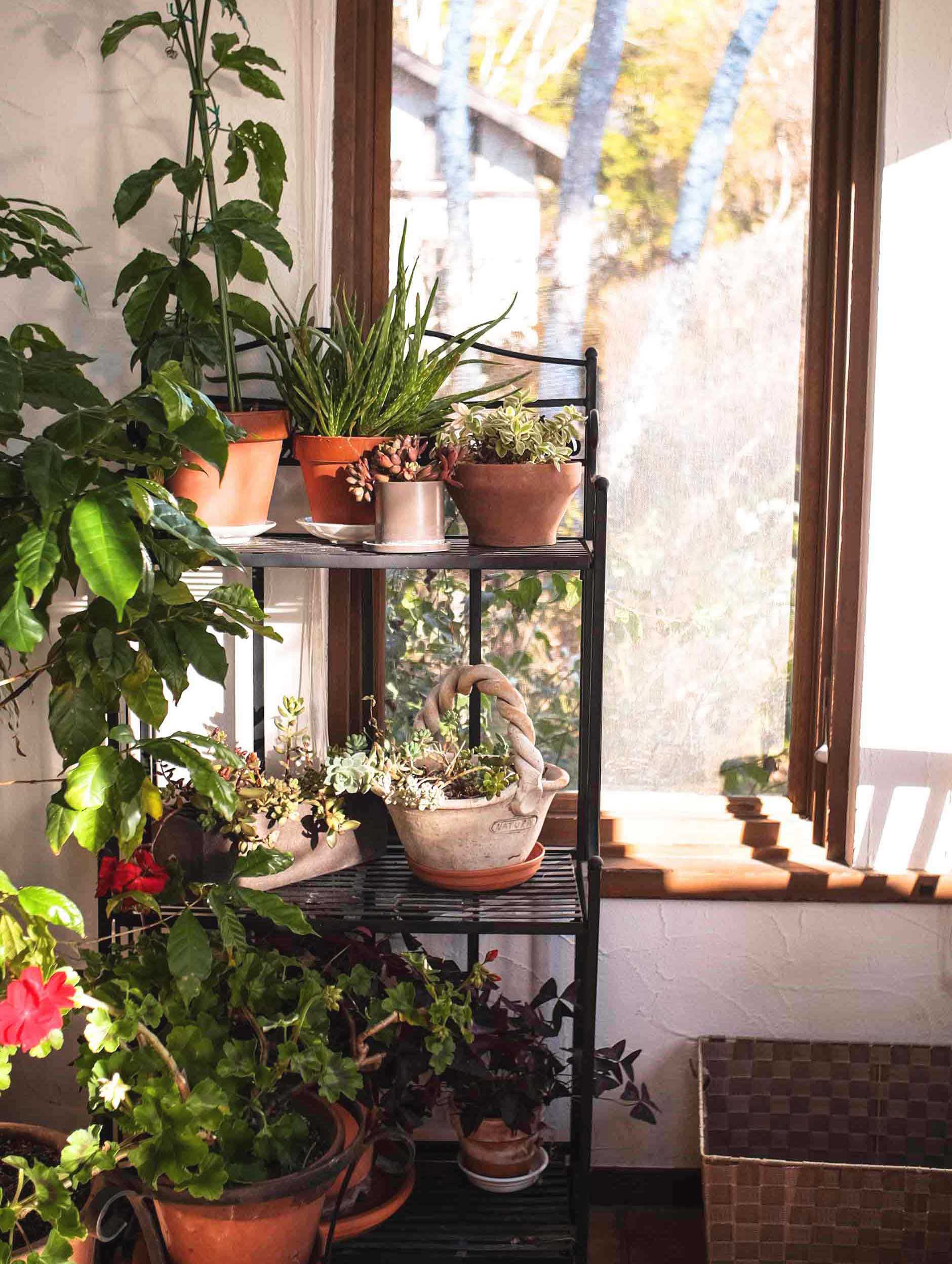
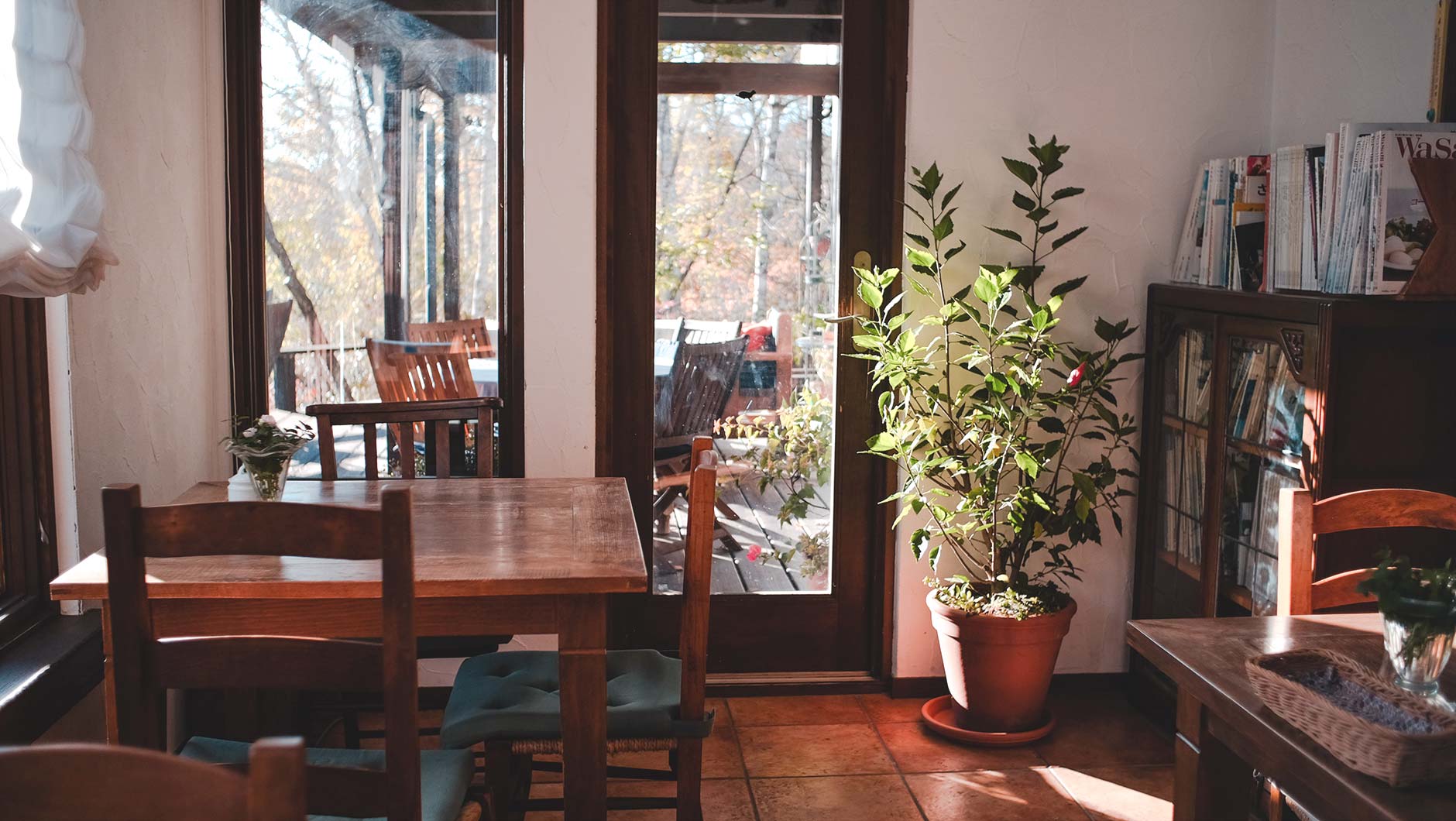
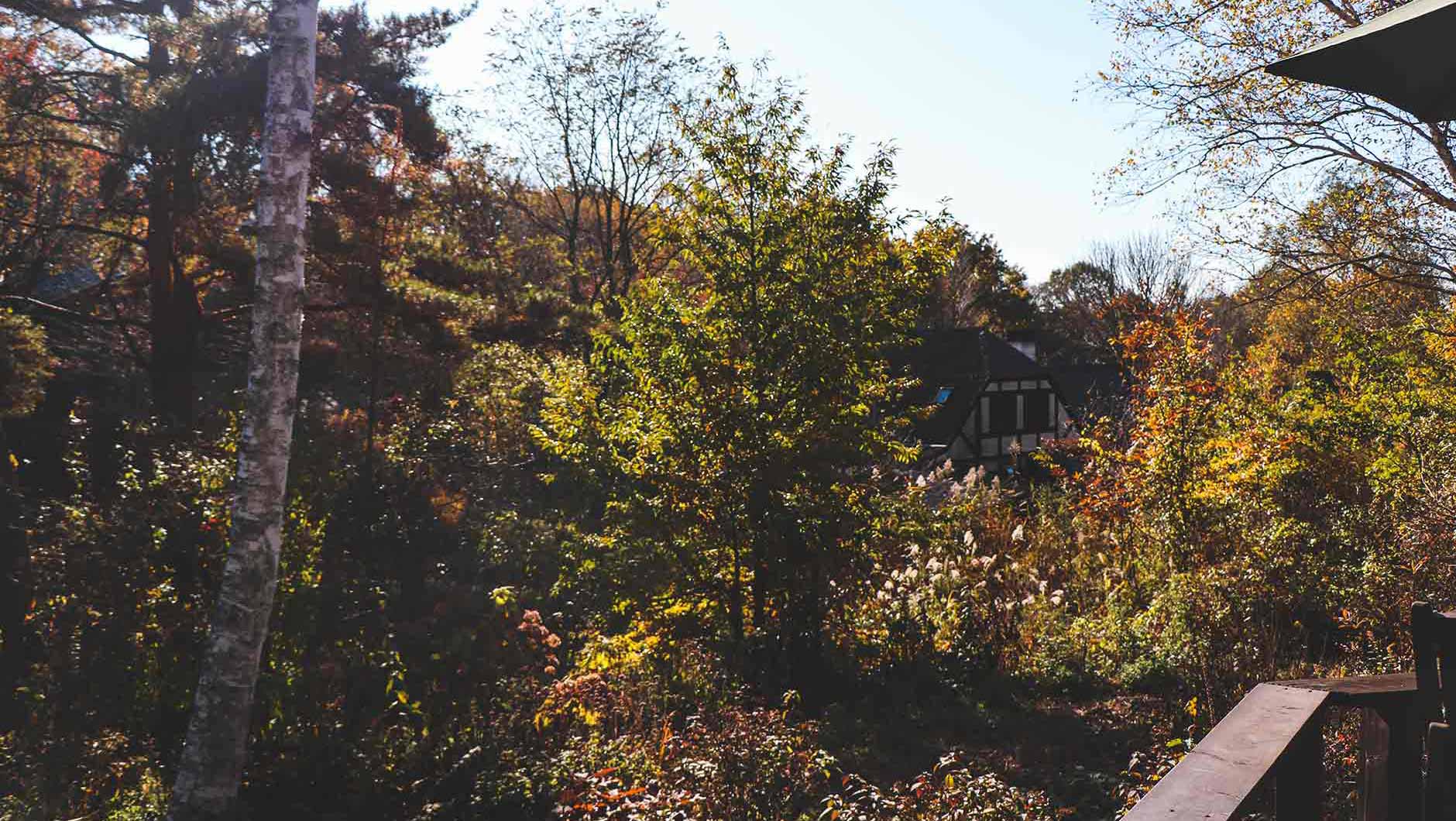
If you get the opportunity, sitting in the sun room area has to be one of the cafe’s best features. It’s charming high ceiling and skylight let’s in those warm afternoon rays that makes you feel at peace. You’ll also have views of the garden or wonder outside on the terrace. I could already imagine my inner granny enjoying a cup of tea in the sun room or sitting on the porch while listening to the birds sing and watching my rose garden grow. Wherever you choose to sit, you’ll definitely forget about the rat race of modern life being surrounded by all this rich nature!
FOOD
s you might have noticed with our various recounts of aesthetically pleasing cafes in Korea and Japan, cafe-hopping while traveling is our thing!
Dare I say, we have become experts at trying to find cafes that offer something attractive while making it worth the trip. At the Mint Garden, their main draw is their hearty salad dishes that look like they are overflowing with green goodness. They refrain from using pesticides as much as possible and use mainly organic and local ingredients so customers can eat with peace of mind.
For the weary traveler who also enjoys tea time, the Mint Garden is also a lovely stop-over for afternoon tea which is when we visited. Considering we had been eating every meal at a convenience store thus far, the thought of a freshly prepared meal was greatly welcomed with open arms.
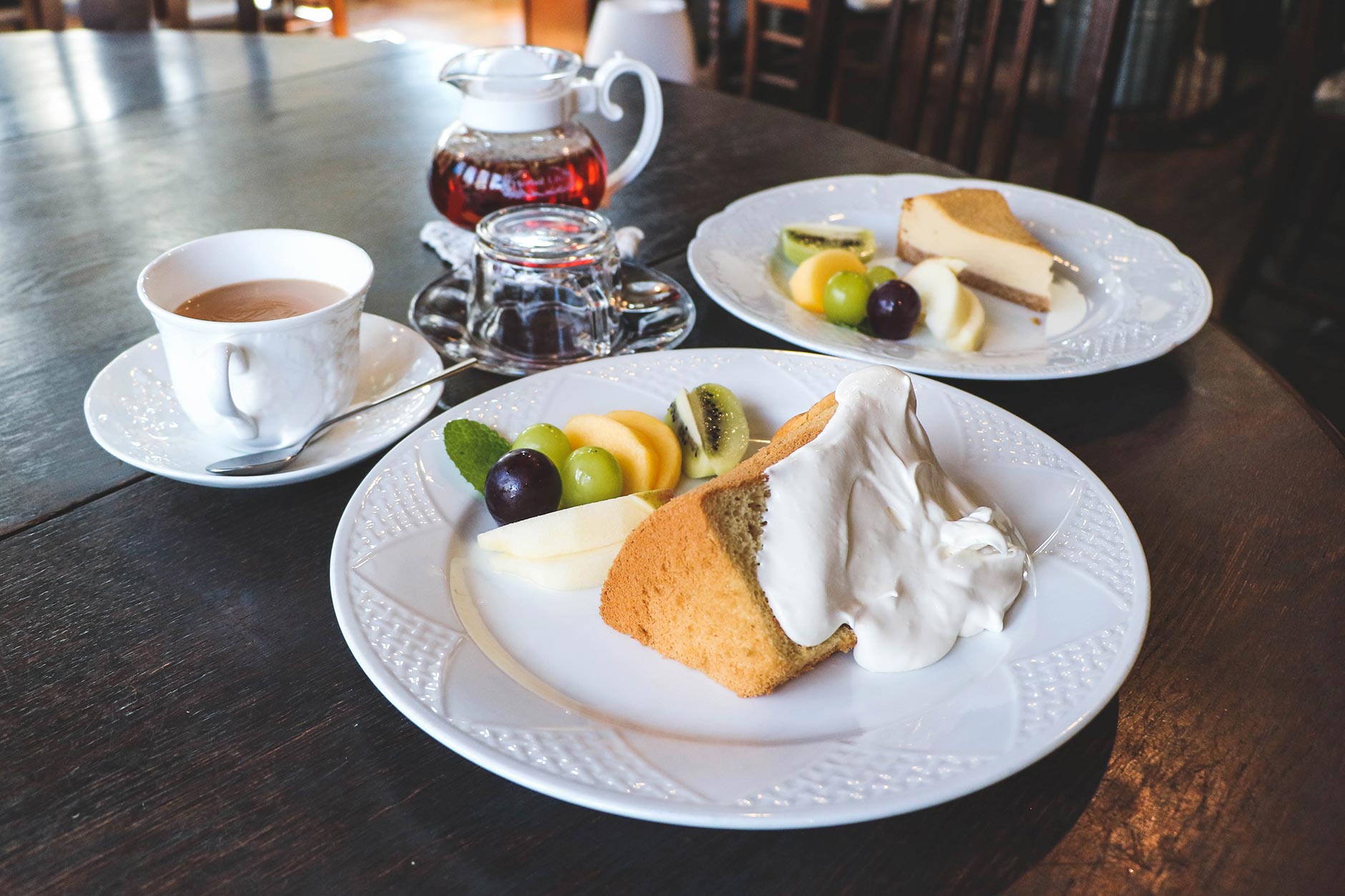
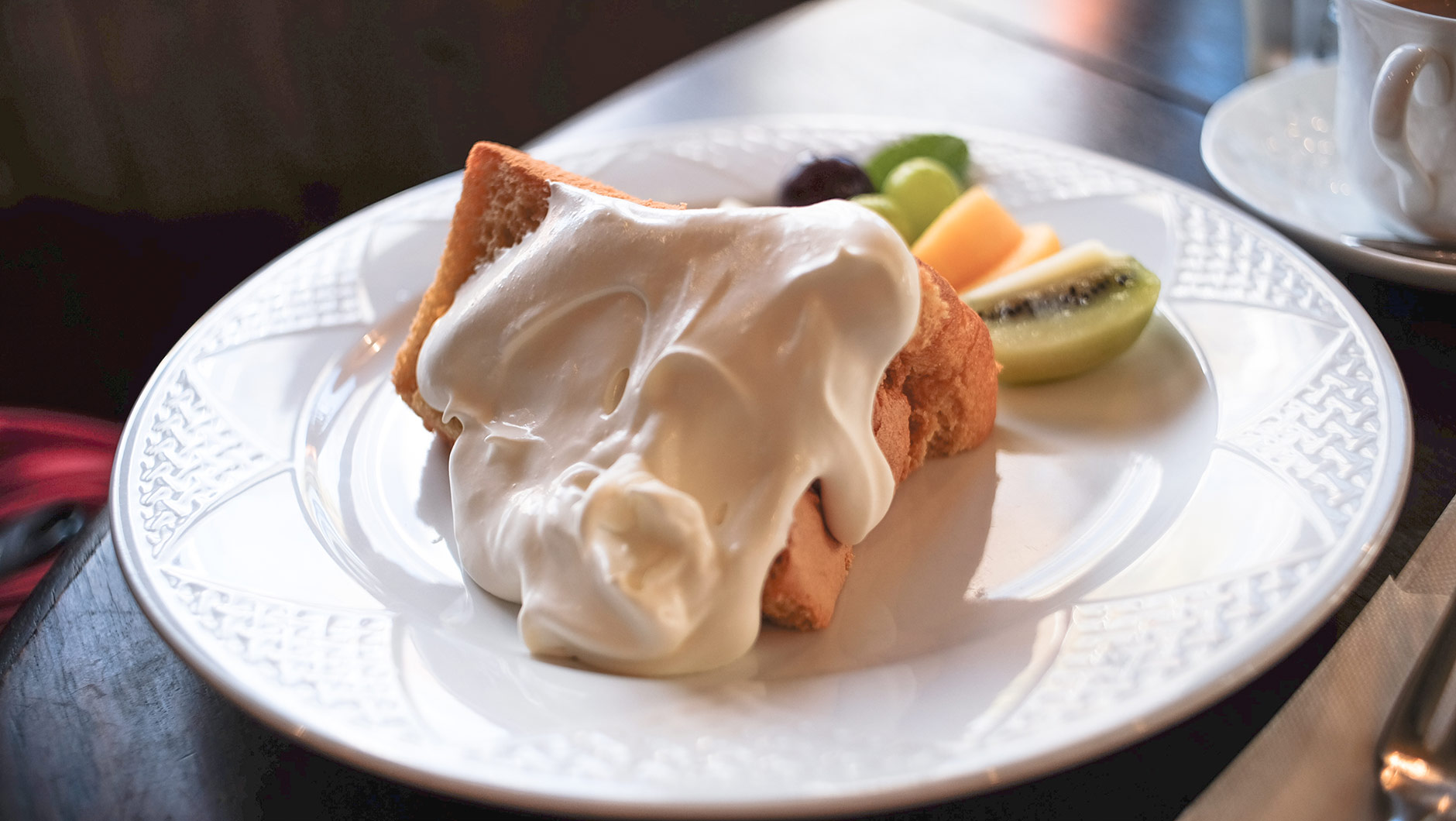
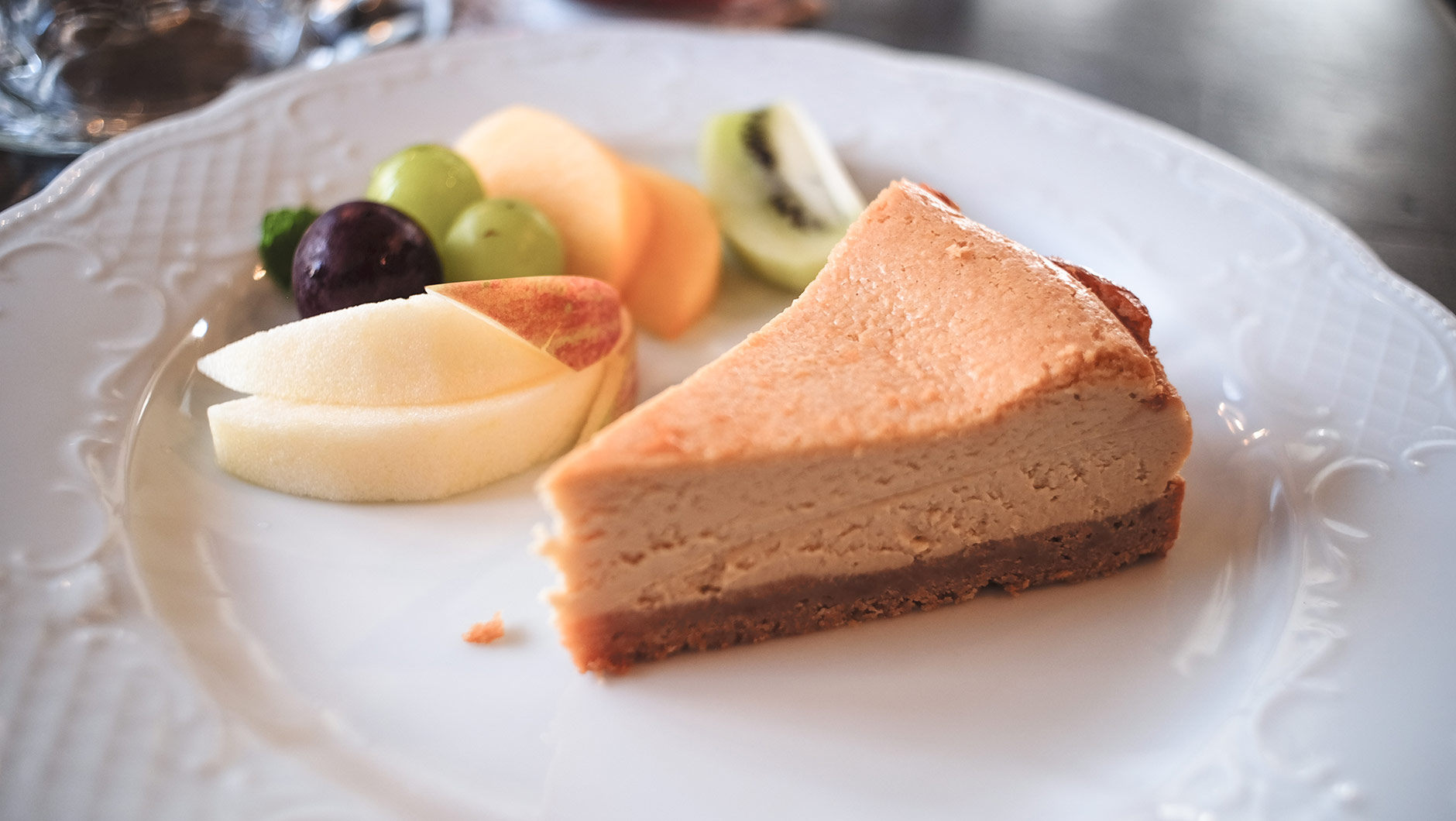
The homemade cakes were all deliciously served with a side of seasonal fresh fruits
and we were lucky to come when Japanese grapes were in season. If you have never tried Muscat or Kyohei grapes in Japan you’ll be surprised how super plump and juicy they are!
For our cakes we decided on the baked cheesecake and the chiffon cake. At first, I thought the cheesecake looked a bit petite on the plate but it was very rich and dense so it turned out to be enough to satisfy my greedy eyes. Of the two, we both agreed the winner was the classic chiffon cake. It was so light and fluffy and tasted even better with the generous dollop of hand whipped cream.
To wash it all down, we chose to share the flowery herb tea called “hanakokoro” which was surprisingly very smooth and an interesting blend of lavender, rose and anise seed. Although I don’t usually like herbal blends, I really enjoyed the flavour of this tea a lot! Not too flowery and very different from any commercial tea blends I have tried before. We also ordered a chai tea as our other set drink.
eeping in mind that this is run and owned by a husband and wife team, it’s best not to rush your time here.
As we beat the lunch time rush, our service at afternoon tea time was pleasant and prompt with a homey hospitality. The staff are friendly and enjoy chatting with their customers but unfortunately can speak only Japanese and some broken English.
Considering this, travellers might find it difficult to order and communicate since the menu is all in Japanese.
Though it isn’t listed anywhere, the last order for lunch time is at 3PM (unless sold out for the day) while tea and cakes are still available to order before closing time at 5PM.
Value For Money
aybe it’s due to the area but considering everything at the Mint Garden is homemade and uses organic ingredients, the prices are incredibly reasonable.
I noticed that the lunch set was only 1150 yen which included curry, naan bread, vegetable salad, drink and fruit dessert – a great bang-for-your-buck! You can also order a lunch cake (450 yen) or creme brulee (350 yen) if you are in the mood for more dessert.
If you are coming by for tea time only, the cakes were not too bad at 500 yen each but you should definitely order the cake set which also includes a drink of your choice to make tea time come under 1000 yen.
Overall, the Mint Garden is an affordable dining spot to savour the wholesomeness of homemade healthy food before continuing the long drive ahead.
The Sailor Moon Cafe is a reoccurring limited-time-only event.
The Shining Moon Tokyo Restaurant has now closed down.
Updated: April 2022
THE VERDICT
Setting & Atmosphere
Food
Service
Value For Money
2.6
OVERALL SUMMARY
Skip the kawaii desserts and go for the real champions of justice – the main dishes
You’ve read my first impressions of anime cafe attractions like the Pokemon Cafe and the Chibiusa Cafe from the Sailor Moon Exhibition before. This time with Talyssa in town, we got to enjoy the delights of anime dining together!
Naturally, we both have the same fraternal appreciation for our childhood queen, Sailor Moon. Luckily for us, Japan had two new cafe attractions centred around our favourite anime series; the 2019 ‘Girls Night Out’ Sailor Moon Cafe pop-up and the permanent restaurant ‘SHINING MOON TOKYO.’ With our busy schedules, we were only able to go to the Sailor Moon Cafe pop-up cafe but was it the right choice? For love, justice and food here are our thoughts on the experience.
Setting & Atmosphere
n my humble opinion, recreating an anime themed experience should be all about the details and besides food, that should be reflected in the decor as well.
Being a recurring ‘limited time only’ event, the interior for the Girls Night Out Sailor Moon Cafe does well in putting ‘Sailor Moon themed bells and whistles’ on whatever surface they can.
Inside, the cafe was decorated with newly created artworks for the event (minus Sailor Pluto and Saturn on the main poster WTF) and a fun, bold colour scheme just like the 90’s show. The official gift shop, the iconic anime soundtrack and projected Sailor Moon videos all served as a good distraction while you waited for your food.
My only pet peeve was that the already small cafe felt so cramped! It’s almost like
everyone was packed in on top of each other like a tin of sardines.
The table space for two people was almost impossible to fit drinks, two mains and adding desert to the mix meant having to balance a plate on your lap. It slowly dawned upon us that this experience was best suited to a light snack spot, rather than a full meal. Dinner was a constant ‘knocking-of-elbows’ with the person next to you and with the time limit looming, you are pressured to eat, enjoy and experience the café before the next group comes in. A chilled experience? Think again!
Despite its flaws, it was a fun casual dine out but if you were to live out your true weeaboo fantasies, the SHINING MOON TOKYO restaurant would be the better choice. We provided some extra photos for comparison below:
Inside the Cafe
Cafe’s Gift Shop (unfortunately many things were already sold out)
hough not as bad as the Pokemon Cafe, the food at the Girls Night Out Sailor Moon Cafe was a bit more sophisticated, but was still a mixed bag of good and bad.
Let’s begin with the drinks menu. I loved that they had a drink for every single Sailor Scout with their own colours and flavours (yes, sweet justice for Sailor Pluto and Saturn). I thought it was a cute touch to put their casual outfit artwork on the straws and as a bonus, you also received a free random coaster. The “Makoto” mint and lemon combo sounded refreshing but the mint syrup tasted borderline like toothpaste. Talyssa’s “Rei” cassis and pomegranate was nice and both drinks were garnished with frozen fruit. While, the drink combinations were interesting, given the cold autumn weather it would have been better if the fruits were fresh.
For food, they had a lunch and dinner menu with dinner time being the most appealing for mains. Talyssa chose the Moonlight Risotto which came with 4 different sauces inspired by the original Sailor Scouts; Mercury (blueberry cheese), Mars (napolitana sauce), Jupiter (pesto) and Venus (capsicum relish). While the
flavours of this dish were quite good, it was a far cry from a risotto, with the texture of the rice being dry and hard. To this day, we are still left wondering why risotto would be served with a blueberry cheese sauce. Ah, the mysteries of Japanese-Western fusion.
In most situations, it usually goes without saying that the more expensive main options are generally much tastier.
My Chicken Steak Plate tasted great especially with the cheese sauce on top. It also came with a surprise glass of sparkling apple cider with rose petals inside and although I relish in the delight that it must have been a present from my man, Tuxedo Mask, it looked like I had grossly over-ordered and I didn’t realise my meal came with its own drink! Fml.
I digress, now we must talk about the desert because it was a massive let down. Although the Cosmic Heart Berry Sandwich looked good in the photo it also tasted super fake – like that artificial cherry flavouring which is a big “no” for me.
“Makoto” (mint and lemon soda) and “Rei” (cassis and pomegranate soda) (¥890 w/o tax each)
Moonlight Risotto (¥1,490 w/o tax) with the 4 different sauces inspired by the original Sailor Scouts;
Mercury (blueberry cheese), Mars (napolitana sauce), Jupiter (pesto) and Venus (capsicum relish)
Chicken Steak Plate with salad and soup set (¥1,990 w/o tax)
Cosmic Heart Berry Sandwich (¥1,690 w/o tax)
Service
or the first timers out there, anime cafe attractions almost always have a session time limit (this event was 1 hour and 20 minutes) and as a result are a bit systematic with a few steps to follow.
One thing I think I under-appreciated about the Pokemon Cafe was the ability to choose when your food arrives. As pop-up cafes are extremely busy, all the food comes at once which as mentioned before, is not great when your table is exceedingly small.
All-in-all, I really enjoyed all the freebies you can collect while dining at this event. It was like a personal challenge to collect everything. The wait staff were overall very bubbly and friendly.
Ticket Envelope Freebie
Random Pick Coaster
Table Mat Freebie
Numbered Ticket Card for the Gift Shop
VALUE FOR MONEY
onsidering the price of the gift shop items, the food, the entry fee and the “limited time only” aspect of the event, there’s a few things we need to factor in to determine our rating for the cafe’s overall value for money.
Unexpectedly, I was gobsmacked by the price of some of the items for sale. While the smaller trinkets at the gift shop like the acrylic key chains and postcards were reasonable in price (650 yen and 300 yen respectively), there were others that were grossly overpriced. For example, the Luna Glass Cup was a steep 1,600 yen and the Clear Bag was a whopping 1,800 yen. Holy crap! They might be collectable items but I can’t fathom anyone would pay top dollar to own something that basic.
Considering the quality of the food was comparable to meals served at local family restaurants like Denny’s or Gusto, the prices were a tad higher than we would expect to pay. With the consistent hits and misses with dishes and drinks, I definitely felt
cheated paying over 1,700yen for a subpar dessert (I’ll have that weird blueberry risotto combo instead, please).
After crunching the numbers including the price of the entry fee (650 yen), the average base price for one drink, one main and one dessert would be roughly 4,000 yen per person.
So, did we think it was money well spent?
Despite all these criticisms, our overall sentiment is that although it is indeed expensive and overpriced, what we’re paying for was the nostalgia and the experience to relive something that we love – and in that sense we found it enjoyable and “worth it” for the fun. Though if we were to recommend our readers one or the other, we think you should save your money for the SHINING MOON TOKYO instead for a better experience.
Acryclic Coaster and Key Chain Displays
Luna Cup and Clear Bag
Acrylic Character Stands
How to Book
urious to explore the world of anime dining for yourself?
To find news about these special events or cafes especially if it’s anime related, it’s best to follow Japanese trend sites like SoraNews24 to catch wind of any new attractions popping up around Tokyo and Japan throughout the year.
For foreigners that don’t read Japanese, the reservation process can be a bit confusing, but generally follows a similar pattern:
Run by two travel and lifestyle bloggers, The Hidden Thimble focus’ on creating truthful and in-depth travel guides, food & beauty reviews. Enjoy drool-worthy photography from around the world!