f you wanted to get a taste of what feudal Japan might have looked like, the countryside of Takachiho in the Miyazaki prefecture comes pretty close. Largely untouched, the mountainous landscape is spectacularly scenic with small villages and terraced rice paddies scattered here and there. The rolling hills are covered with pine trees and the early morning mist creeps up between the valleys and catches on the mountainous peaks. As dawn begins to break, the sun rays peak through mountain silhouettes as sleepy villagers begin to wake.
I’d be lying if I didn’t say the place felt alive with shinto spirits.
In Takachiho, it’s really not hard to see what inspired the stories and supernatural spirits of Japanese folklore and mythology. While Shintoism seems far removed from most modern Japanese lifestyle, Takachiho is one of the few places where it is so openly and commonly practiced.
Here, we’ve come to marvel at one of the most renowned and uniquely beautiful spots in Kyushu. Descending into Takachiho Gorge, its ancient rock walls reach up to the heavens, showing off ribbed colonnade structures covered in sparkling moss. Stepping into a small rowing boat, we cross the barrier between reality and the spirit realm, enclosed by a canopy of green and orange coloured leaves. Ahead of us, the teal green water of the Gokase river snakes between the curves and bends of the gorge’s walls and flows underneath one of Japan’s top 100 waterfalls, the Manai falls.
As we drift down the waters of the Gokase river, we invite you on a mythical journey to discover the nostalgia of old Japan in Takachiho.
Takachiho Mythology
ne day, Amaterasu goddess of the sun, looked down upon the Earth from the heavens and wept at the chaos that consumed the land. To restore peace, she sent her grandson, Ninigi no Mokoto to govern the islands of Japan in her honour.
Into a mist covered Takachiho, Ninigi no Mikoto and a procession of deities descended from the heavens carrying three items: the jewel Yasakani no Magatama, the mirror Yata no Kagami and the sword kusanagi no Tsurugi. With him, Ninigi also brought rice and scattered it across the land.
Today, the Kushifuru Shrine near Takachiho Gorge is believed to be the spot where Ninigi and his procession of deities arrived in Japan. It is here on Earth that Ninigi established the Japanese Imperial Family and is the divine ancestor to Japan’s first emperor, Jimmu, Ninigi’s grandson. The three items Nigini brought to Earth with him also formed the Imperial Regalia of Japan.
In the 8th Century, two of Japan’s most ancient history books were published by the Emperor; the Kojiki and Nihonshoki. These books describe Japan’s creation as a continent, the foundation of Japan’s Imperial line and much more through a catalog of songs, myths, legends and oral traditions.
It is here in Takachiho’s misty valleys and mountainous peaks that many of the recorded legends play out across the landscape of Takachiho. Takachiho Gorge itself is also home to Japan’s creation myth where Izanagi and Izanami created the first Japanese island and brought the first source of spring water to the Earthly realm, in a natural well known as Ama Manai. This well is the source of the spring water that flows through the Manai Falls.
For most young Japanese people it seems as if the Shinto mythology that formed the core of their country’s spiritual origins has been lost to the fast paced and modern society we so commonly see today.
With such significant mythological ties, this is not the case in Takachiho. Compared to populated Japanese cities, life here seems to slow down and the native religion of Shintoism is alive, intimately interwoven and vibrantly celebrated among the community. It is both awe-inspiring and magical to behold and will illustrate a historical and spiritual side of Japan you may not be able to witness in most tourist frequented areas.
Locals praying at Takachiho Shrine
Izanagi and Izanami
Priest performing traditional ceremony at Takachiho Shrine
Things to Do At Takachiho Gorge
akachiho may be remote and rural but there’s a myriad of things to do and explore – with all places accesible by foot. What many might not realise is that a good majority of the most popular things to see and do in Takachiho are actually located within the Takachiho Gorge area. Below we share some of our favourite experiences at Takachiho Gorge:
Enjoy a Boat Ride Down Takachiho Gorge
hen it comes to enjoying the gorge you can do so in two ways; by foot or by boat. We couldn’t pass up the opportunity to explore the gorge by boat, but had been forewarned that the line for boats attracted a serious crowd with seriously longer wait times.
So, how do you avoid long wait times? You beat the queue and get there first by arriving at 7:30AM. Yes I know, sleep is a hard sacrifice while on holiday, but definitely a worthwhile one. Even though we were first in line, I can tell you that the line started forming only shortly after we arrived and the carpark was almost full when we parked just a bit earlier! It was clear that the late morning starts of the citizens of Tokyo do not apply in Takachiho! Get there early so that you don’t waste large chunks of the day waiting in line. If you’ve only got the day in Takachiho, this will give you time to explore more of the area.
Without an experienced row-boater between us, we jumped in our boat and clumsily fumbled with the oars. The rowing does take some time to get used to, but is a great experience.
As you row down the gorge, you can get up close and personal with the Manai falls – even rowing under it if you like – and also take a closer look at the colonnade structures of the gorge’s walls. It can be scary at times as a rookie rower – wall and boat collisions will and do happen, but the boats are sturdy enough that it makes it difficult to fall in. I don’t know what happens if you do fall in, or what, if anything, lurks beyond the depths of the Gosake river, but you are equipped with a life vest ensuring safety no matter what happens.
There is a time limit of 30minutes per boat ride – which actually goes pretty fast! You can also buy some food to feed the ducks, which we did! Rowing down the gorge and back, plus feeding the ducks, actually took us a little longer than 30 minutes, but the staff were really nice and didn’t charge us extra.
It costs 2000 yen to hire a boat and each boat can fit a maximum of 3 passengers. Boats cannot be pre-booked. Food for the ducks costs 200 yen. There are no facilities to hold your luggage, so leave it in your hotel, car or tour bus!
Takachiho boat ride rules.
Walk Along Takachiho Promenade
f roughing the waters of the gorge is too much for you, you can also enjoy the scenic beauty of the area from above by following the paved pathway that follows the edge of the gorge. The path offers stunning views all along, with some perfect postcard photo opportunities of the gorge and Manai falls.
Stroll the path for as long as you like, taking time to observe down into the gorge from the various bridges and viewpoints to get some really nice photos. It is along this walk that you’ll get the popular shots you see online of looking down into the gorge through a canopy of momiji leaves as well great viewpoints of Manai falls with boaters below. Continue walking and eventually you’ll arrive at Takachiho Shrine. The total length of the trail is about 1km (10mins).
Visiting in autumn we were expecting yellow and orange momiji leaves, but the leaves change colour here later than the rest of Japan – so keep that in mind if you’re hoping to catch autumn surroundings during your time at the gorge.
With that being said, summer’s green leaves are also delightful and the greenery enhances the gorge’s mystical atmosphere. In summer, the gorge is also illuminated in the evenings until 10PM.
Along the walk there are numerous points of interest such as Kihachi Rock – a 200 tonne rock said to be thrown by the god Kihachi as he challenged the irresponsible deity that ruled the village of Takachiho and Onokoro pond.
Take a Gander at Onokoro Pond
f I’m being fair, I can’t say that this pond is anything special to look at (sorry!) but it’s cultural significance is one that may tickle your fancy.
In the centre of this pond is a small island with a little shrine (known as onokorojima).
With Takachiho’s close association to Japan’s creation myths, it is said that this is the first Japanese island that the gods Izanagi and Izanami created. Because of its historical significance, each year during the spring festival of Takachiho shrine, a portable shrine circles around onokorojima three times – a ritual purification known as misogi.
Spring Festival celebrations in Onokoro Pond, Takachiho. Taken from Getty Images
Catch the Sunrise above a Sea of Clouds at Kunimigaoka
f you thought Takachiho wasn’t pretty enough, just wait until you visit Kunimigaoka (Country Gazing Hill) look out. Located a short drive up the mountain from Takachiho Gorge, this beautiful view overlooking the Takachiho countryside awaits. It’s stunning even during daytime, but the magic really comes alive at sunrise where a phenomenon known as ‘unkai ‘occurs between the months of September – late November.
Unkai translates into “Sea of clouds” and on days where there is a significant difference between the minimum and maximum temperatures, the beautiful Japanese fog and mist creates a sea of clouds that covers the entire valley. It literally looks like as if you are standing above the clouds. Definitely worth the early morning start.
Watch a Traditional Kagura Performance at Takachiho Shrine
agura is Japan’s earliest form of religious dance with deep ties to Shintoism. It is thought to have entertained the imperial courts and general public for over 1000 years.
Kagura reenacts the stories from classical Japanese mythology. Over time as the country lost touch with Shintoism the tradition wasn’t passed down through the generations, and today, it is really rare to see Kagura performed in urban areas. In fact, there are only 5 places in Japan that perform traditional Kagura regularly and Takachiho is one of them.
There are two ways you can engage in Kagura performances in Takachiho. The first is nightly Kagura Performances at Takachiho shrine – a shortened 4 act version of the 33 acts in Kagura.
The second is the all night Takachiho Yokagura Festival held on the 22nd and 23rd of November. For the entire night, the Takachiho community comes together to enjoy Kagura dancing, storytelling and local foods. At this festival, the full 33 acts of Kagura are reenacted across the entire night. Fascinated? Us too. Find out more about Kagura in Takachiho in our Blog Post: “See a Traditional Kagura Show in Takachiho”
What to Eat
hiho No Ie is a restaurant located at the heart of Takachiho Gorge that specialises in Nagashi Soumen or flowing noodles. How it works is somen noodles (thin white noodles, similar to soba) are dropped into a bamboo stalk cut in half to form a “chute” that is filled with flowing water. As the somen flows down the chute, you try to catch them with your chopsticks. These noodles are cold and like Soba, somen noodles are dipped in a dipping sauce before being eaten.
I don’t know about you, but there’s always one episode in an anime series where the school class goes on some summer holiday and one of the many activities they do is eat Nagashi Soumen – so i’ve always wanted to do it!
Despite being autumn, we could still enjoy the fun! It was especially cool to experience it for the first time in Takachiho, as it is thought the origins of the dish may lie here! Established in 1955, Chiho no Ie claims to be the birthplace of Nagashi soumen and still streams cool, fresh water from Tamadare Falls, as thought to be originally done.
We also ordered the hot beef soba noodles (absolutely delicious!) as well as the somen set meal with grilled fish. All very fresh, tasty and unique with foods I’d never had before.
Don’t worry! If you miss your noodles, you can collect them at the end.
Bamboo chute where the somen flows down.
Salted and grilled Amago (trout), Konyaku jelly, Rice Balls, tofu, salad, takana pickle.
Beef Soba
How to Get To Takachiho Gorge
From Kumamoto To Takachiho Bus Centre
From Kumamoto Airport, there are direct highway buses to the Takachiho Bus Centre operated by Kyushu Sanko Bus and Miyazaki Kotsu. Be mindful as there are only two buses scheduled per day. The whole trip will take around 2 hr 30 min and costs 2410 yen one way.
From Miyazaki To Takachiho Bus Centre
From Miyazaki Airport, you can take the JR Nichirin or Hyuga limited express train to Nobeoka Station and transfer to a number 71/72 Miyazaki Kanko bus to the Takachiho Bus Centre. The whole trip will take roughly 3 hr 30 min. The express train will take 80 minutes and costs 3000 yen while the bus trip will take 90 minutes and costs 1820 yen.
From Takachiho Bus Centre to Takachiho Gorge
It is possible to walk from Takachiho bus centre to Takachiho Gorge. The walk will take about 25 minutes in total. Taxi from Takachiho bus centre to the gorge will cost approximately 1200 yen and take 6 minutes.
There is a Takachiho Gorge Shuttle Bus service that operates during the busy season April – November only. This bus departs from Takachiho Bus Centre and will take you directly to the gorge for 100 yen. Please note that the schedule may change daily and it can be infrequent despite what the Takachiho Gorge shuttle bus timetable says. There are also public buses available from Takachiho Bus Centre to Takachiho Shrine, where it is a 10minute walk to Takachiho Gorge.
By car – Recommended
As you can tell, transportation in Takachiho is both infrequent and inconvenient due to its remote surroundings. Your best bet is to hire a rental car to get the most out of your trip. Not to mention the mountain drive is both scenic and beautiful especially during the autumn time! At Takachiho gorge, there are 3 carparks; Oshioi Parking for 500 yen, Araragi Parking for 300 yen and Ohashi Parking is free. See parking locations and more information.
The easiest way to rent a car is at the airport. If you are looking for a place, we hired our rental car through Nippon Rent-A-Car at Kumamoto Airport which was very easy and had great staff service.
city nestled between vast mountain ranges and steeped in well-preserved antiquity, Takayama is a charming town for those seeking to experience a traditional getaway.
With its pretty riverside setting and architecture dating back to the Edo and Meiji eras, many have compared Takayama to the likes of Kyoto – a city renowned for its cultural and historical significance. Kyoto represents life in the old capital, preserving the refined styles and traditions of well-known Japanese practices such as kaiseki meals, geisha customs, and ancient Imperial Court life. As opposed to its famous tourist-heavy moniker, Takayama offers a low-key, rustic experience of old Japan developed from its feudal history and its important agricultural roots.
What whispers of the past does Takayama hold to inspire our sense of exploration?
Thanks to its isolated geographical location from other major cities and their influences, Takayama will amaze you with its bountiful nature spots, mouth-watering gourmet food, and homegrown sense of cultural identity cultivated for over 300 years.
What to do
akayama has an abundance of museums and local attractions just waiting to be discovered on foot.
Whether you are stopping by on a day trip or staying overnight, here are some highlights of our personal favourites:
Old Township (Furui-machi-nami)
n absolute must-see in Takayama, the Old Township is a preserved cluster of period establishments dating back between the 17th and the 19th century.
It is centered around the Sanmachi-Suji district area, a collection of three main streets (Ichi-no-machi, Ni-no-machi, and San-no-machi) that are linked by the flowing rivers that run through the town.
As you listen to the soft running of the water, you’ll discover alleys of latticed bay
windows and traditional wooden storefronts adding to the timeless feeling that still lingers in the area. Strolling through each street you can find plenty of eateries, shopping, sake breweries, museums, and plenty of examples of old merchants’ houses, traditional inns, and private houses.
Accessing the district will also allow you to walk on the iconic red bridge over Miyagama River, making it truly feel like you have crossed over into another time and space.
Sakurayama Hachimangu Shrine
here are many shrines in Takayama but one of the oldest is the Sakurayama Hachimangu Shrine and dedicated to the deity Hachiman.
Hachiman has a strong spiritual relationship with Shintoism and Buddhism and is believed to be the divine protector of Japan, its people, and the Imperial Family.
During ancient times, many samurai also worshiped him and peasants worshiped Hachiman as the god of agriculture.
If you happen to visit during Autumn you can also see the annual Chrysanthemum Festival (Bunkyo Kiku Matsuri) where displays of blooming Chrysanthemum flowers and flowering bonsai are on display. Chrysanthemums represent longevity, rejuvenation, and the Imperial Family in Japan.
Takayama Yatai Kaikan (Takayama Festival Float Exhibition Hall)
uring the city’s famous Takayama Festival, giant intricately decorated floats called “yatai” are paraded through the city and the Takayama Yatai Kaikan is where you can view and learn more about these stunning works of art.
The yatai used during the Takayama festival are a type called “dashi” which have a strong tie to the folk belief of spirits living within the plants, rocks, and nature of the mountains. These yatai floats were built for these spirits as they were thought to be holy, descended from the heavens. Thus, these yatai are made to resemble
mountains to worship these divine beings. The yatai displayed at Takayama Yatai Kaikan are hundreds of years old and the floats used for the autumn Takayama Festival are rotated three times a year.
When purchasing an admission ticket, you can also receive an audio guide in English to further explain the cultural and historical value these amazing floats have. Being situated within the grounds of the Hachiman Shrine, you may also see a Miko-san (Japanese shrine maiden) stationed at the reception desks and gift store areas.
Sakurayama Nikkokan
ith your pass into the Takayama Yatai Kaikan you will also be granted free entry into the Sakurayama Nikkokan next door.
The Sakurayama Nikkokan features a dazzling, highly detailed recreation of the Toshogu Shrine in Nikko built at 1/10th of the scale, as well as other models of famous religious buildings throughout Japan. All the intricate detailing in the ornaments, carving, and paintings have been replicated precariously by famed
carpenters from the Taisho Era and took 15 years to complete.
Though it may seem a bit strange to see a famous cultural site from Nikko being displayed in a totally different prefecture, the craftsmanship of these models and the yatai next door showcases the impressive handiwork of Takayama’s famous artisans. Also to note, the woodwork and the techniques in weaving and dyeing that go into constructing the yatai is so exquisite that it is often compared to the Yomeimon Gate of Nikko’s Toshogu Shrine – one of the most beautiful gates in Japan.
Nikko Toshogu Shrine’s Yomeimon Gate
Hida Folk Village
he Hida Folk Village is an open-air museum built along a picturesque hillside featuring thatched wooden houses, shrines, and other historical representations of what Hida Province looked like in the past.
The thatched-roofed houses called “gassho-zukuri farmhouses” date back during the Edo era (1603 – 1867) and have been kept in their original conditions. They were moved to the Hida Folk Village from Shirakawago, an area famous for their gassho-zukuri farmhouses and have received World Heritage status.
You can see many folk artifacts on display showcasing life in the past mountain farming village and demonstrations of local crafts like Hida lacquer, weaving, and dyeing. You can also participate in traditional craft-making such as sashiko quilting and straw craft at the cultural centres.
For those who are unable to visit the World Heritage Site Shirakawago, the Hida Folk Village is a good alternative to still experience the golden days of Edo period farm life.
akayama’s morning market is made up of two local markets; one in front of the Takayama Jinya Shrine and the other along the Miyagawa River. It is said to be one of the biggest morning markets in Japan and a great place for locals and tourists to interact. Shops sell everything from fresh vegetables, dried fruit, spices, Japanese sweets, crafts, and local souvenirs.
The Takayama Jinya Shrine market has a particularly interesting background. Started more than 300 years ago it began with silk farmers selling mulberry tree leaves. To this day, farmers are the only ones permitted to open stalls here. The markets are opened daily and it is best to visit around 6AM to soak up the energetic atmosphere of the stalls being set up for the day.
or all lovers of Japanese pop culture, the pop art aesthetics that became mainstream during the Showa period (1926 – 1989) are memorialized through some of the period’s most iconic symbols such as comic book characters like Astro Boy, early idols and propaganda memorabilia.
The Takayama Showa-kan Museum leaves visitors with the perfect impression of what makes this retro style so unique; the fusion of Japanese aesthetics with
American influences.
From the vintage candy and toy store at the front to the perfect recreation of the 1950’s retro streets at the back, the Takayama Showa-kan Museum allows you to enjoy the nostalgia of postwar Japan as you explore through their highly decorated rooms.
The rooms depict different settings inspired by the year 1955 including the street front alley, movie theatre, barbershop, video game corner, general store, and more!
f you are lucky enough to witness the Takayama Festival, you may have seen puppet performances on top of the giant yatai floats parading through the streets.
These puppets are called karakuri puppets – mechanised moving marionettes with gears, levers, and strings – that emerged during the Sengoku Period after the introduction of European clock-making to Japan.
These puppets are used in puppetry performances doing tricks or retelling folk stories as a form of entertainment, especially during the height of its popularity during the Edo Era. The concealment of any gears and mechanics as well as the
puppeteer hidden behind stage platforms gives the impression that these puppets are moving by themselves.
Luckily, you don’t have to wait for the next Takayama Festival to see these puppets in action as the Karakuri Museum holds performances every 30 minutes. Seeing them perform and understanding their craftsmanship is impressive considering this is a time before the modern inventions of robots and AI.
The museum also showcases an impressive collection of over 200 lion dance masks called “shishimai” from all over Japan.
rom restaurant establishments with long culinary histories to humble street food fanfare, Takayama’s local food scene gives you the best of what the mountain region has to offer.
eing located in the mountains producing clean spring water and high altitudes of fertile soil, Takayama is home to some of the freshest fruit and vegetables including mountain vegetables called “sansai,” root vegetables, peaches, apples, and melons.
Tomatoes and spinach are also the most popular vegetables grown in this region. The tomatoes are said to be incredibly sweet and the local spinach has no bitter taste.
popular dish in Takayama is Wasakana or river fish marinated in sweet soy sauce or salted and grilled.
You can eat it as a side dish with rice or a topping in your noodle soup and these river fish are usually of two kinds of river trout, Ayu and Iwana.
Pickled Vegetables
eing plentiful with vegetables, Takayama has many varieties of pickled vegetables.
The local specialty is pickled red turnips called “Aka kabu zuke” and
are crunchy in texture with a slightly sour-salty taste. This iconic purplish-red turnip is mainly grown in the Takayama area and is called “Hida beni kabu.”
he people of Takayama did not only use the plants found in the mountain forests for solely woodwork but also infused this with their local cuisine as well.
The Japanese magnolia tree grows abundantly in the mountainous areas of the Gifu prefecture and is not widely found throughout Japan. Collected in the autumn it has a delicate fragrance and is used in cooking as a layer for flavour when grilling meat or wrapped around mochi and sushi.
Hida Beef on top of a Houba Leaf
Local Sake
akayama’s location in the Japan Alps makes it ideal for sake production and at its peak as a castle town, there were more than 60 sake breweries in Takayama.
The rice produced in Takayama is called “Hida-Homare” rice and is said to have the
five taste elements of sweetness, spiciness, sourness, astringency, and bitterness.
Today, only 7 sake breweries still remain in the old town district and are hundreds of years old.
However, the most famous event and one of the country’s most beloved festivals is the Takayama Festival.
Takayama Festival
he Takayama Festival is held twice a year to celebrate spring and autumn and is ranked as one of Japan’s three most beautiful festivals making it on UNESCO’s Intangible Heritage List.
During each festival, the giant yatai floats are pulled through the streets and you can see Karakuri puppet doll performances and a Mikoshi Procession. It is said the
mikoshi shrine carriage contains the celebrated shrine’s deity and only leaves the shrine for the festival. There is also an evening festival for night festivities.
Seeing the festival floats during the lavish parade is a truly spectacular sight and each yatai float displays the wealth and skills of the area it comes from in the Takayama area.
Spring Takayama Festival
he spring festival is held in the southern part of Takyama’s Old Township on April 14 – 15.
It is sometimes called Sanno Festival as it is celebrated around the
Hie Shrine also known as “Sanno-sama.” The shrine is dedicated to family safety.
The spring festival is to pray for a good harvest and the coming of spring.
he autumn festival is celebrated at the northern end of Takayama’s Old Township on October 9-10 and is also known by another name, Hachiman Festival, as it is celebrated around Hachiman Shrine.
The shrine’s god, Hachiman, is the divinity of archery and war but is also worshiped
for good agriculture and fishing.
The autumn festival is celebrated as an extravagant way to show thanks for the year’s harvest.
or an affordable and comfortable stay in Takayama, we recommend K’s House Takayama.
It is a hostel-style accommodation with simple furnishings in the rooms and amenities such as laundry service, shared kitchenette, and bike rental available.
What surprised us was the very comfy furnishings in the common room areas styled
in a traditional Japanese aesthetic that you can enjoy during your stay.
It’s a great place to stay whether you are the kind of traveller who wants the freedom to do things at your own pace, or get friendly with the locals and chat with the friendly hotel staff and other fellow travellers.
Take the JR Hokuriku Shinkansen from Tokyo to Toyama and then at Toyama Station take the JR Hida limited express train to Takayama.
The journey from Tokyo to Toyama by bullet train will take 4-5 hours and costs ¥15,500 one way. From Toyama to Takayama it will take a further 1 hour and 40 minutes and costs ¥3,420.
By Bullet Train from Tokyo via Nagoya
Take the JR Tokaido Shinkansen from Tokyo Station to Nagoya Station and transfer to the JR Hida limited express train to Takayama.
The bullet train ride takes 1 hour and 40 minutes and costs ¥11,090 and the limited express train will take 2 and a half hours and costs ¥6,140.
By Highway Bus from Tokyo
From Shinjuku’s largest bus terminal called “Busta Shinjuku” take the highway bus operated by Keio and Nohi Bus directly to Hida-Takayama.
If you take a plane, you have the option of two airports:
Via Toyama airport
You will need to start at Toyama Airport and take a Toyama Airport limousine bus to Toyama Eki Mae. From Toyama Eki Mae bus stop, walk to Toyama Station and take the JR Hida limited express train to Takayama.
The whole bus and train journey will take roughly 2 hours and 40 minutes and costs roughly ¥4,000.
Via Matsumoto airport
You will need to start at Matsumoto Airport and take the Matsumoto Airport limousine bus to Matsumoto Bus Terminal.
From Matsumoto Bus Terminal bus stop you will need to take an express highway bus to Takayama Nohi Bus Center run by ALPICO GROUP. You can book online the express bus from Matsumoto to Takayama in English, too.
By car
You can easily drive from Tokyo to Takayama which will take 4.5 – 5 hours or you can hire a car at Toyama Airport like we did and it will only take 1 hour and 40 minutes. We rented our car via Nippon Rental.
gainst a rich, sky blue backdrop stands a pristine white shrine overlooking a sea of clouds. In the background the breath taking Mount Fuji is surrounded by the Yatsugatake, Southern, Central and Northern Alps.
This describes perfectly the photograph I saw which instantly had me add “Sunrise hike up Mount Kurumayama,” to our list of things to do on The Hidden Thimble’s upcoming Japan trip.
In Japan, the phenomenon of ‘unkai’ or ‘sea of clouds’ is a popular sight to see, especially in the early mornings from Autumn to early Spring. Unkai describes the mystical experience of being above the clouds or overlooking a sea of clouds, usually when standing on the peak of a mountain. The clouds typically form a blanket that covers the valleys and cities below.
Starting your day with a sunrise hike while on vacation is tough on a summer’s day. Doing it on a freezing cold November morning with little sleep the night before? Nearly impossible.
Nearly.
We hit snooze once…annnnd ended up leaving just before it started getting light outside. But, this actually worked in our favour because, long story short, being unfamiliar with the area made it extremely difficult to find the starting points of the hiking trails…imagine us trying to do it in the darkness of the night?
So you can get the most out of a sunrise hike to Mount Kurumayama – even in the black of night – we’re sharing allll our knowledge in this handy blog post:
Hiking To Mount Kurumayama Summit and Shrine
o let’s be real, the goal of a sunrise hike is to be able to get the most sleep possible, while still being able to hike to the summit of a mountain with enough time to catch the sunrise. Therefore, you need to know the shortest route out of the many different ways to hike to Mount Kurumayama’s summit.
We believe the shortest route begins at the Kurumayama SKYPARK carpark. The start of the hiking trail can be found behind the Kurumayama Sky Plaza building, where you will find a sign pointing towards the correct trail. In total, the walk is only 3kms which should take you roughly 40mins. Remember to take a torch with you. It will be dark as night when you start.
While the signage is great at the very beginning of the hike, it does disappear after some time and knowing which way to go can be difficult. Being unfamiliar with the area, we went the wrong way a couple of times, but were able to use google to walk in the right direction and find our way back on track. The hike is very gentle and easy, and begins with wooden steps that transition into a flat pebbled path.
The path does veer off into different directions at times and there’s often no signage pointing which way to go, please refer to the map below for the correct route.
If you would like to visit Yashima Marsh, you can do so by taking a left off the track and following the signs.
As you get closer to the summit, you will begin walking up stoney steps. This is probably the steepest and toughest part of the hike, but still easy overall. Once you reach the summit, the shrine is literally right in front of you. All that’s left to do is enjoy the view and take some photos! There are a few seats at the top too so you can have a picnic. Beware. It is absolutely freezing. Painfully so in autumn when we visited, but temperatures are also known to be below 10 degrees even in summer.
We unfortunately didn’t get the right conditions to experience the unkai overlooking the valley with Mount Fuji in the background. We were however, able to experience the full unkai effect overlooking the valleys on the opposite side of the mountain. If your goal is to see unkai, make sure to check the weather conditions ahead of time.
Signage can be found at the Kurumayama Kogen SKYPARK, behind the Sky Plaza Building
This is what the start of the hiking trail looks like.
View of Mount Fuji
Veer right off the main path to hike to Yashima Marsh.
Ema are wooden tablets you can use at Japanese shrines to write down any prayers or wishes. This is a traditional way to send prayers and wishes to the gods.
Unkai/Sea of Clouds viewed from Mount Kurumayama
Chairlift to Mount Kurumayama Summit
Hiking not your thing? Every Sunday from May to early November you can take a 15minute sunrise chairlift to the summit.
Enjoy your sleep in ;)
Seasonality: The Best Time to Visit Kurumayama Kogen
e visited Kurumayama Kogen during the month of November, which is off-peak season. There was literally no one in the area which made the experience very peaceful and finding places to park the car easy and stress free. The downside was there weren’t a whole lot of places open for dinner. In fact, we resorted to convenience store dinners, which in Japan is actually pretty great haha.
In autumn you can enjoy golden pampas grasslands and landscapes shifting colour from yellow to orange to red – beautiful against the blue sky. The crisp autumn air makes it the perfect time to get a clear view of Mount Fuji from the summit of Mount Kurumayama.
The downside? The lifts weren’t in operation, so if you’re relying on the lifts take that into consideration. It’s also very, very cold!
In winter the SKYPARK is transformed into a snow covered wonderland. This is the mountain’s most popular season and is filled with winter sport enthusiasts. Snow trekking to the summit is also possible in winter.
Spring and Summer is Kurumayama’s green season. The grasslands are transformed into luscious green fields filled with mountain blooms. Enjoy the nikko kisuge (yellow daylilies), Dwarf Pincushion Flowers and the Japanese Azalea.
Siree and I were doing a mini roadtrip around the Gifu area, so we decided to hire a car from Toyama Airport as we needed to return there to catch a plane to Miyazaki for the second half of our trip. From Toyama Airport, it was a 3.5 hour drive which was really easy to navigate using Google Maps.
For those travelling from Tokyo, it’s just a 3 hour drive.
Parking in the area is great and free 24 hours a day! There are 5 parking areas with a capacity of approximately 1500 vehicles. Some of the carparks can be quite far away from the SKYPARK, so on busy days a shuttle bus is available for transport to the SKYPARK.
By Public Transport
No matter where you are traveling from, the easiest way to travel to Kurumayama Kogen SKYPARK is from Chino station which can be reached from most stations in Japan. Once at Chino Station, you need to take the “ALPICO Highland Express Bus” from Stand 3. The bus needs to say “車山高原行” and the stop is “車山高原”.
There unfortunately is not a lot of English information on traveling to Kurumayama via public transport and any information you find on official tourist sites is incredibly vague. The best we can do for you is provide this Japanese link, which has a map that shows where bus stand 3 is: Chino to Kurumayama Bus Information
iree and I stayed at Petit Hotel Kanan, which is only a 10 minute walk from Kurumayama Kogen Ski Resort or a 2 minute drive. We stayed in a twin room with a private bathroom. Water was hot, the room was warm and amenities were great. The hotel provides soap, shampoo, slippers and a hairdryer and there’s free wifi inside the rooms. The hotel also has a full restaurant and sometimes hosts local jazz performances.
Nearby, Lake Shirakaba is only a 15minute drive.
Guests are free to come and go at any time, so we were able to leave early in the morning to do our sunrise hike.
y intense, albeit short adventure to the global city of Singapore was everything one would imagine from the luxurious film set of “Crazy Rich Asians.”
Touching down into the “Lion City” awaited an exciting modern oasis balancing impressive futuristic architecture against the stunning tropical landscape. Its unique history and fusion of Malaysian, Indian, Chinese, Arab and English cultures echos everywhere you walk. Though the humidity might melt your face off, the vibrant street colours, glitzy multi-complexes and culturally rich enclaves are exciting exploring grounds to discover on foot.
This 24-hour itinerary will give you the best of the touristy essentials mixed with some local finds to entice you back for another visit. Oh, and satisfy your fatty foodie soul with the tastiest grub in town!
Start with a Local's Breakfast
Ya Kun Kaya Toast Family Café or Chee Kei in Changi Airport Terminal 2
efore leaving the airport, kick start the first of your many food adventures with a traditional Singapore breakfast staple at Ya Kun Kaya Toast.
Kaya toast is toasted bread filled with butter and a jam called, kaya. Kaya is made from eggs, sugar, coconut milk and pandan leaves. The dish is dipped in and eaten with a soft boiled egg and either hot coffee or tea is served together.
At first, the idea of a cold butter sandwich dipped in egg sounded quite bizarre and admittedly heart attack inducing but the combination is surprisingly delicious.
An alternative is a bowl of good old Cantonese comfort food – wonton noodle soup. At the famous Chee Kei noodle shop grab some noodles with a serving of radish or, if you have two stomachs, the Braised Beef Tendon and Brisket with Rice is not to be missed.
Above: Ya Kun Kaya Toast Family Café’s Set A – Kaya Butter Toast with a Soft Boiled Egg, Kaya Butter Toast and Coffee or Tea.
Right: Chee Kei’s Shrimp Noodle Soup, Braised Beef Tendon and Brisket with Rice and Radish (side dish).
See The Gardens by the Bay Early
ingapore has arguably the most well maintained public gardens I have ever been in any country. Rightly so, given its reputation and committed vision to being a “City in a Garden.”
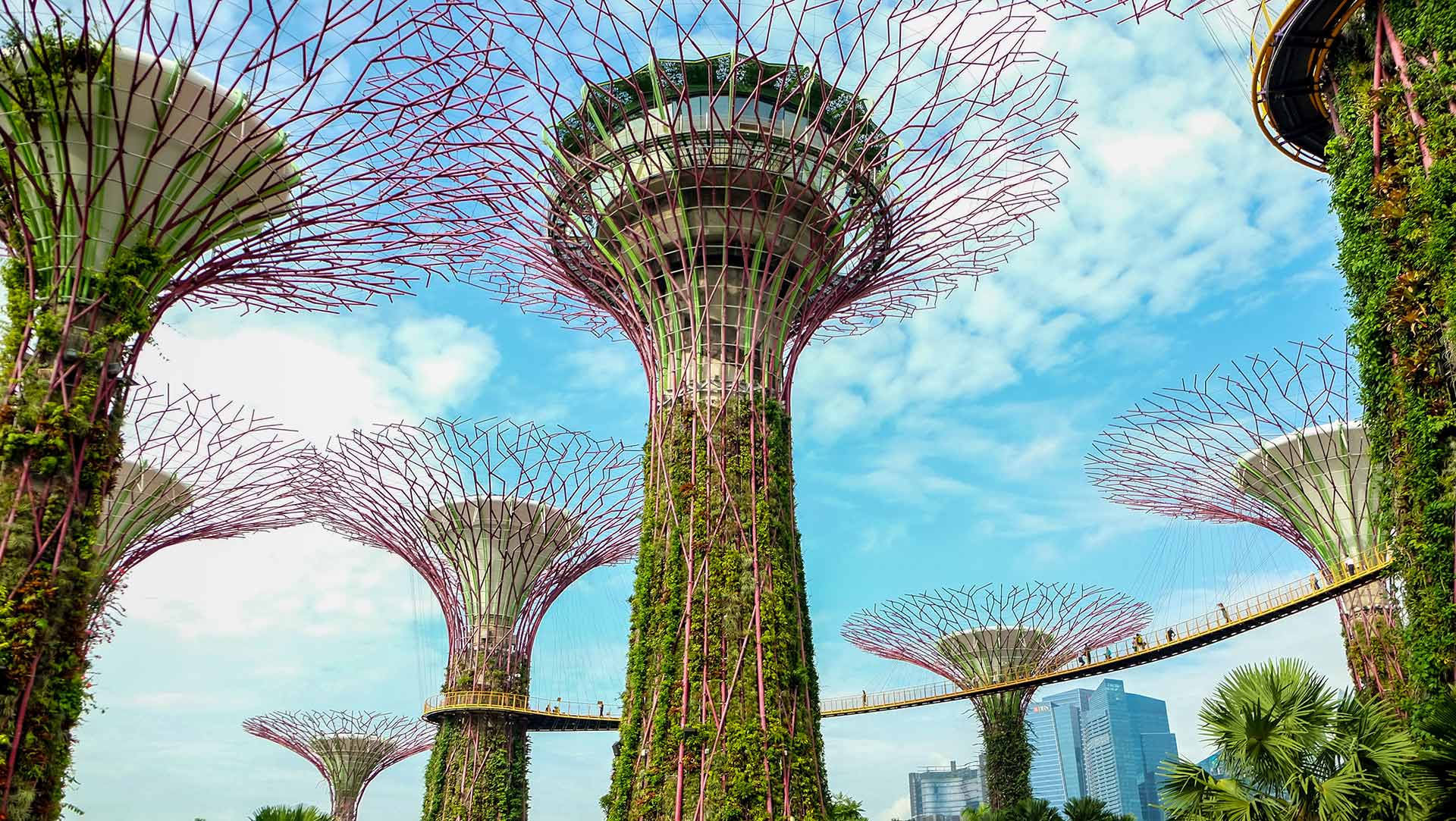
It is the site for the beautiful Supertree Grove that scenically towers over the surrounding botanical gardens and is a very popular tourist spot.
If you plan to walk along the OCBC Skybridge, I suggest getting there as early as possible to enjoy a somewhat uncrowded vantage point to overlook the beautiful botanical gardens below and local area.
Within the Gardens by the Bay are a number of other attractions with the two most popular being the Cloud Forest and Flower Dome.
Head to Brunch at CHIJMES
The Glasshouse Specialty Coffee and Toast Bar
Chijmes, 30 Victoria Street, #01-03 Singapore 187996
estled inside the gorgeous CHIJMES building, The Glasshouse brings us the delights of specialty coffee and artisan sourdough bread surrounded by giant leafy houseplants as if a greenhouse and coffee shop had merged.
Out of all their open sandwiches I tried, the Classic Salmon Sandwich was the winner with it’s salty salmon slices and tart pickled radish on herby cream cheese spread. The Hummus and Bread Bowl was worth it to try out their delicious homemade hummus but maybe their Avocado and Dukkah Sandwich would have been the better choice to change up the taste experience while eating.
For coffee, I chose the interesting White Coffee since it is a popular local coffee style plus I added oat milk just to be a little extra.
After brunch, it’s also worth exploring the CHIJMES building itself. It’s a beautiful reconverted old Catholic convent with open hallways and cloistered courtyards.
The beautiful Neo-Classical style makes it a showstopper for wedding photos and the gorgeous interiors of the other diners are perfect for Instagram-worthy outings.
Left: The Hummus and Bread Bowl and White Coffee.
Right: Classic Salmon Sandwich with Avocado Slices (Extra).
Browse and Window Shop at Haji Street
f you like eccentric art and a place that is bustling with activity both day and night, you will no doubt enjoy a stop over to this charismatic neighborhood.
Haji Street is a trendy joint full of independent shop houses and eateries. You can find an exciting mix of interesting hobby and fashion stores matched with tasty international food and quirky bars – all sandwiched next to each other in perfect harmony.
Experience Chinatown
istorically the area where Chinese immigrants settled during British ruled Singapore, the red and gold coloured streets of Chinatown is a vital cultural enclave for visitors to experience Chinese culture and heritage.
Though a longer stay would include a thorough visit to the famous Buddha Tooth Relic Temple and NUS Baba House, here is a sample of Chinatown’s famous eateries and sights.
Follow the Mural Art Trail
Dotted around various locations within small back alleys or between shopfronts on the main road, the street art created by Singapore’s creative artists will take your breath away with their depictions of the past to more modern inspirations.
The murals painted by artist Yip Yew Chong are my particular favourite for their detailed scenes of times gone by in old Chinatown. Try to pose just right for that perfect shot and turn those stills into living artwork. Check out here for street art locations.
Dine at the World’s Cheapest Michelin-starred Restaurant
Hawker Chan Chinatown Restaurant
78 Smith St, Singapore 058972
Hawker Chan Chinatown Complex Branch
335 #02-126 Smith St, Complex Market & Food Centre, Singapore 050335
Start your Michelin-starred studded food trek with a visit to the first Hawker to be awarded one star, Hawker Chan Soya Sauce Chicken Rice & Noodle.
For those unfamiliar with Cantonese food, soy sauce chicken is a popular dish in Hong Kong that requires meat to be braised and marinated multiple times while roasting in an oven or open fire. The result is a mouth watering caramelized outer layer with a juicy and moist inside that’s so tender you’ll wonder how it could only cost under SGD$4 at Hawker Chan.
If the original Hawker store is too crowded or you arrive later in the day (the stall closes at 3:30PM and Sundays), the restaurant version located a few steps away is a more comfortable alternative with air conditioning and longer operating hours. Though, this restaurant establishment version only received a Bib Gourmand award, the large tables and ample seating make this alternative worth visiting for a taste.
Soya Sauce Chicken Rice
Char Siew Noodle
Find the Best Cheap Grub at Maxwell Road
Maxwell Road Hawker Centre
1 Kadayanallur St, Singapore 069184
Hawker Centres are large food courts housing many individual food vendors dishing out no-frills meals with maximum flavour for dirt cheap.
Singapore’s Chinatown is abundant in hawker centres but the clear stand out the local’s swear by is Maxwell Road Hawker Centre.
Maxwell Road Hawker Centre has been featured on many television programs and is home to the nation’s most famous chicken rice hawker stall Tian Tian and their rival Ah Tai.
No visit to Singapore would be complete without a taste of Tian Tian’s Hainanese Chicken Rice.
Tian Tian has a high reputation within Singapore and around the world, having been awarded the Bib Gourmand award by The Michelin Guide, praised by Anthony Bourdain whose poster hangs proudly in their store and even winning against Gordon Ramsey in a culinary showdown on Singtel’s Hawker Heroes Challenge.
A few stalls down is another well-to-do establishment called Ah Tai Hainanese Chicken Rice. The owner, who also shares the same name, actually is a former staff of Tian Tian. From storefront design to food menu options Ah Tai shares some dare I say “similarities” to their famous neighbour’s chicken rice. However, one taste and you’ll soon realise that there’s something deeper going on in its flavour that makes it it’s own.
So, which is better?
It might sound like a cop-out but they are both so identical in quality it’s hard to tell. They are both really good. What is different is the slight taste experience happening in your mouth when tasting both.
I guess one can argue that it simply comes down to the dining experience. Ah Tai offers complimentary soup and a shorter wait while Tian Tian offers that yummy stock rice that just can’t be beaten.
If you are keen to know more I suggest visiting hungrygowhere for a deep dive into what you can expect from both places.
Ah Tai Hainanese Chicken Rice
Tian Tian Hainanese Chicken Rice.
Take a Tea Break
Tea Chapter
9 Neil Road, Singapore 088808
hile in Chinatown, a stop at the Tea Chapter is a must. It has an impressive reputation within Singapore and was even visited by Queen Elizabeth II!
The tea shop on street level is a great place for buying high-quality tea but climb the wooden stairs to reach the tea salon above you’ll find a fascinating place for some traditional refreshments.
Upon arrival, you can choose your favourite tea room setting before sitting down and glancing through their hand bond menus.
As to expect, there were many black, white, green and red teas on offer but we chose the recommended Queen’s tea called “Imperial Golden Cassia.” We also asked the staff for a tea serving demonstration before attempting the steps ourselves.
The experience at Tea Chapter was a great eye-opener to the appreciation of Chinese tea culture. It was one of the highlights of my trip! I loved the authentic and educational insight the staff provided while being able to relax and enjoy chatting with company.
“Imperial Golden Cassia” is the same tea Queen Elizabeth II was served on her visit here.
View the Night Scene with the Merlion
Marina Bay Area
here’s nothing quite like a romantic nightly stroll along the waterfront to soak up the city lights and at the Marina Bay area, there are three places that look amazing light up under the dark sky: the SuperTree Grove (again, haha), Marina Bay Sands and the Merlion.
If you are following this 24 hour guide in order, I would recommend to visit the SuperTree Grove first, than take the footbridge that connects to the Marina Bay Sands resort complex to see the nightly free SPECTRA – Light & Water Show at the Marina Bay Sands waterfront before walking along the harbour to see the Merlion on the other end.
This will make for shorter travel time to the next activity, eating chilli crab at JUMBO Seafood!
The SPECTRA – Light & Water Show at the Marina Bay Sands waterfront is at 8PM and 9PM on Sundays to Thursdays while on Fridays and Saturdays it will be changed to 9PM and 10PM.
There is also a light and sound show called Garden Rhapsody at the SuperTree Grove held at 7:45pm and 8:45pm daily.
The SuperTree Groves lit up during the night.
The Marina Bay Sands on the opposite side of the waterfront.
The Merlion lit up at night.
Dine on Singapore's Famous Crab
JUMBO Seafood Restaurant – Riverside Port
30 Merchant Road #01-01/02, Riverside Point, Singapore 058282
nother signature dish to try in Singapore before leaving is, of course, the infamous chilli crab.
Singaporean chilli crab is so good it was listed 35 on the World’s 50 most delicious foods list by CNN Go. Its a deliciously cooked crab in a sweet-savoury tomato chilli based sauce.
If I could recommend a place, JUMBO Seafood is a great chain restaurant and the Riverside Point location makes for a modern and stylish dining experience. Although chilli crab isn’t supposed to a spicy dish despite its name, the spice level at JUMBO Seafood seems to have been made spicier when I visited in October this year (2019).
I would confirm with the waiter if they can make the sauce milder if you are not the best with spicy food.
They also offer packets of their special chilli crab sauce for sale should you want to buy one as a souvenir.
As it is one of their most popular locations, I suggest booking in advance if you are lusting to get your mud crab fix without waiting forever in line.
Singapore Chilli Crab
Ginger and Spring Onion Crab
See the Jewel
f time permits before flying out of Singapore, a stop at the newly opened Jewel is another must-do.
Jewel located in Terminal 1 is a nature-themed entertainment area in Changi Airport where you can see the world’s tallest indoor waterfall, Rain Vortex and enjoy recreational activities on the higher levels of the canopy garden.
Even if you are only able to enjoy the Rain Vortex’s light show, it’s a great way to close off your trip.
olourful, unique and pretty things have always attracted me. Call me vain but I can’t help but be attracted to them. So, when a last minute schedule change to my Italian holiday now included Venice, it also meant that Burano was within reach.
Yes! The island of Burano! Recognised internationally as one of the 10 most colourful cities in the world (although really, it’s more like a village). For those that don’t know, Burano is a picturesque fishing island located in the Northern Venetian lagoon and is part of an archipelago of four islands connected by footbridges.
Burano is small enough for a half day trip, or make it a full day trip by visiting nearby islands. Here are my top 5 highlights when visiting Burano.
Sample Burano's locally caught Seafood
urano is a fishing village and fishing villages usually mean amazingly, fantastic seafood. Burano is no exception, in fact I had my most delicious meal in all of Italy right here.
What many tourists don’t realise is that majority of the food sold in Venice isn’t actually Venetian. That’s why a venture to Venice’s islands is worthwhile, especially if you want to try true Venetian food – it’ll taste better and cost you less that anything you’ll find on the Venice main island.
As a fan of Jamie Oliver, I remembered that in one of his TV episodes he visited Burano restaurant ‘Trattoria al Gatto Nero da Ruggero‘, where he met the ‘Risotto king of Venice’ and was taught how to make the perfect cuttlefish risotto. Naturally, the foodie inside me really wanted to eat there but the place was completely booked out by the time I arrived on the island.
Hoping I’d find a restaurant just as delicious, I stumbled across ‘Trattoria de Primo e Paolo‘. Just like Trattoria al Gatto Nero, the restaurant is a family business.
The family catches their own seafood from the lagoon every morning and it is then also prepared by the family in the restaurant.The waitstaff were so friendly and could speak English well. Unsure of what to eat, I was recommended the “antipasto misto di pescetti vari” which featured a variety of locally caught seafood prepared traditionally. Although an entrée, I was assured it would be large enough to keep me full.
I can’t say enough about the service, everyone I spoke to was really nice and the waiter took the time to explain the dish to me when it arrived. The best way to experience this dish is by starting at the bottom row and working your way up, row by row. The bottom row is all about enjoying natural seafood flavours as they are. The flavours get more and more pronounced as you work your way up the dish. The top row was where Venetian cuisine came alive and the Italians showed off their finesse for flavour combinations.
I absolutely loved it and it was worth the expensive 25 euros. Yes, pricey for a budget traveller like me, but so worth it!
Bottom: Sea Bass, Octopus, Abalone, Fish, Seabass
Middle: Prawn, octopus, octopus, prawn
Top: Mussel, Soft shell crab, shrimp, tuna
Stroll Burano's multi-coloured streets
he main reason people visit Burano is to set their eyes on the brightly coloured houses that line the canals. With so much colour, I wondered if even the grumpiest person would feel a slice of happiness here.
And you know what? Yes they would, because the locals not only have houses that are every colour of the rainbow BUT they also coordinate the washing they hang up to match their houses. Therefore I conclude that this town is the happiest town alive, especially if the locals take the effort to colour coordinate the way they hang up their washing just to put a smile on the probablydefinitely annoying tourists that visit daily.
Turns out though, the coloured houses exist for a reason. Some say it was to help the local fishermen find their houses after fishing in the foggy winter mornings. Another source says the houses were painted the same colour as the fishermen’s boats, so if something happened to them out at sea, they would know which house to contact.
Today though, likely because of tourism, you’ll notice the houses in Burano follow a colour scheme. This is because, in order to paint your house in Burano, you need to officially request to do so from the government. If they agree, they will also let you know which colour you are allowed to paint it.
I wasn’t lying about the colour coordinated washing!
The main street on the island is the Via Galuppi and it’s where you’ll find most restaurants, souvenir shops, bars and stores selling Italian snacks and food.
Wandering away from the main streets, you’ll find a tonne of colourful alleyways that are much quieter – some are even free of tourists during peak hour. This makes a little wandering great for finding a quiet place to take photos if you were unable to beat the crowds by arriving early in the morning.
Other notable landmarks include the leaning bell tower and the Church of San Martino.
Arrive Early and Use the Afternoon to Explore Surrounding Islands
et me start with saying, you’ve been lied to. All those articles you read about Burano being “Venice’s best kept secret” with little to no tourists is a big. Fat. Lie. At least nowadays it is. Burano is overflowing with tourists from 11:30am, so if you can make an effort to catch one of the first Vaporetto from Venice! You’ll skip the tourists for a couple of hours and could probably also score a booking at the restaurant of your choice for lunch.
One thing I enjoyed about Burano was that it’s really small, which was great because it doesn’t take up a whole day on your probably already short travel itinerary. Burano is perfect for a half day trip, meaning you have the afternoon to visit surrounding islands in the Venetian lagoon, such as Murano, popular for its glass making or Mazzorbo which is connected to Burano by a wooden walk bridge. Mazzorbo is rich in history and beauty offering vineyards, traditional food, artichoke fields and fruit trees. Find about more in this small guide to Mazzorbo island, Italy.
Early mornings in Burano
Experience the Tradition of Burano Lacemaking
urano’s close connection to lace goes back to its early history where, in the 1500s, Burano was becoming increasingly known for its intricate and delicate handmade lace. The fashion of the time created a high demand for lace across Europe and this continued to the late 1800s.
While tourism is the island’s biggest industry today, there are a small few that have carried on the tradition of lacemaking in Burano. For tourists looking to purchase real Burano lace it doesn’t come cheap, with small items costing 45+ euros. Burano lace can take months or even years to craft, so any cheap lace is likely Chinese imitations.
At the Museo del Merletto you can learn about the history of the craft and view 16th, 17th, and 18th century lace pieces crafted in Burano. You’ll also find beautiful gowns worn by Queen Marghertia and Jackie Kennedy that are embellished with Burano lace.
Lace making was traditionally undertaken by women together with the friends and relatives at their houses and today some of the more traditional lace shops in Burano, still have woman inside crafting up their latest creations.
Get a Closer Look at True Venetian Culture
f you happen to venture to Burano during a Wednesday morning, you can enjoy Burano’s fresh fish market which features fresh seafood from the Venice lagoon. All seafood is locally caught by the fisherman of Burano – what better way to sample Venice’s fresh produce.
If you’re only in Venice for a short time and didn’t have the chance to check out Murano and its history in traditional glass making, you can also watch the Murano glass work at the New Arte Fuga a small shop and glass factory located in Burano.
Lastly, consider staying overnight in Burano and you’ll be treated its heartwarming, authentic side. As the crowds begin to leave the islands for their hotels in Venice, a stunning sunset awaits. Watch as Burano is illuminated with the shimmering lights reflecting on the canal waters as the residents come out of their homes to catch up with one another or play cards and listen to music in the streets.
Getting to Burano from Venice
etting to Burano from Venice is super easy and will set you back around 40 – 45minutes.
Simply take Vaporetti (water bus) #12 from the Fondamente Nove Piere. The vaporetti also stops at Murano, Mazzorbo, Burano, Treporti and Punta Sabbioni, making a day trip to a couple of these islands super easy.
As a quick tip, water bus tickets in Venice are only valid for a certain time frame. A single ticket (one way) is only valid for 75minutes. So if you plan to go to Burano, but stop off and spend time at other islands first, you will need to buy another ticket to get to Burano. Therefore, if you plan to stop off at numerous places during the day, it might be smarter to buy a 24, 48 or 72 hour ticket.
If however, you just plan to go to Burano, a return trip to costs 15 Euro, which is expensive….but this is Venice!
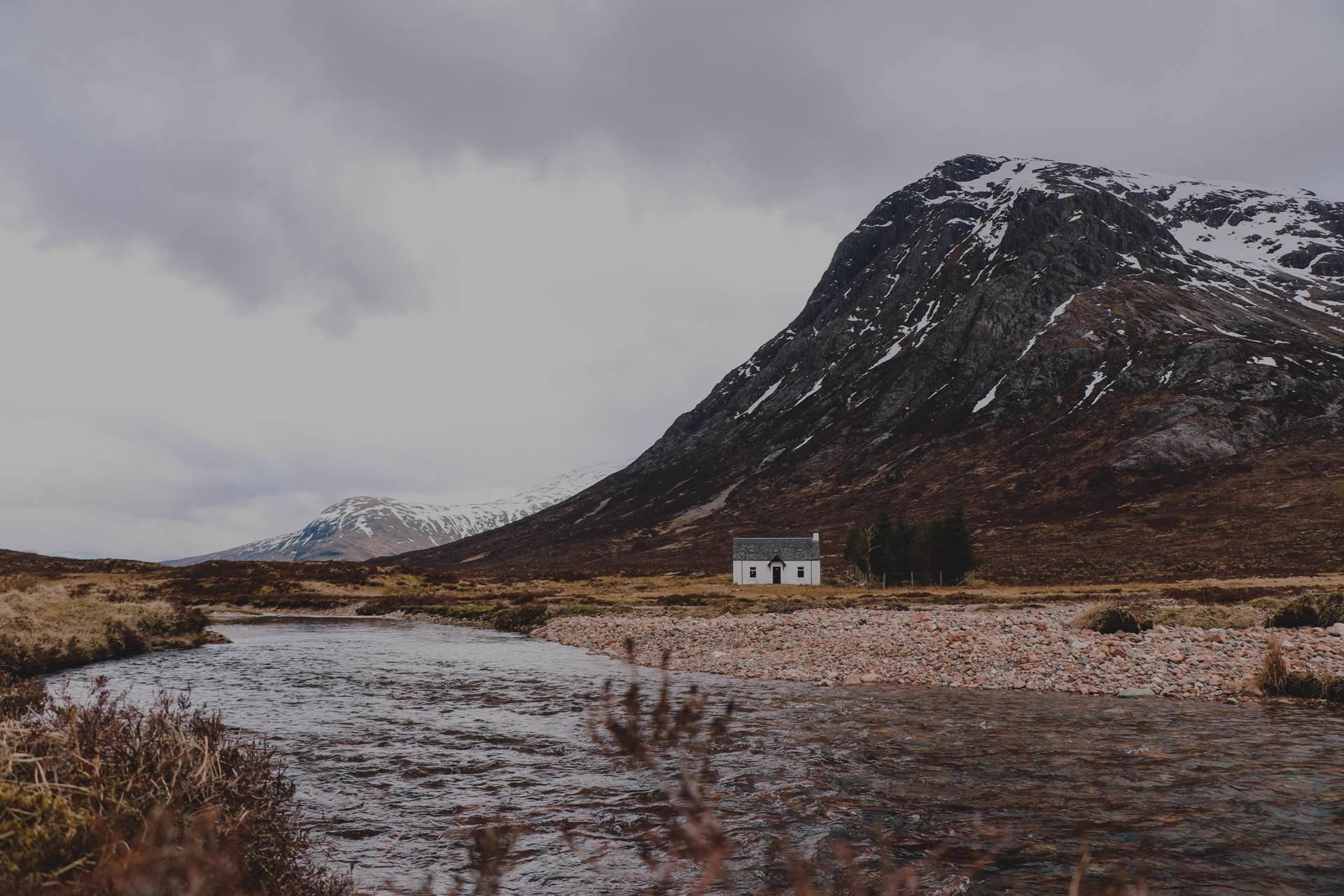
ou’ve probably seen the iconic image of a tiny, little, white hut looking lonely and dwarfed at the base of a dark and rugged mountain. The first time I saw this picture perfect image, I knew I had to go and see it myself in person.
The problem was, without even having a name to go by, this little white hut can be pretty difficult to find. Trust me, searching “Little White Hut, Scotland” into Google doesn’t get you very far.
Even after finding out its name, it was really difficult to get an exact location. Eventually, my search brought me to Glencoe, but when you know nothing about Scotland, a location that says “The North Side of the Buachaille Etive Mor” isn’t very helpful. Instead it raises a number of questions like: How big is the Buachaille Etive Mor – for all I know it could take 4 hours to circulate it before I find the hut. How am I suppose to know which side is the North Side? GoogleMaps doesn’t exactly tell you that information. Similarly, how close can you get to it by car? Is there any parking nearby? Do you need to hike there? Is it hidden or easy to see and out in the open?
So for the noobs out there who, like I was, are just trying to make their travel dreams come true, here’s a trusty guide to everything you need to know during your search to find the Lagangarbh Hut.
The Exact Location of the Lagangarbh Hut
Without further ado, let’s get into the hut’s location!
The Lagangarbh Hut is located in the Western Scottish Highlands of Glencoe Scotland, on the north side of The Buachaille Etive Mor. The coordinates are: 56.661806, -4.904396.
Being the only building in the vicinity amongst such a rugged and expansive landscape is part of its breathtaking appeal. Even though the hut looks as if it’s standing in the middle of nowhere in pictures, it’s actually not difficult to find at all! In fact, it’s right beside the main highway, the A82, that passes right through Glencoe. Visible from the road, you absolutely cannot miss it! Parking is also very stress free and simple. There are plenty of shoulders on the A82, that you can veer off into and park the car. From these parking spots, it’s just a short walk to the Lagangarbh Hut.
Referring to the map below, I’ve included 3 markers, click the icon in the top left corner to pop open a sidebar with more info. I have marked 2 of the closest parking spots on the map, but there are numerous along the highway.
As you walk towards the hut, you’ll notice the River Coupall runs just in front of it. If you want to get a closer look at the hut, there are wooden footbridges scattered around the area that you use to cross over the river.
I arrived around 4PM – 5PM and pretty much had the place to myself except for another group of photographers. It was great because by this time all the tour buses had left, so there was plenty of parking and no crowds – the best! I also visited during mid-March, which is a quieter season.
Map of the Lagangarbh Hut and Parking Areas
Use the map below to navigate to the two closet parking areas and the Lagangarbh Hut (it’s called “Glen Coe Photography House” in GoogleMaps).
Getting To Glencoe From Edinburgh or Glasgow
By Car
If you’re looking to travel to the Lagangarbh Hut from Glencoe or Glasgow, I recommend that you drive. It’s one of the most scenic, beautiful drives, plus there’s a whole heap of great places to stop off at along the way – if you’re an Outlander fan, you can a stop at Doune Castle, like I did. Altogether, the drive is around 2.5 hours which saves you a lot of time when you compare it to the 4 hours trip by public transport. The drive is very simple, I had no problems!
By Public Transport
If hiring a car is not for you, there are buses you can take from Edinburgh and Glasgow to Glencoe village. Tickets can be bought from Scottish Citylink.
The bus routes to the right show the buses and the exact route to take to get to Glencoe Visitor Centre, which is located closer to Glencoe village. You want to get off at the “Chairlift Road End” stop (according to Google, this is the closest stop to The Lagangarbh Hut, but you could ask the bus driver if there are any closer stops). According to Google it’s a 1 hour walk from “Chairlift Road End” to the Lagangarbh Hut, or just under a 3 hour walk from the Visitor Centre.
Shot of the A82 highway that passes by the Lagangarbh Hut.
Seasonality: When to Visit
ypically, it’s said that the best time to visit Scotland is during the months of April through to June, which covers spring and early summer in Scotland, and September to November, which are Scotland’s autumn months. As a rule of thumb when travelling to Europe, summer tends to be peak season which means more crowds.
To know when YOU should visit Scotland, it’s comes down to your answer to this question; “What type of Scotland do you want to see?” For me, I envisioned lush green landscapes and was initially disappointed to find that March was still very much dominated by brown/orange hues as the flora was still recovering from the winter months.
In the end, I ended up loving these colours in the landscape, but there was an initial shock. So, if you want lush, green Scotland, visit from May – August. If you want orange, auburn hues, visit during mid-late autumn or early spring like I did. If you want to see the place as a winter wonderland covered in show, visit in winter.
Below, I’ve included scenes of the Lagangarbh Hut through the seasons to help you decide when you might like to visit.
If you are interested in staying at the hut, applications are only accepted from Mountaineering Clubs, Hillwalking Clubs, Individual members of Mountaineering Scotland or the BMC (British Mountaineering Council). See details below:
The Lagangarbh Hut and Barn. Both are available for accomodation.
Run by two travel and lifestyle bloggers, The Hidden Thimble focus’ on creating truthful and in-depth travel guides, food & beauty reviews. Enjoy drool-worthy photography from around the world!