While traveling around Suwa, Nagano, it was a real challenge to find places opened on a Wednesday. While most of the popular eateries we read about on travel sites were closed, we were lucky to strike gold with a small local find called the Mint Garden through good old Google search. With the autumn drive towards the Mint Garden as our last saving grace to satisfy our afternoon tea cravings, here’s what to expect in this idyllic cottage cafe.
Setting & Atmosphere
f you love all the charms that quiet mountain living has to offer, you’ll definitely enjoy the country home aesthetic of Mint Garden.
The owners run the cafe out of their European style wooden house by themselves and it has all the vintage details you would expect of a chic traditional German farmhouse. Once you step inside, you’ll instantly feel at home. The wooden antique furniture with exposed ceiling beams radiated those cozy hygge vibes while, the old stove heater kept the room at a toasty warm temperature. There’s also a small handmade trinket shop next to the register.
Even better, the cafe is also dog friendly and the owners have three dogs themselves
who you can see behind the register bar. Their older black Labrador is a big old sweetie who gets around slowly and will melt your heart!
If you get the opportunity, sitting in the sun room area has to be one of the cafe’s best features. It’s charming high ceiling and skylight let’s in those warm afternoon rays that makes you feel at peace. You’ll also have views of the garden or wonder outside on the terrace. I could already imagine my inner granny enjoying a cup of tea in the sun room or sitting on the porch while listening to the birds sing and watching my rose garden grow. Wherever you choose to sit, you’ll definitely forget about the rat race of modern life being surrounded by all this rich nature!
FOOD
s you might have noticed with our various recounts of aesthetically pleasing cafes in Korea and Japan, cafe-hopping while traveling is our thing!
Dare I say, we have become experts at trying to find cafes that offer something attractive while making it worth the trip. At the Mint Garden, their main draw is their hearty salad dishes that look like they are overflowing with green goodness. They refrain from using pesticides as much as possible and use mainly organic and local ingredients so customers can eat with peace of mind.
For the weary traveler who also enjoys tea time, the Mint Garden is also a lovely stop-over for afternoon tea which is when we visited. Considering we had been eating every meal at a convenience store thus far, the thought of a freshly prepared meal was greatly welcomed with open arms.
The homemade cakes were all deliciously served with a side of seasonal fresh fruits
and we were lucky to come when Japanese grapes were in season. If you have never tried Muscat or Kyohei grapes in Japan you’ll be surprised how super plump and juicy they are!
For our cakes we decided on the baked cheesecake and the chiffon cake. At first, I thought the cheesecake looked a bit petite on the plate but it was very rich and dense so it turned out to be enough to satisfy my greedy eyes. Of the two, we both agreed the winner was the classic chiffon cake. It was so light and fluffy and tasted even better with the generous dollop of hand whipped cream.
To wash it all down, we chose to share the flowery herb tea called “hanakokoro” which was surprisingly very smooth and an interesting blend of lavender, rose and anise seed. Although I don’t usually like herbal blends, I really enjoyed the flavour of this tea a lot! Not too flowery and very different from any commercial tea blends I have tried before. We also ordered a chai tea as our other set drink.
eeping in mind that this is run and owned by a husband and wife team, it’s best not to rush your time here.
As we beat the lunch time rush, our service at afternoon tea time was pleasant and prompt with a homey hospitality. The staff are friendly and enjoy chatting with their customers but unfortunately can speak only Japanese and some broken English.
Considering this, travellers might find it difficult to order and communicate since the menu is all in Japanese.
Though it isn’t listed anywhere, the last order for lunch time is at 3PM (unless sold out for the day) while tea and cakes are still available to order before closing time at 5PM.
Value For Money
aybe it’s due to the area but considering everything at the Mint Garden is homemade and uses organic ingredients, the prices are incredibly reasonable.
I noticed that the lunch set was only 1150 yen which included curry, naan bread, vegetable salad, drink and fruit dessert – a great bang-for-your-buck! You can also order a lunch cake (450 yen) or creme brulee (350 yen) if you are in the mood for more dessert.
If you are coming by for tea time only, the cakes were not too bad at 500 yen each but you should definitely order the cake set which also includes a drink of your choice to make tea time come under 1000 yen.
Overall, the Mint Garden is an affordable dining spot to savour the wholesomeness of homemade healthy food before continuing the long drive ahead.
The Sailor Moon Cafe is a reoccurring limited-time-only event.
The Shining Moon Tokyo Restaurant has now closed down.
Updated: April 2022
THE VERDICT
Setting & Atmosphere
Food
Service
Value For Money
2.6
OVERALL SUMMARY
Skip the kawaii desserts and go for the real champions of justice – the main dishes
You’ve read my first impressions of anime cafe attractions like the Pokemon Cafe and the Chibiusa Cafe from the Sailor Moon Exhibition before. This time with Talyssa in town, we got to enjoy the delights of anime dining together!
Naturally, we both have the same fraternal appreciation for our childhood queen, Sailor Moon. Luckily for us, Japan had two new cafe attractions centred around our favourite anime series; the 2019 ‘Girls Night Out’ Sailor Moon Cafe pop-up and the permanent restaurant ‘SHINING MOON TOKYO.’ With our busy schedules, we were only able to go to the Sailor Moon Cafe pop-up cafe but was it the right choice? For love, justice and food here are our thoughts on the experience.
Setting & Atmosphere
n my humble opinion, recreating an anime themed experience should be all about the details and besides food, that should be reflected in the decor as well.
Being a recurring ‘limited time only’ event, the interior for the Girls Night Out Sailor Moon Cafe does well in putting ‘Sailor Moon themed bells and whistles’ on whatever surface they can.
Inside, the cafe was decorated with newly created artworks for the event (minus Sailor Pluto and Saturn on the main poster WTF) and a fun, bold colour scheme just like the 90’s show. The official gift shop, the iconic anime soundtrack and projected Sailor Moon videos all served as a good distraction while you waited for your food.
My only pet peeve was that the already small cafe felt so cramped! It’s almost like
everyone was packed in on top of each other like a tin of sardines.
The table space for two people was almost impossible to fit drinks, two mains and adding desert to the mix meant having to balance a plate on your lap. It slowly dawned upon us that this experience was best suited to a light snack spot, rather than a full meal. Dinner was a constant ‘knocking-of-elbows’ with the person next to you and with the time limit looming, you are pressured to eat, enjoy and experience the café before the next group comes in. A chilled experience? Think again!
Despite its flaws, it was a fun casual dine out but if you were to live out your true weeaboo fantasies, the SHINING MOON TOKYO restaurant would be the better choice. We provided some extra photos for comparison below:
Inside the Cafe
Cafe’s Gift Shop (unfortunately many things were already sold out)
hough not as bad as the Pokemon Cafe, the food at the Girls Night Out Sailor Moon Cafe was a bit more sophisticated, but was still a mixed bag of good and bad.
Let’s begin with the drinks menu. I loved that they had a drink for every single Sailor Scout with their own colours and flavours (yes, sweet justice for Sailor Pluto and Saturn). I thought it was a cute touch to put their casual outfit artwork on the straws and as a bonus, you also received a free random coaster. The “Makoto” mint and lemon combo sounded refreshing but the mint syrup tasted borderline like toothpaste. Talyssa’s “Rei” cassis and pomegranate was nice and both drinks were garnished with frozen fruit. While, the drink combinations were interesting, given the cold autumn weather it would have been better if the fruits were fresh.
For food, they had a lunch and dinner menu with dinner time being the most appealing for mains. Talyssa chose the Moonlight Risotto which came with 4 different sauces inspired by the original Sailor Scouts; Mercury (blueberry cheese), Mars (napolitana sauce), Jupiter (pesto) and Venus (capsicum relish). While the
flavours of this dish were quite good, it was a far cry from a risotto, with the texture of the rice being dry and hard. To this day, we are still left wondering why risotto would be served with a blueberry cheese sauce. Ah, the mysteries of Japanese-Western fusion.
In most situations, it usually goes without saying that the more expensive main options are generally much tastier.
My Chicken Steak Plate tasted great especially with the cheese sauce on top. It also came with a surprise glass of sparkling apple cider with rose petals inside and although I relish in the delight that it must have been a present from my man, Tuxedo Mask, it looked like I had grossly over-ordered and I didn’t realise my meal came with its own drink! Fml.
I digress, now we must talk about the desert because it was a massive let down. Although the Cosmic Heart Berry Sandwich looked good in the photo it also tasted super fake – like that artificial cherry flavouring which is a big “no” for me.
“Makoto” (mint and lemon soda) and “Rei” (cassis and pomegranate soda) (¥890 w/o tax each)
Moonlight Risotto (¥1,490 w/o tax) with the 4 different sauces inspired by the original Sailor Scouts;
Mercury (blueberry cheese), Mars (napolitana sauce), Jupiter (pesto) and Venus (capsicum relish)
Chicken Steak Plate with salad and soup set (¥1,990 w/o tax)
Cosmic Heart Berry Sandwich (¥1,690 w/o tax)
Service
or the first timers out there, anime cafe attractions almost always have a session time limit (this event was 1 hour and 20 minutes) and as a result are a bit systematic with a few steps to follow.
One thing I think I under-appreciated about the Pokemon Cafe was the ability to choose when your food arrives. As pop-up cafes are extremely busy, all the food comes at once which as mentioned before, is not great when your table is exceedingly small.
All-in-all, I really enjoyed all the freebies you can collect while dining at this event. It was like a personal challenge to collect everything. The wait staff were overall very bubbly and friendly.
Ticket Envelope Freebie
Random Pick Coaster
Table Mat Freebie
Numbered Ticket Card for the Gift Shop
VALUE FOR MONEY
onsidering the price of the gift shop items, the food, the entry fee and the “limited time only” aspect of the event, there’s a few things we need to factor in to determine our rating for the cafe’s overall value for money.
Unexpectedly, I was gobsmacked by the price of some of the items for sale. While the smaller trinkets at the gift shop like the acrylic key chains and postcards were reasonable in price (650 yen and 300 yen respectively), there were others that were grossly overpriced. For example, the Luna Glass Cup was a steep 1,600 yen and the Clear Bag was a whopping 1,800 yen. Holy crap! They might be collectable items but I can’t fathom anyone would pay top dollar to own something that basic.
Considering the quality of the food was comparable to meals served at local family restaurants like Denny’s or Gusto, the prices were a tad higher than we would expect to pay. With the consistent hits and misses with dishes and drinks, I definitely felt
cheated paying over 1,700yen for a subpar dessert (I’ll have that weird blueberry risotto combo instead, please).
After crunching the numbers including the price of the entry fee (650 yen), the average base price for one drink, one main and one dessert would be roughly 4,000 yen per person.
So, did we think it was money well spent?
Despite all these criticisms, our overall sentiment is that although it is indeed expensive and overpriced, what we’re paying for was the nostalgia and the experience to relive something that we love – and in that sense we found it enjoyable and “worth it” for the fun. Though if we were to recommend our readers one or the other, we think you should save your money for the SHINING MOON TOKYO instead for a better experience.
Acryclic Coaster and Key Chain Displays
Luna Cup and Clear Bag
Acrylic Character Stands
How to Book
urious to explore the world of anime dining for yourself?
To find news about these special events or cafes especially if it’s anime related, it’s best to follow Japanese trend sites like SoraNews24 to catch wind of any new attractions popping up around Tokyo and Japan throughout the year.
For foreigners that don’t read Japanese, the reservation process can be a bit confusing, but generally follows a similar pattern:
oted in the top 10 most precarious buildings by Time magazine, the “tea house built too high” known as Takasugi-an is a Dr Seuss-esque tea house built overlooking the surrounding mountain range of Chino, Nagano. It sounds like the place for the perfect cup of tea – if only it didn’t sway so easily in the wind!
Actually there are a total of three impractical tree houses in Chino each uniquely unusual – Takasugi-an, Hikusugi-an and the Flying Mud Boat.
The most famous of the three, Takasugi-an, looks dainty and fragile as it expertly balances off the ground on top of two slender looking chestnut tree trunks. In contrast, its neighbour Hikusugi-an which literally translates to “the too-low tea house” is so hysterically close to the ground it looks more like a tent rather than a tea house. Last but not least, the death defying Flying Mud Boat located towards the front uses only cables and is suspend in midair like a hovering wooden space ship.
That’s just the kind of mind bending thinking that led to the creation of these impressive funky structures by architect Fujimori Terunobu. They are part of an art installation exploring unconventional ways to create small spaces that challenges traditional design and ideas of comfort.
So how can you step inside these quirky spaces? Unfortunately there’s not a lot of information online but here’s everything you need to know about visiting this off-the-grid attraction.
Who is Fujimori Terunobu?
o understand why these tea houses exist, we must first understand the man who created them.
Fujimori grew up in Chino. In fact, the site where the tea houses are built on is his family owned plot of land, which overlooks his first work “Jinchōkan Moriya Historical Museum” – a historical museum that showcases Chino’s neighbouring city Suwa’s ancient religious roots and connection with the prestigious Moriya family clan. Bonus fact: If you are a fan of the popular anime film “Your Name,” Suwa is heavily referenced in the film’s setting through Mitsuha’s character.
His approach to architecture is defined as being eccentric and humorous due of his experimental use of natural materials and his subversion of traditional tea house building techniques. He also mentions that his works are intentionally medieval in style, wanting to go back to a time before the Bronze Age to create ‘an international style in the Neolithic Age.” Simply put, imagine a Flintstones-esque Stone Age with a Japanese sensibility to design and the imagination of a Studio Ghibli film. This video shares more about his intentions behind Takasugi-an and The Flying Mud Boat.
Besides architecture, Fujimori is quite famous in Japan as a cultural commentator, author and television host and represented Japan in the 2006 Venice Biennale.
What to expect inside
esides the general descriptions found in many online art articles, it was quite hard to find any information on what these structures actually look like on the inside.
Although we weren’t able to go inside ourselves – we talk about this later on – from our research we were able to gather some sense of what each interior space has to offer.
Takasugi-an’s incredibly tiny, measuring only 2.2 meters on each side but this relaxing fort-like interior with attachable ladder to climb to the entrance is the treehouse happy childhood dreams are made of. Inside, the use of nature such as light reflecting from the gold leaf sky line during the day and moonlight shining from the bamboo shutters makes it a soothing experience to be inside. The Flying Mud Boat tea house is like a cozy wooden cabin ready to fly off on a Treasure Island inspired adventure and though we aren’t sure why Hikusugi-an’s tea house roof can completely open like a Babushka doll, the interior’s use of white and wooden paneling sure is hypnotic when the roof is closed.
All three works explore Fujimori’s experiment with tiny spaces. Whilst planning, he mentions he wasn’t interested in creating the smallest space possible, rather prioritising the sense of comfort that small spaces offer.
The structures also break conventions in Japanese tea house design and traditional architecture as well. The Flying Mud Boat’s suspension system is so unique it’s the only suspension structure in the world to run cables under its base foundation like a hammock. Takasugi-an and Hikusugi-an’s tea house designs both offer views of the outside world as oppose to traditional Japanese tea houses that insulate the guest to concentrate on the tea. In addition, the windows of Takasugi-an have another design advantage in that it replaces the traditional picture scrollor kakejiku found in many Japanese houses with the changing nature outside acting like a real-time artwork. Kakejiku is normally a painting or calligraphy that represents the time of year.
In retrospect, these citations of artistic insight aren’t necessarily known by the average tourist which is why visiting the structures using a guided tour would no doubt enrich your experience of seeing these peculiar buildings.
hile you can view the tea houses from the street, the only way inside is to join a tour through ChinoTabi.
ChinoTabi’s Fujimori Terunobu Tea House Tour is a three hour tour that will give you better context into Fujimori’s philosophy of design. It also includes a casual Japanese tea ceremony experience inside Hikusugi-an which we really
wanted to do but unfortunately, we inquired too late for a booking. You will also get to visit one of Japan’s oldest Shinto shrine complexes, Suwa Taisha during the tour.
If you wish to join, it’s best to inquire for reservations at least 3 months in advance to secure a spot as group numbers are limited to 8 people per tour. Tours are also closed during the winter season.
Seeing inside Takasugi-an during the ChinoTabi tour
Be aware that the bikes must be returned daily before 5pm and can be hired throughout the year except for the winter months.
Driving only takes 10 minutes, though, it is still an extra 11 minutes walk from the free parking at the Kamisha Honmiya Parking Lot to reach the houses.
Feel free to use our interactive map to help plan your trip.
Seasonality: When to Visit
f you have your heart set on doing the tour and having the full experience, we recommend visiting during spring, summer, and autumn as the tours are not operational during the winter.
However, if you don’t mind seeing the houses from the outside seeing Fujimori’s tea houses and the Chino area during any season has great sightseeing opportunities all-year-round for travellers.
To list a few attractions nature, hiking and scenic drives are some of the main draws to the area. In fact, Chino is a popular destination during the summer for mountain
hiking as the cool summer temperature averages around 27 degrees making it a perfect getaway from the heat. Many people flock to the Kurumayama Kogen highland area to see the wild flowers bloom and the deep greens of the fairy tale-like Moss Forest for exploring.
For autumn, the view of Yokoya Gorge with its impressionist autumn leaves is breathtaking at the observatory point Yokoya Kannon and Choen-ji temple’s picturesque fiery red autumn leaves are a must see in the area. The winter months have everyone head into the Alps to the snow resorts for exciting ski activities and plenty of hot springs to enjoy.
y intense, albeit short adventure to the global city of Singapore was everything one would imagine from the luxurious film set of “Crazy Rich Asians.”
Touching down into the “Lion City” awaited an exciting modern oasis balancing impressive futuristic architecture against the stunning tropical landscape. Its unique history and fusion of Malaysian, Indian, Chinese, Arab and English cultures echos everywhere you walk. Though the humidity might melt your face off, the vibrant street colours, glitzy multi-complexes and culturally rich enclaves are exciting exploring grounds to discover on foot.
This 24-hour itinerary will give you the best of the touristy essentials mixed with some local finds to entice you back for another visit. Oh, and satisfy your fatty foodie soul with the tastiest grub in town!
Start with a Local's Breakfast
Ya Kun Kaya Toast Family Café or Chee Kei in Changi Airport Terminal 2
efore leaving the airport, kick start the first of your many food adventures with a traditional Singapore breakfast staple at Ya Kun Kaya Toast.
Kaya toast is toasted bread filled with butter and a jam called, kaya. Kaya is made from eggs, sugar, coconut milk and pandan leaves. The dish is dipped in and eaten with a soft boiled egg and either hot coffee or tea is served together.
At first, the idea of a cold butter sandwich dipped in egg sounded quite bizarre and admittedly heart attack inducing but the combination is surprisingly delicious.
An alternative is a bowl of good old Cantonese comfort food – wonton noodle soup. At the famous Chee Kei noodle shop grab some noodles with a serving of radish or, if you have two stomachs, the Braised Beef Tendon and Brisket with Rice is not to be missed.
Above: Ya Kun Kaya Toast Family Café’s Set A – Kaya Butter Toast with a Soft Boiled Egg, Kaya Butter Toast and Coffee or Tea.
Right: Chee Kei’s Shrimp Noodle Soup, Braised Beef Tendon and Brisket with Rice and Radish (side dish).
See The Gardens by the Bay Early
ingapore has arguably the most well maintained public gardens I have ever been in any country. Rightly so, given its reputation and committed vision to being a “City in a Garden.”
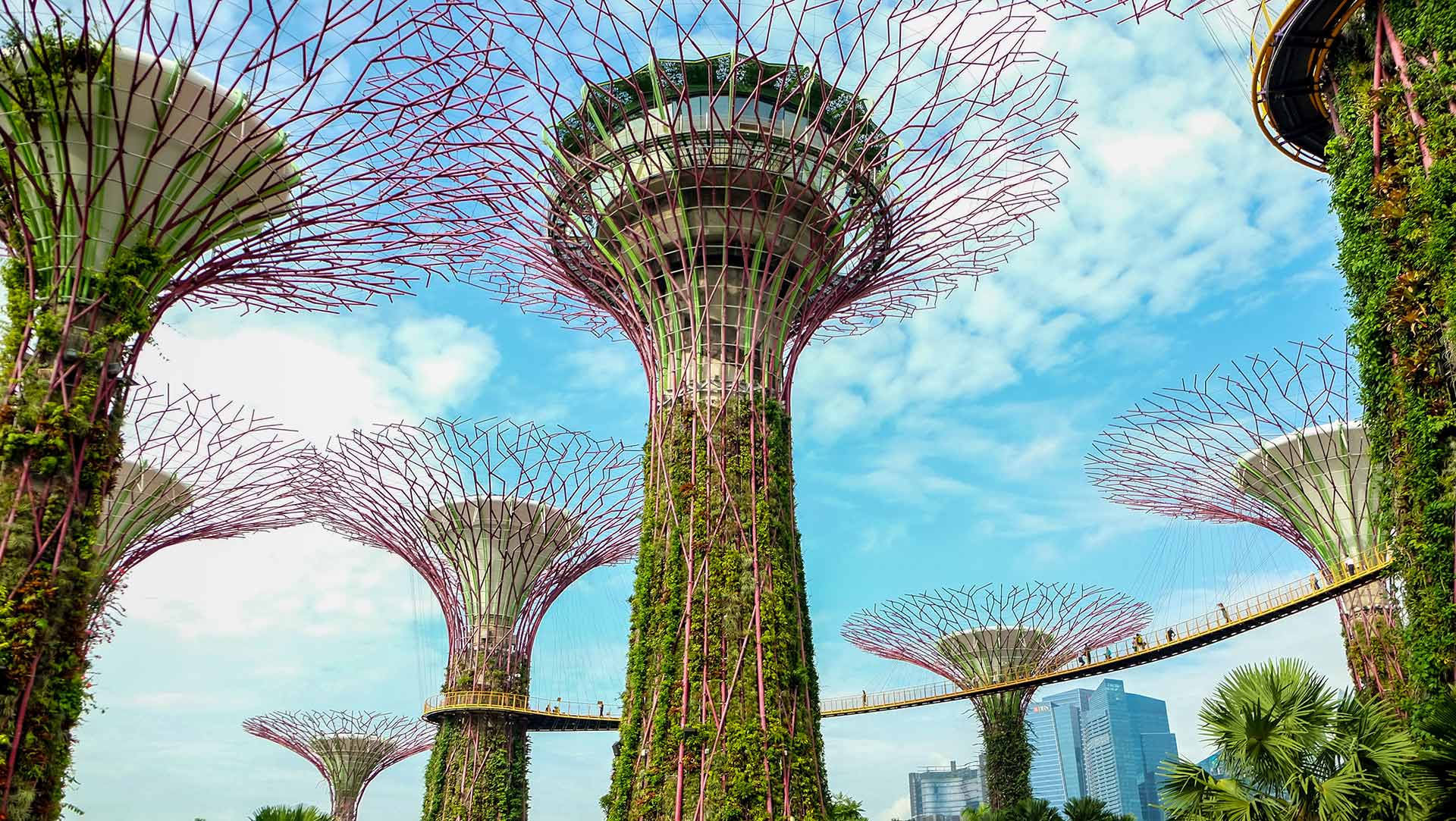
It is the site for the beautiful Supertree Grove that scenically towers over the surrounding botanical gardens and is a very popular tourist spot.
If you plan to walk along the OCBC Skybridge, I suggest getting there as early as possible to enjoy a somewhat uncrowded vantage point to overlook the beautiful botanical gardens below and local area.
Within the Gardens by the Bay are a number of other attractions with the two most popular being the Cloud Forest and Flower Dome.
Head to Brunch at CHIJMES
The Glasshouse Specialty Coffee and Toast Bar
Chijmes, 30 Victoria Street, #01-03 Singapore 187996
estled inside the gorgeous CHIJMES building, The Glasshouse brings us the delights of specialty coffee and artisan sourdough bread surrounded by giant leafy houseplants as if a greenhouse and coffee shop had merged.
Out of all their open sandwiches I tried, the Classic Salmon Sandwich was the winner with it’s salty salmon slices and tart pickled radish on herby cream cheese spread. The Hummus and Bread Bowl was worth it to try out their delicious homemade hummus but maybe their Avocado and Dukkah Sandwich would have been the better choice to change up the taste experience while eating.
For coffee, I chose the interesting White Coffee since it is a popular local coffee style plus I added oat milk just to be a little extra.
After brunch, it’s also worth exploring the CHIJMES building itself. It’s a beautiful reconverted old Catholic convent with open hallways and cloistered courtyards.
The beautiful Neo-Classical style makes it a showstopper for wedding photos and the gorgeous interiors of the other diners are perfect for Instagram-worthy outings.
Left: The Hummus and Bread Bowl and White Coffee.
Right: Classic Salmon Sandwich with Avocado Slices (Extra).
Browse and Window Shop at Haji Street
f you like eccentric art and a place that is bustling with activity both day and night, you will no doubt enjoy a stop over to this charismatic neighborhood.
Haji Street is a trendy joint full of independent shop houses and eateries. You can find an exciting mix of interesting hobby and fashion stores matched with tasty international food and quirky bars – all sandwiched next to each other in perfect harmony.
Experience Chinatown
istorically the area where Chinese immigrants settled during British ruled Singapore, the red and gold coloured streets of Chinatown is a vital cultural enclave for visitors to experience Chinese culture and heritage.
Though a longer stay would include a thorough visit to the famous Buddha Tooth Relic Temple and NUS Baba House, here is a sample of Chinatown’s famous eateries and sights.
Follow the Mural Art Trail
Dotted around various locations within small back alleys or between shopfronts on the main road, the street art created by Singapore’s creative artists will take your breath away with their depictions of the past to more modern inspirations.
The murals painted by artist Yip Yew Chong are my particular favourite for their detailed scenes of times gone by in old Chinatown. Try to pose just right for that perfect shot and turn those stills into living artwork. Check out here for street art locations.
Dine at the World’s Cheapest Michelin-starred Restaurant
Hawker Chan Chinatown Restaurant
78 Smith St, Singapore 058972
Hawker Chan Chinatown Complex Branch
335 #02-126 Smith St, Complex Market & Food Centre, Singapore 050335
Start your Michelin-starred studded food trek with a visit to the first Hawker to be awarded one star, Hawker Chan Soya Sauce Chicken Rice & Noodle.
For those unfamiliar with Cantonese food, soy sauce chicken is a popular dish in Hong Kong that requires meat to be braised and marinated multiple times while roasting in an oven or open fire. The result is a mouth watering caramelized outer layer with a juicy and moist inside that’s so tender you’ll wonder how it could only cost under SGD$4 at Hawker Chan.
If the original Hawker store is too crowded or you arrive later in the day (the stall closes at 3:30PM and Sundays), the restaurant version located a few steps away is a more comfortable alternative with air conditioning and longer operating hours. Though, this restaurant establishment version only received a Bib Gourmand award, the large tables and ample seating make this alternative worth visiting for a taste.
Soya Sauce Chicken Rice
Char Siew Noodle
Find the Best Cheap Grub at Maxwell Road
Maxwell Road Hawker Centre
1 Kadayanallur St, Singapore 069184
Hawker Centres are large food courts housing many individual food vendors dishing out no-frills meals with maximum flavour for dirt cheap.
Singapore’s Chinatown is abundant in hawker centres but the clear stand out the local’s swear by is Maxwell Road Hawker Centre.
Maxwell Road Hawker Centre has been featured on many television programs and is home to the nation’s most famous chicken rice hawker stall Tian Tian and their rival Ah Tai.
No visit to Singapore would be complete without a taste of Tian Tian’s Hainanese Chicken Rice.
Tian Tian has a high reputation within Singapore and around the world, having been awarded the Bib Gourmand award by The Michelin Guide, praised by Anthony Bourdain whose poster hangs proudly in their store and even winning against Gordon Ramsey in a culinary showdown on Singtel’s Hawker Heroes Challenge.
A few stalls down is another well-to-do establishment called Ah Tai Hainanese Chicken Rice. The owner, who also shares the same name, actually is a former staff of Tian Tian. From storefront design to food menu options Ah Tai shares some dare I say “similarities” to their famous neighbour’s chicken rice. However, one taste and you’ll soon realise that there’s something deeper going on in its flavour that makes it it’s own.
So, which is better?
It might sound like a cop-out but they are both so identical in quality it’s hard to tell. They are both really good. What is different is the slight taste experience happening in your mouth when tasting both.
I guess one can argue that it simply comes down to the dining experience. Ah Tai offers complimentary soup and a shorter wait while Tian Tian offers that yummy stock rice that just can’t be beaten.
If you are keen to know more I suggest visiting hungrygowhere for a deep dive into what you can expect from both places.
Ah Tai Hainanese Chicken Rice
Tian Tian Hainanese Chicken Rice.
Take a Tea Break
Tea Chapter
9 Neil Road, Singapore 088808
hile in Chinatown, a stop at the Tea Chapter is a must. It has an impressive reputation within Singapore and was even visited by Queen Elizabeth II!
The tea shop on street level is a great place for buying high-quality tea but climb the wooden stairs to reach the tea salon above you’ll find a fascinating place for some traditional refreshments.
Upon arrival, you can choose your favourite tea room setting before sitting down and glancing through their hand bond menus.
As to expect, there were many black, white, green and red teas on offer but we chose the recommended Queen’s tea called “Imperial Golden Cassia.” We also asked the staff for a tea serving demonstration before attempting the steps ourselves.
The experience at Tea Chapter was a great eye-opener to the appreciation of Chinese tea culture. It was one of the highlights of my trip! I loved the authentic and educational insight the staff provided while being able to relax and enjoy chatting with company.
“Imperial Golden Cassia” is the same tea Queen Elizabeth II was served on her visit here.
View the Night Scene with the Merlion
Marina Bay Area
here’s nothing quite like a romantic nightly stroll along the waterfront to soak up the city lights and at the Marina Bay area, there are three places that look amazing light up under the dark sky: the SuperTree Grove (again, haha), Marina Bay Sands and the Merlion.
If you are following this 24 hour guide in order, I would recommend to visit the SuperTree Grove first, than take the footbridge that connects to the Marina Bay Sands resort complex to see the nightly free SPECTRA – Light & Water Show at the Marina Bay Sands waterfront before walking along the harbour to see the Merlion on the other end.
This will make for shorter travel time to the next activity, eating chilli crab at JUMBO Seafood!
The SPECTRA – Light & Water Show at the Marina Bay Sands waterfront is at 8PM and 9PM on Sundays to Thursdays while on Fridays and Saturdays it will be changed to 9PM and 10PM.
There is also a light and sound show called Garden Rhapsody at the SuperTree Grove held at 7:45pm and 8:45pm daily.
The SuperTree Groves lit up during the night.
The Marina Bay Sands on the opposite side of the waterfront.
The Merlion lit up at night.
Dine on Singapore's Famous Crab
JUMBO Seafood Restaurant – Riverside Port
30 Merchant Road #01-01/02, Riverside Point, Singapore 058282
nother signature dish to try in Singapore before leaving is, of course, the infamous chilli crab.
Singaporean chilli crab is so good it was listed 35 on the World’s 50 most delicious foods list by CNN Go. Its a deliciously cooked crab in a sweet-savoury tomato chilli based sauce.
If I could recommend a place, JUMBO Seafood is a great chain restaurant and the Riverside Point location makes for a modern and stylish dining experience. Although chilli crab isn’t supposed to a spicy dish despite its name, the spice level at JUMBO Seafood seems to have been made spicier when I visited in October this year (2019).
I would confirm with the waiter if they can make the sauce milder if you are not the best with spicy food.
They also offer packets of their special chilli crab sauce for sale should you want to buy one as a souvenir.
As it is one of their most popular locations, I suggest booking in advance if you are lusting to get your mud crab fix without waiting forever in line.
Singapore Chilli Crab
Ginger and Spring Onion Crab
See the Jewel
f time permits before flying out of Singapore, a stop at the newly opened Jewel is another must-do.
Jewel located in Terminal 1 is a nature-themed entertainment area in Changi Airport where you can see the world’s tallest indoor waterfall, Rain Vortex and enjoy recreational activities on the higher levels of the canopy garden.
Even if you are only able to enjoy the Rain Vortex’s light show, it’s a great way to close off your trip.
Run by two travel and lifestyle bloggers, The Hidden Thimble focus’ on creating truthful and in-depth travel guides, food & beauty reviews. Enjoy drool-worthy photography from around the world!